
Paid Plumbing Full-Website SEO Audit Services With a Prioritized Action Plan
Find the technical, local, content, conversion, and tracking issues costing your plumbing company visibility and calls. This paid plumbing full-website SEO audit service documents URL-level evidence and turns each priority finding into an implementation-ready action plan.
Request My Complete Audit View SEO PricingNeed a quick first look instead? Start with the free plumbing SEO audit. Choose the complete paid audit when the next decision affects rankings, a redesign, an agency relationship, expansion, or a meaningful SEO budget.
You get a paid full-website plumbing SEO audit, the evidence, and the action plan—not a list of tool warnings.
An automated scan can count missing tags. It cannot decide which problem is costing a plumbing company calls, whether an emergency service page deserves priority over a minor speed warning, or which repair must happen before the next one. Our paid plumbing website SEO audit combines a whole-site crawl with manual review of priority templates, service and location pages, local search support, conversion paths, and measurement, then translates the findings into business decisions.
This is the commercial full-audit service for owners who need documented findings and an implementation sequence. Unlike the free first look, the paid engagement starts with agreed business questions, priority services, available access, and review scope, then ends with a written report that connects each material finding to an affected page or system, recommended repair, owner, dependency, and validation step. The free plumbing SEO audit remains the quick diagnostic option, while the plumbing SEO audit process guide explains the methodology for readers who are still researching. If you are comparing diagnosis with ongoing SEO, web design, or paid search, use the plumbing SEO services hub to choose the correct commercial route without blurring those page roles.
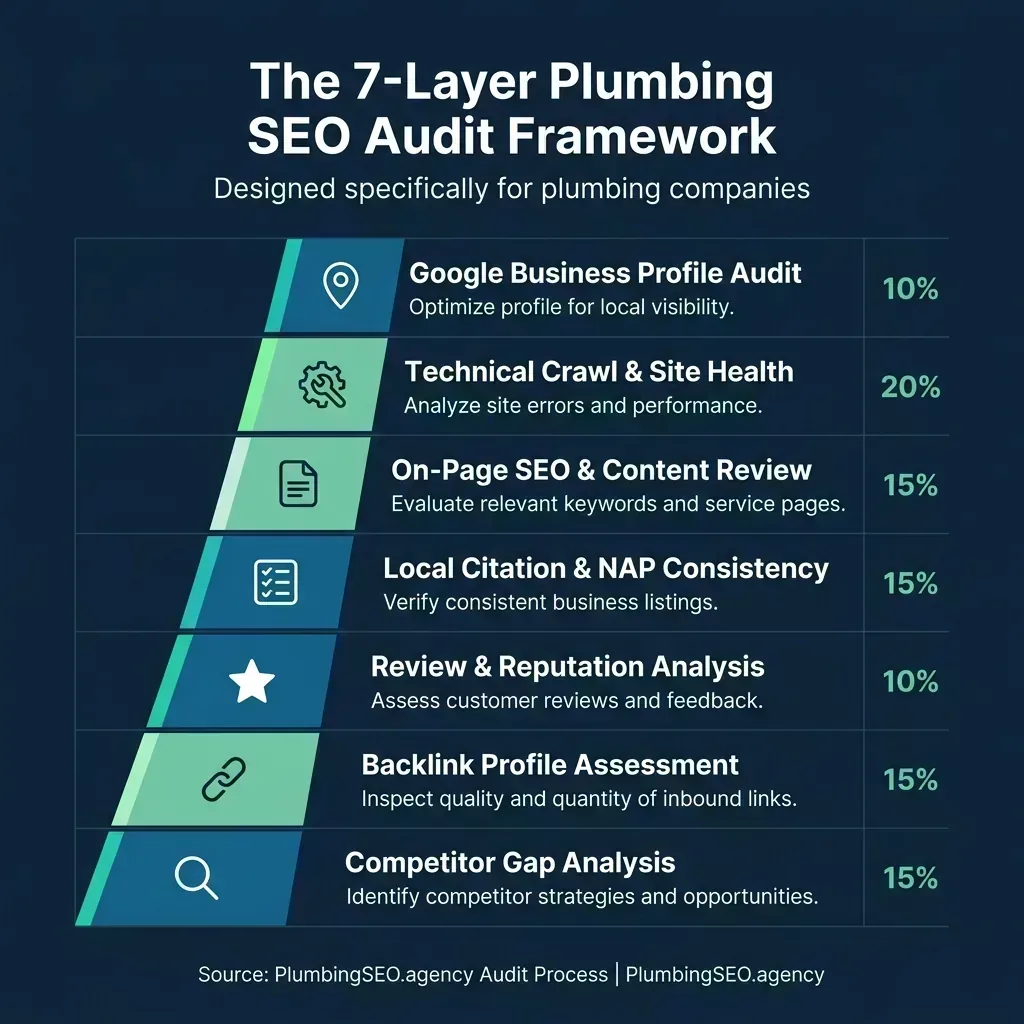
Full-site evidence
We review the pages, templates, crawl paths, local signals, conversion routes, and measurement setup that influence whether a homeowner finds you and calls. Important findings identify the affected URL or system and the evidence behind the recommendation.
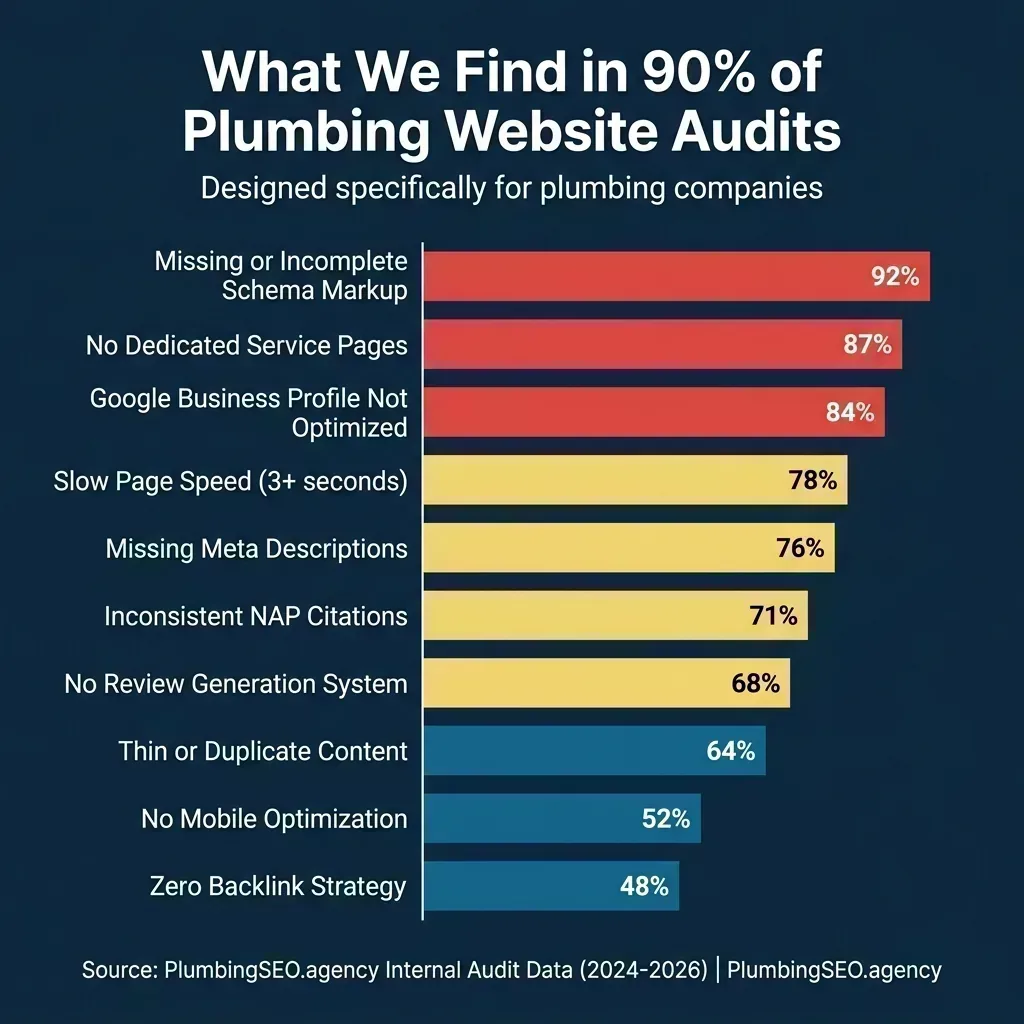
Prioritized repair order
Every meaningful issue is sorted by urgency, likely impact, effort, and dependency. A blocked money page or broken lead path comes before cosmetic cleanup. The result is a work queue, not an overwhelming export.
Implementation-ready instructions
Recommendations state what should change, where it should change, who can own the work, what must happen first, and how to verify the repair. Your developer, writer, office manager, marketer, or current agency should be able to act without decoding vague advice.
Owner-level summary
You also get a plain-language view of the largest leaks, the first decisions to make, and the work that can wait. That lets you approve spending based on expected business value instead of the length of an SEO checklist.
We audit the complete path from Google discovery to a booked plumbing call.
A plumbing website is part technical system, part local proof, part sales path. Auditing only one layer can produce the wrong priority. We examine how the layers work together so a technically healthy page is also relevant to the right service, credible in the right market, easy to use on a phone, and measurable after the call arrives.
Technical SEO
Crawl access, indexability, robots directives, canonical tags, redirects, status codes, XML sitemaps, duplicate URLs, site architecture, Core Web Vitals, mobile usability, structured data, image handling, and JavaScript or template problems that hide important content.
Service and location pages
Coverage and quality for emergency plumbing, drain cleaning, water heaters, sewer repair, leak detection, repiping, commercial plumbing, and the locations you actually serve. We flag thin, overlapping, missing, or poorly targeted pages.
Local visibility
Website support for the Google Business Profile, service areas, NAP consistency, reviews, citations, local landing pages, map relevance, photos, licenses, and the trust signals a homeowner needs before making a call.
Content and internal links
Topic coverage, helpfulness, duplicated sections, outdated claims, orphan pages, anchor text, hub-and-spoke paths, and whether educational content moves a ready buyer toward the correct service page.
Calls and conversions
First-screen clarity, phone visibility, click-to-call behavior, forms, trust proof, service-area reassurance, mobile friction, contact routes, and whether the next step matches the visitor's urgency.
Analytics and lead tracking
Google Analytics, Search Console, call tracking, form events, thank-you paths, source attribution, and reporting gaps that make it impossible to connect SEO work to real lead activity and booked jobs.
Every important finding becomes a specific action with an owner and a validation step.
The value of an audit is not the number of issues it finds. The value is knowing which repair to make first and how to confirm it worked. Your action plan groups recommendations into a practical sequence so access problems are fixed before content expansion, measurement is repaired before results are judged, and high-value pages are handled before low-impact cleanup.
1. Stop active losses
Critical crawl, indexation, canonical, redirect, tracking, form, or phone problems that can block visibility or leads. These items include the evidence, affected pages, immediate repair, and post-fix check.
2. Strengthen money pages
Service and location pages with weak relevance, thin proof, unclear headings, poor internal support, or conversion friction. These repairs focus on the pages most likely to produce qualified plumbing calls.
3. Close local and content gaps
Missing service coverage, weak market proof, unsupported Google Business Profile signals, internal-link gaps, and useful content opportunities. Expansion comes after the foundation can support it.
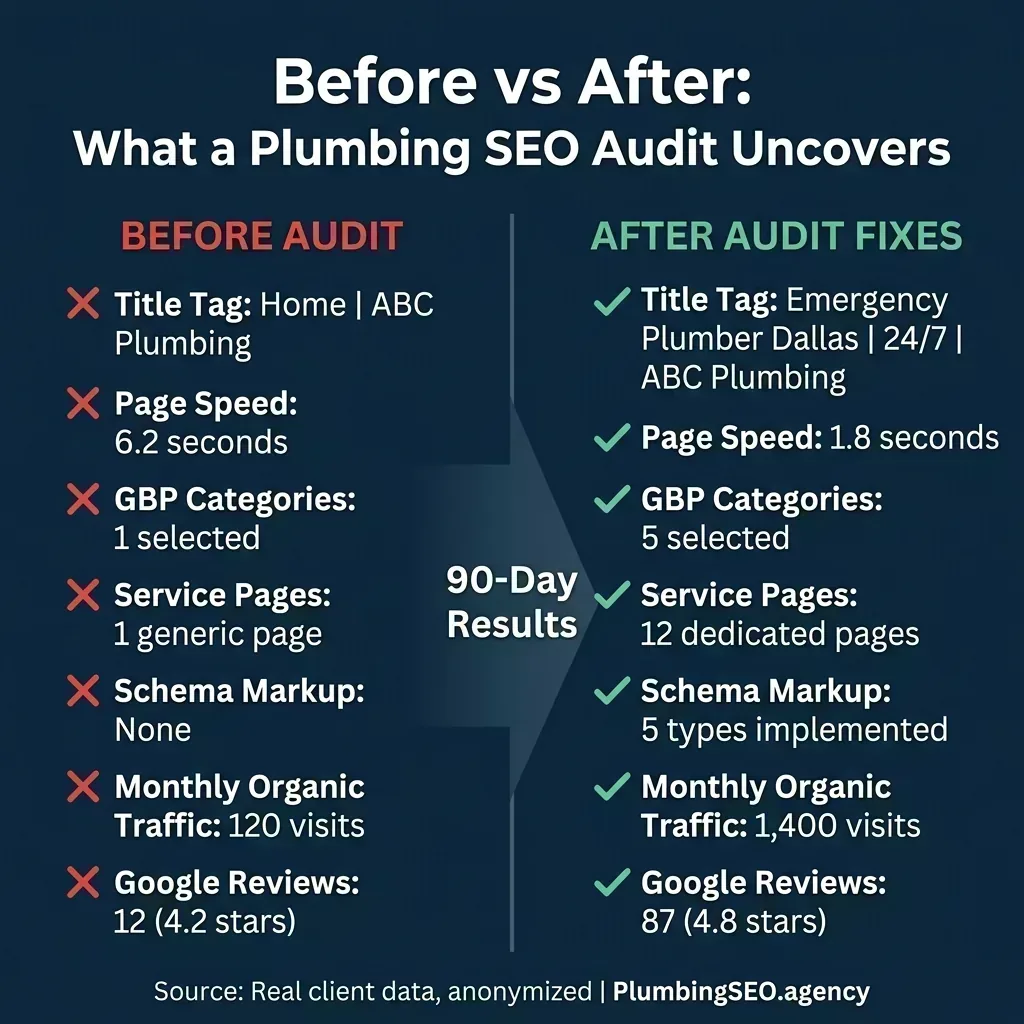
4. Validate and monitor
Each major repair includes a definition of done: crawl confirmation, index check, schema validation, link test, form submission, call event, page-level reporting, or another measurable proof. That keeps implementation from ending at “we changed it.”
Each action can include the affected URL, finding, evidence, business impact, recommended change, priority, estimated level of effort, dependency, suggested owner, and validation method. That format makes the report useful whether you implement in-house, keep your current provider, or ask PlumbingSEO.agency to scope the repairs.
Technical SEO is reviewed in the order that search engines and customers experience it.
We start by checking whether important pages can be discovered, crawled, rendered, understood, selected for indexing, and loaded well enough to use. The audit does not treat every warning equally. A canonical pointing at the wrong URL matters more than a harmless formatting preference, and a slow emergency page with a broken call button matters more than a minor score change on an unused page.
Discovery and crawl paths
We inspect robots rules, XML sitemaps, navigation, internal links, orphan pages, pagination, URL parameters, redirect chains, broken links, and status codes. The goal is to make important plumbing pages easy to reach without wasting crawl attention on duplicates or dead ends.
Indexing and canonical signals
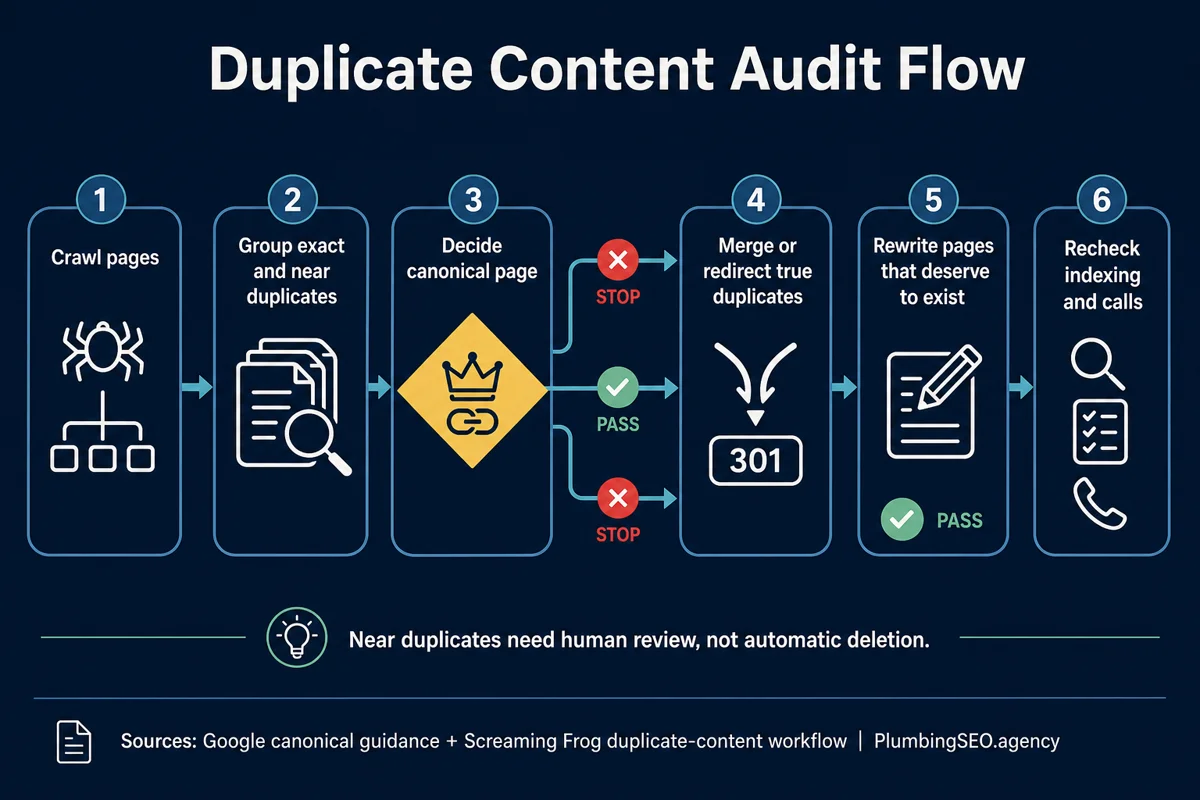
We review index directives, canonical tags, duplicate versions, trailing-slash or protocol inconsistencies, rendered content, and pages that are discovered but not indexed. For owners troubleshooting coverage, the plumbing website indexing checklist explains the basics. Our guides to canonical tags for plumbing websites and duplicate-content diagnosis show common causes; the paid audit documents the exact URL-level repair.
Performance and mobile use
Core Web Vitals, large assets, layout shifts, render delays, mobile tap targets, sticky elements, and script behavior are checked in context. We focus on problems that prevent a homeowner from reading, trusting, calling, or submitting a request.
Structured data and templates
We validate service, organization, breadcrumb, article, FAQ, and local-business markup where appropriate. We also look for template errors that create duplicate schema, missing headings, repeated metadata, inaccessible images, or inconsistent calls to action across many pages.
The website must support the Google Business Profile and prove where your plumbers work.
Local visibility is not a separate island. Google and homeowners use the website to understand services, locations, legitimacy, and the next action. The audit reviews whether your site gives the Business Profile and local landing pages enough consistent evidence without filling the copy with repeated city names.
Market and service-area clarity
We check whether primary markets, nearby service areas, office details, and travel coverage are clear and accurate. Location pages should contain real local value, not the same paragraph with a different city name.
Google Business Profile alignment
Services, categories, landing pages, contact details, hours, photos, reviews, and website messaging should support the same business. Conflicts are documented with the page or field that needs attention.
Trust and prominence
Licenses, insurance, warranties, team proof, real project evidence, review presentation, associations, address information, and contact details are reviewed for consistency and usefulness. See the plumbing website trust signals guide for examples owners can recognize.
Local repair route
When the largest gaps involve Maps support, reviews, citations, or market coverage, the action plan can route the next phase into local SEO for plumbers rather than treating every problem as a website rewrite.
We check whether every high-value plumbing service has a clear, useful page and a reason to rank.
A technically clean site can still underperform when all services are compressed into one paragraph, several pages compete for the same intent, or educational articles never support the pages that generate revenue. The audit maps page roles before recommending more content.
Coverage map
We inventory the services and markets the company actually wants to grow, then compare them with the pages that exist. Missing or weak coverage is separated from services that do not need a dedicated page.
Page quality and usefulness
Titles, headings, introductions, scope, process, FAQs, photos, proof, pricing context, service-area language, and calls to action are reviewed from the homeowner's perspective. Recommendations improve clarity rather than simply repeating a keyword.
Overlap and cannibalization
We flag pages that target the same job without a meaningful difference, location pages that duplicate one another, and articles that compete with service pages. The action plan identifies a primary page and support role before consolidation or rewriting is considered.
Internal-link support
We check whether navigation, service hubs, location pages, and useful articles guide both search engines and owners toward the right next step. The internal linking guide for plumbing websites covers the principle; your report names the actual source and destination pages.
Rankings only matter when the website makes it easy to call and the reporting can prove the lead.
Plumbing traffic is often urgent and mobile. A buried phone number, broken form, confusing service area, or untracked click can erase the value of better visibility. We test the practical route from landing page to contact and review whether the measurement setup captures meaningful actions.
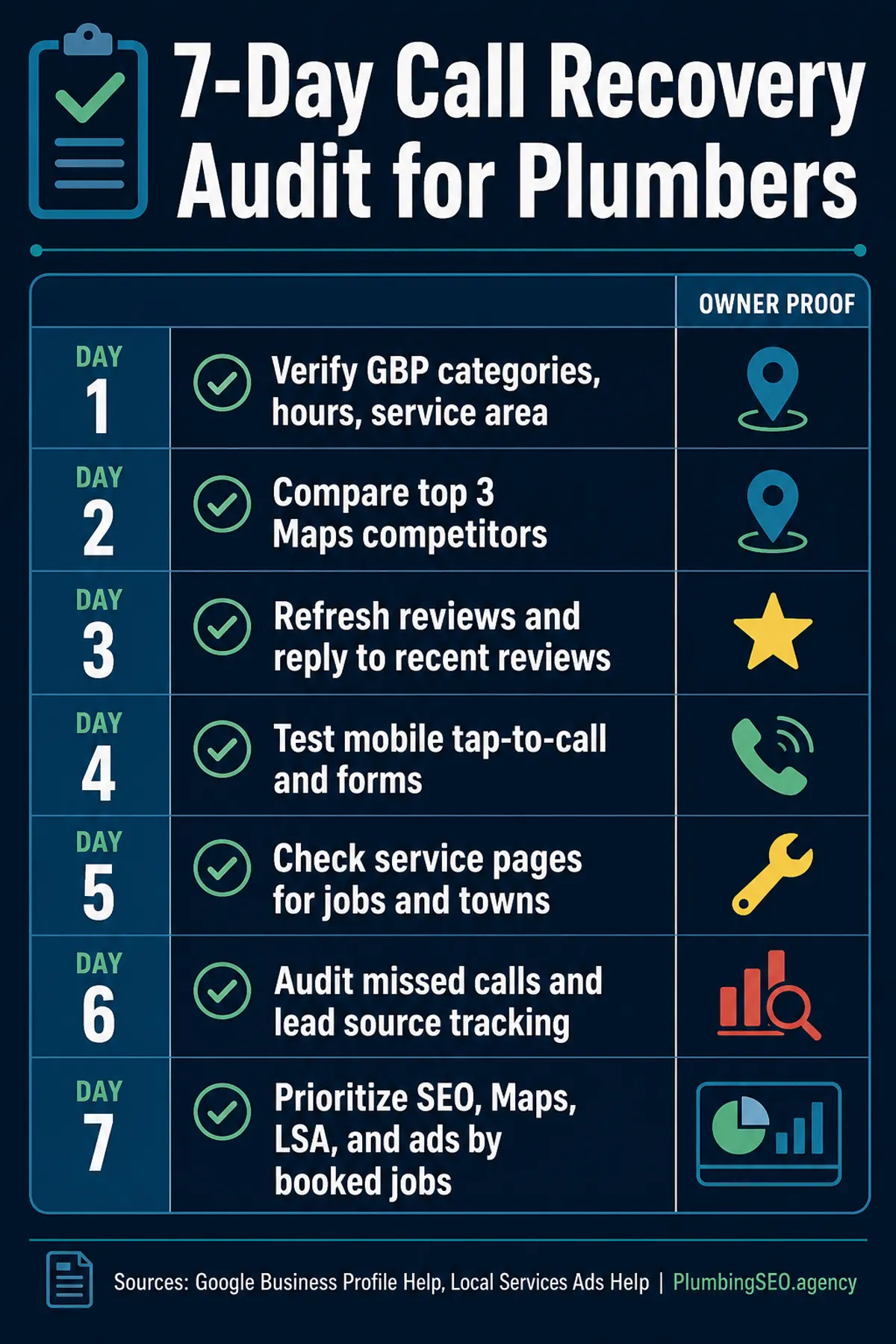
Phone and mobile path
We check number visibility, click-to-call links, sticky controls, page overlays, hours, emergency messaging, and whether a mobile visitor can reach the office without searching through the page.
Forms and contact options
Form length, labels, validation, confirmation, spam protection, accessibility, and the fit between the contact option and service urgency are reviewed. The forms vs click-to-call guide provides additional context.
Analytics and events
We review whether calls, forms, email clicks, booking actions, and important page paths can be measured without inflating results with low-value events. Tracking recommendations state what should fire and how it should be tested.
Reporting that owners can use
Search Console and analytics data should help answer which pages attract qualified demand, where visitors stop, and whether the next repair improved leads. The action plan separates useful owner metrics from activity reports that do not connect to calls.
We compare the plumbing search results you need to win, then turn the gaps into achievable work.
Competitor research is useful only when it changes a decision. We compare the pages, local proof, service coverage, trust, internal structure, and conversion experience visible in the markets that matter to your company. We do not recommend copying a competitor or chasing every feature on a national website.
Search-result fit
We look at the kinds of pages ranking for priority services and markets: service pages, location pages, directories, map results, guides, or large brands. That context helps determine whether the current page type and content depth match the opportunity.
Proof and offer gaps
We compare review presentation, project evidence, licenses, guarantees, service-area clarity, response messaging, FAQs, and calls to action. The report identifies missing proof your company can genuinely provide.
Content and architecture gaps
We compare high-value service coverage, local pages, supporting guides, navigation, and internal links. Recommendations focus on gaps tied to real services and markets, not a generic mandate to publish more.
Priority by feasibility
A local plumbing company should not receive an enterprise wish list. Gaps are weighed against resources, current site health, market value, and dependency so the action plan starts with work the business can realistically complete.
The final package is built for decisions, assignment, implementation, and verification.
You should not need another consultant to explain the consultant's report. The deliverables separate the owner summary from the working detail while keeping every recommendation connected to evidence and a next action.
The biggest leaks
A plain-language overview of what is limiting visibility, calls, or measurement, plus the decisions that deserve owner attention first.
Evidence by page and system
Documented technical, local, content, internal-link, conversion, and tracking findings with affected URLs or systems.
Sequenced repair queue
Recommendations ordered by impact, urgency, effort, and dependency, with a suggested owner and a clear definition of done.
Page and keyword role map
A practical view of which existing page should handle each important service or market, where support content is needed, and where overlapping pages create confusion.
Measurement checklist
The events, reports, crawl checks, index checks, and lead signals needed to validate implementation and monitor whether important pages are improving.
Implementation routes
A clear split between work for a developer, writer, local SEO specialist, designer, office team, or agency. You can use your own team or request a repair scope from us.
Choose the depth that matches the decision in front of you.
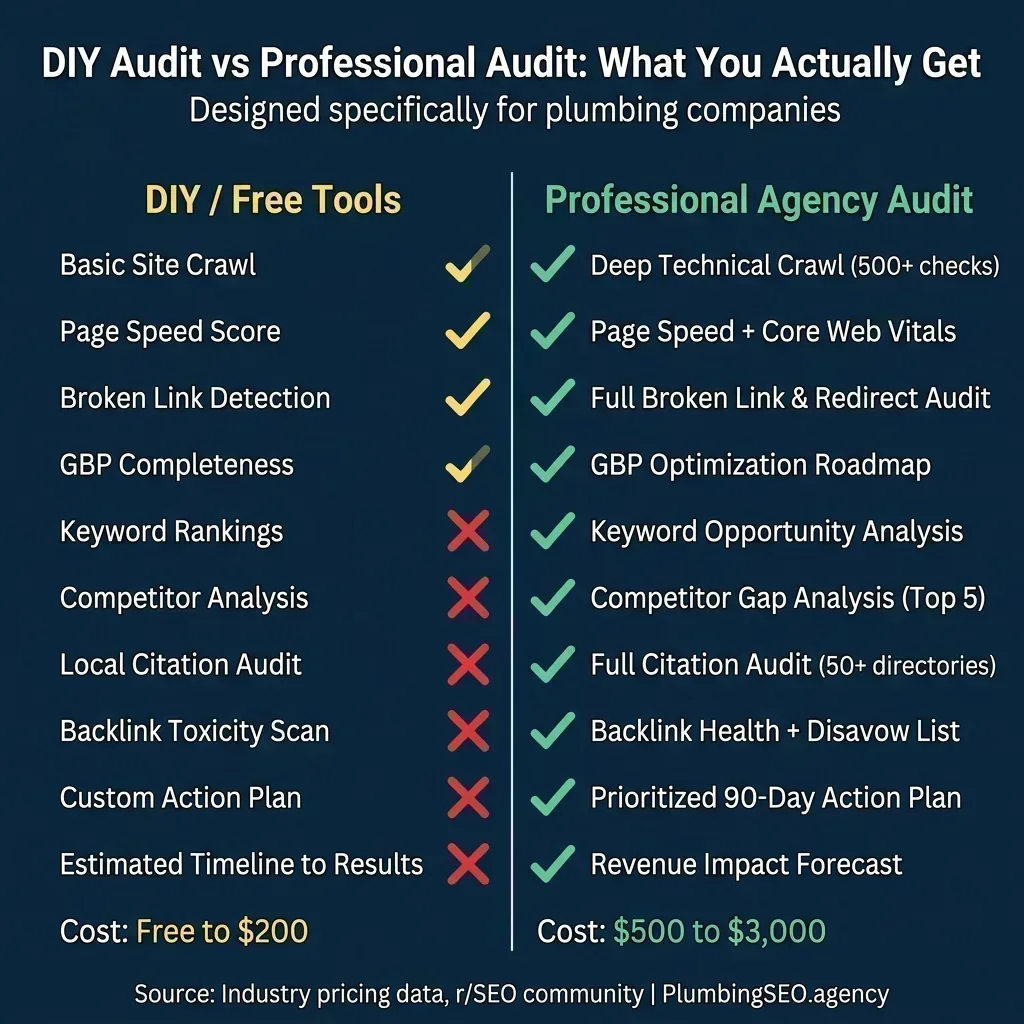
The free and paid audits serve different needs. The free audit is a useful starting point. The complete paid audit is for a business decision that needs deeper evidence, a whole-site view, and an action plan detailed enough to implement.
Start with the free audit when
You want a quick outside opinion, need help naming the most obvious leak, or want to see how PlumbingSEO.agency thinks before commissioning a full review. It is a diagnostic entry point, not a complete teardown.
Request the free auditChoose the complete paid audit when
You need to approve a meaningful SEO budget, diagnose a sustained loss, review agency work, prepare for a redesign, expand into services or markets, solve indexation problems, or give a team a documented repair sequence.
Request the complete auditIf you are researching how an audit works before buying, read the plumbing SEO audit process guide. If you are comparing providers, the best SEO for plumbers guide helps with that decision. This service is the commercial path when you are ready for the complete review and action plan.
The paid audit is most useful when guessing has become more expensive than knowing.
A complete audit is not necessary for every business or every question. It is most valuable when several parts of the website may be involved, different people need to coordinate repairs, or the next choice carries enough cost that evidence matters.
Visibility or call decline
Organic visibility, Maps activity, calls, or form leads have fallen and the cause is not obvious. The audit checks technical, page-level, local, conversion, and measurement causes together.
Unclear agency performance
You receive reports but cannot connect the activity to stronger pages, local visibility, calls, or booked jobs. The audit provides an independent view and a clearer set of implementation questions.
Redesign or migration
You are considering a new website, domain change, CMS move, template rebuild, or navigation change. Auditing first can protect valuable pages and prevent a redesign from carrying old problems into a new system.
Service-area expansion
You plan to add services, technicians, offices, or markets and need to know whether the current architecture, content, local proof, and tracking can support the investment.
Indexing and duplication problems
Important pages are excluded, duplicates compete, canonicals are inconsistent, or search engines keep choosing an unexpected URL. The audit maps the cause before anyone adds another page.
SEO plan before execution
You want to invest in plumbing SEO services but need a grounded scope. The audit identifies whether the first phase should be technical repair, local SEO, service pages, conversion work, or measurement.
The process moves from business context to evidence, priorities, and an executable repair plan.
A useful audit begins with what the plumbing company is trying to grow. Before analysis starts, we confirm the website, priority services and markets, known concerns, available access, current providers, and the decision the report needs to support. Scope and fee are confirmed before paid work begins.
1. Confirm goals and access
We document priority services, locations, lead types, recent changes, known problems, and the people who may implement the work. Search Console, analytics, call tracking, and Google Business Profile access are requested only when relevant and available.
2. Crawl, inspect, and test
We combine sitewide crawl data with manual page review, rendered-page checks, mobile use, local search support, analytics evidence, and practical lead-path testing. Automated tools support the work; they do not set the priorities.
3. Diagnose and prioritize
Findings are connected across layers. A weak service page may also have poor internal links, thin local proof, and an untracked call button. The action plan groups related repairs so the team solves the cause rather than patching isolated symptoms.
4. Deliver the repair plan
You receive the owner summary, complete findings, prioritized action plan, page-role guidance, and validation checklist. The plan can be implemented by your team, your current provider, or PlumbingSEO.agency.
Keep the report independent, then choose the right implementation path.
The audit does not require you to replace your team or sign a monthly plan. You can hand the action plan to your developer, writer, marketer, office manager, or current SEO provider. If you want help, we can scope the priority repairs separately after the evidence is clear.
Technical repair
Crawl, canonical, sitemap, redirect, schema, speed, and template work can be assigned to a developer with the affected pages, dependency order, and validation checks already documented.
Service-page improvement
Weak commercial pages can move into a focused content and conversion phase. If the page framework itself is the problem, plumbing web design may be the more efficient route.
Local visibility work
Google Business Profile support, review systems, citation consistency, service-area proof, and location content can be grouped into a local implementation track instead of mixed into unrelated website tasks.
Ongoing SEO plan
When the foundation is sound but the market requires continued service-page, local, authority, and content work, use the audit priorities to compare scope and plumbing SEO pricing without paying for activity that does not address the evidence.
Complete plumbing website SEO audit FAQs
What do your paid plumbing full-website SEO audit services include?
The audit covers technical SEO, crawlability, indexability, canonicals, redirects, sitemaps, speed, schema, service pages, location pages, local search support, Google Business Profile alignment, internal links, calls to action, forms, analytics, call tracking, and competitor gaps. Findings are organized into a prioritized action plan.
What will I receive after the audit?
You receive a complete audit report and an implementation-ready action plan. Each important finding explains the affected page or system, the evidence, likely business impact, recommended repair, priority, dependencies, responsible owner, and how to verify the fix.
How is the paid audit different from the free SEO audit?
The free audit is a first-look diagnostic that identifies a few likely leaks. The paid audit is a deeper, manual review of the full website and its local search support, with documented evidence, URL-level recommendations, and a sequenced action plan for implementation.
Is this audit built specifically for plumbing companies?
Yes. The review is built around how plumbing customers search and call. It checks high-value services, emergency intent, service areas, Google Maps support, mobile click-to-call paths, trust signals, and whether SEO reporting connects to leads and booked jobs.
Can the audit review work completed by another SEO agency?
Yes. The audit can provide an independent second opinion on existing SEO work, reports, page strategy, local search activity, tracking, and technical implementation without requiring you to change providers first.
Does the audit include local SEO and Google Business Profile support?
Yes. It reviews how the website supports local visibility, including service-area clarity, location signals, reviews, citations, local pages, internal links, Google Business Profile alignment, and the path from a Maps or organic visit to a call.
Will the action plan tell my team what to fix first?
Yes. Recommendations are sequenced by impact, urgency, effort, and dependency. Critical access or tracking failures come before expansion work, and each item is written so an owner, marketer, developer, writer, or SEO provider can understand the next action.
Do you check calls, forms, analytics, and lead tracking?
Yes. The audit checks mobile phone visibility, click-to-call behavior, forms, thank-you paths, analytics configuration, Search Console coverage, call tracking, and whether the reporting can distinguish traffic from actual lead activity.
Can you help implement the audit recommendations?
Yes. You can use the action plan with your own team or provider, or ask PlumbingSEO.agency to scope the highest-priority repairs. The report separates technical, content, local SEO, conversion, design, and measurement work so implementation can be assigned clearly.
Can the audit diagnose why Google ranks the wrong page?
Yes. The audit compares the query with the pages Google is showing, then reviews titles, headings, canonicals, internal links, page purpose, content overlap, and conversion intent. The action plan identifies the intended page and the narrowest changes needed to clarify its role without creating another competing URL.
Who is the paid plumbing SEO audit best for?
It is best for plumbing companies with an established website, falling visibility, weak service or location pages, unclear agency reporting, indexing problems, inconsistent local performance, poor lead tracking, or a planned redesign, expansion, or SEO investment that needs evidence before execution.
Know what to fix, who should fix it, and what comes first.
Request a complete plumbing website SEO audit with documented evidence and a prioritized action plan built for implementation.
Request My Complete Audit