
- A cheap lead is only cheap if your team can book it. Track cost per qualified lead, cost per booked job, and revenue by channel.
- SEO usually wins long-term cost per lead, Google Ads and LSA can fill today’s schedule, and referrals close best but rarely scale by themselves.
- For most plumbing companies, the smart plan is not SEO versus ads. It is owned local visibility plus paid channels with call tracking and booking discipline.
If the phones are quiet, the first question is usually, "Where do we get more leads?" The better question is, "What are we paying for a booked plumbing job?"
That difference matters. A $70 lead that never books is not cheaper than a $160 lead that turns into a water heater install. One keeps a truck moving. The other makes the report look busy while the schedule stays thin.
This guide compares plumber cost per lead across SEO, Google Ads, Local Services Ads, and referrals. It is written for plumbing owners who need real numbers, not a pretty dashboard. You will see where each channel fits, what to track, and when the math says to fix booking before buying more traffic.
What counts as a lead for a plumbing company?
A plumbing lead is not just a form fill or phone call. A good lead should be from your service area, match work you actually want, and give your office enough information to book or disqualify it quickly.
In my opinion, this is where a lot of marketing gets sideways. The report says "40 leads." The dispatcher says, "Half were outside our area, five wanted free estimates for tiny jobs, and three never answered." The phone tells the truth.
Use these three levels when you judge any channel:
Raw lead
- A call, form, chat, or booked request from any marketing source.
- Useful for volume, but dangerous if judged alone.
Qualified lead
- In your service area, about a real plumbing need, and contactable.
- This is the minimum number worth comparing by channel.
Booked job
- The lead turns into a scheduled call, estimate, or job on the board.
- This is what payroll cares about. Rankings do not buy pipe.
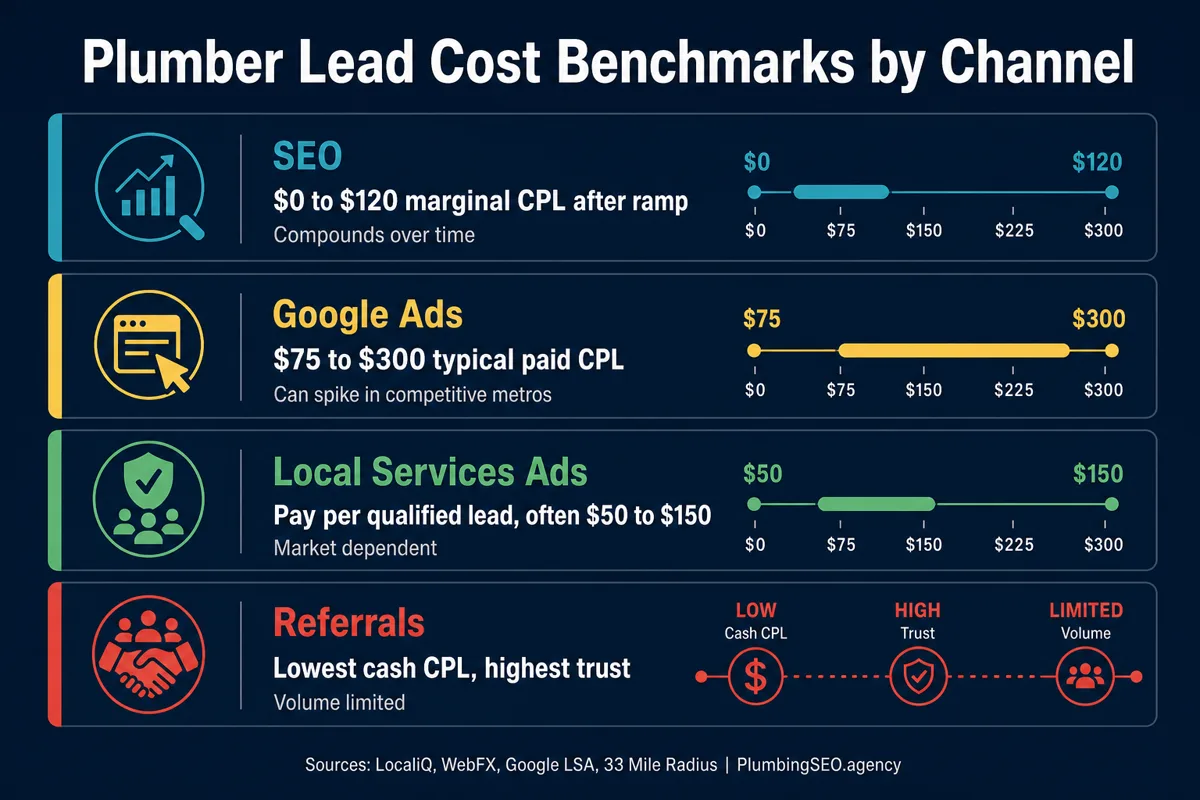
Plumber cost per lead benchmarks by channel
Published home-services benchmarks show why plumbers should avoid one-size-fits-all lead math. LocaliQ reports home services cost per lead ranges from $29.08 to $101.49 across the subcategories it analyzed. WebFX reports B2C home services CPL around $144 and notes that plumbing and similar high-volume services can convert at 12% to 16%.
Those are helpful guardrails, but plumbing is a special animal. Emergency plumber keywords in big metros can get expensive fast. A referral might cost almost nothing in cash but take years of service to earn. SEO can look slow early, then become the cheapest source of qualified calls once rankings and trust compound.
| Channel | Typical CPL pattern | Best use | Watch-out |
|---|---|---|---|
| SEO | Higher early cost, lower marginal CPL after rankings build | Owned local demand, service pages, Maps support, long-term lead cost control | Takes time. Thin pages, weak reviews, or bad tracking make ROI look fuzzy. |
| Google Ads | Often $75 to $300+ in competitive plumbing markets | Fast testing, emergency work, seasonal pushes, new service areas | Bad match types, broad keywords, and weak landing pages burn budget. |
| Local Services Ads | Pay per qualified lead through Google’s LSA platform | High-trust top-of-page calls when reviews, response speed, and screening are strong | Volume can swing, disputes matter, and reviews still influence trust. |
| Referrals | Lowest cash cost, highest trust | Repeat customers, neighbors, property managers, builders, and local partners | Hard to forecast unless you deliberately ask, track, and follow up. |
| Purchased leads | Often $35 to $100 for plumbing lead providers, based on 33 Mile Radius estimates | Short-term gap filling when the schedule needs calls now | Shared leads and low intent can crush booking rate. |
SEO cost per lead for plumbers
SEO does not behave like a vending machine. You put money in before the compounding starts. That makes the first few months feel expensive, especially if you only divide that month’s invoice by that month’s organic calls.
The better way is to measure SEO in two layers:
- Build cost: the investment to fix technical SEO, service pages, Google Business Profile signals, content, internal links, and conversion tracking.
- Marginal lead cost: the cost of each additional organic call once your pages and Maps visibility are already working.
A strong plumber digital marketing plan should not make SEO live in a silo. It should connect the website, Maps, reviews, call tracking, and paid channels so you know which calls became real jobs.
If you want a practical way to model payback, use the plumbing SEO ROI calculator. It forces the right question: how many booked jobs does this channel need to pay for itself?
Google Ads cost per lead for plumbers
Google Ads can be the fastest way to get in front of a homeowner who needs a plumber today. It can also be the fastest way to pay for clicks from people you should never have chased.
For plumbing companies, paid search CPL usually moves because of five things:
- Service type: emergency, drain, sewer, slab leak, and water heater searches do not price the same.
- Market pressure: a small town and a major metro are different ballgames.
- Keyword control: exact service intent beats broad "plumber" fishing trips.
- Landing page fit: sending drain cleaning traffic to a generic homepage leaks calls.
- Office response: missed calls turn paid traffic into an expensive guessing game.
If you are already running paid search, compare this post with our guide on how much PPC costs for plumbers. The paid-click math matters, but the booked-job math matters more.
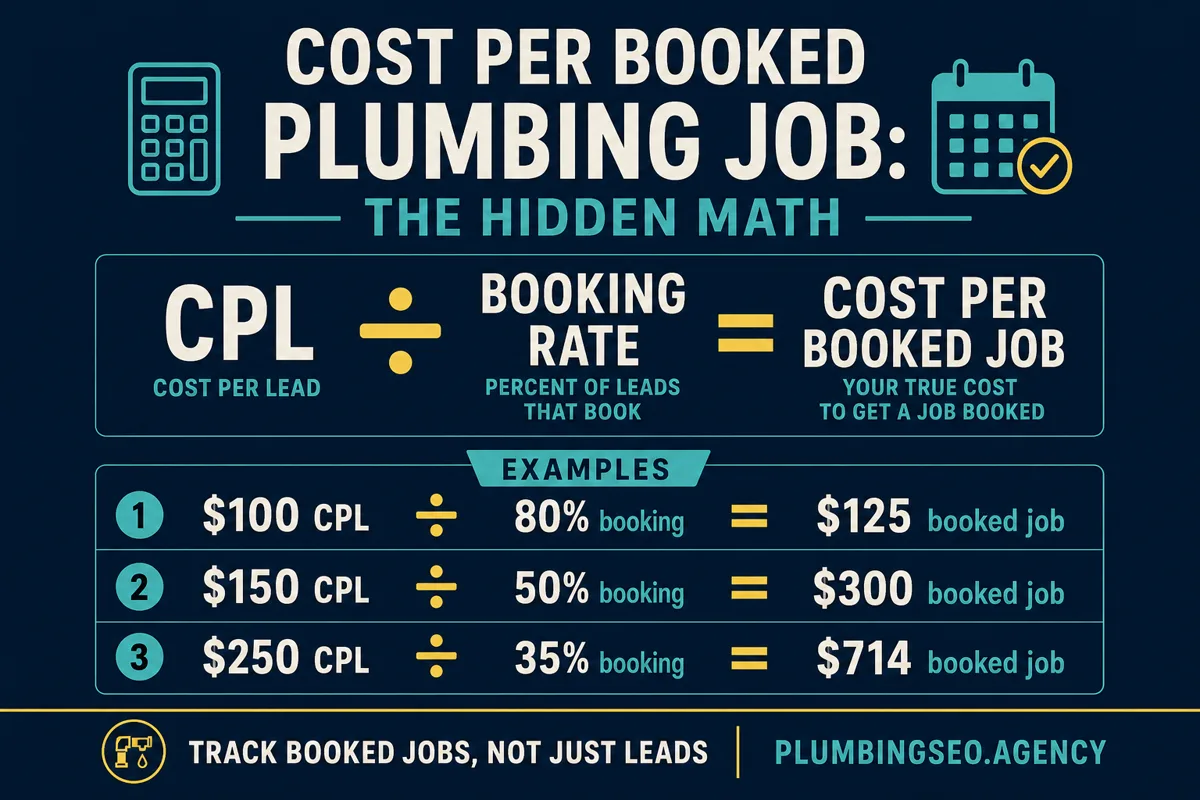
Use this as a rough owner check. Replace the default numbers with one channel from your own call tracking.
If this number looks ugly, do not automatically buy more leads. Fix lead quality, answer speed, dispatch fit, and follow-up first.
Local Services Ads cost per lead for plumbers
Google Local Services Ads are different from standard Google Ads because the advertiser pays for leads, not clicks. Google describes LSA as a way to pay when potential customers get in touch through the ad.
That sounds simple, but it still needs management. LSA performance depends on service categories, location, budget, reviews, screening status, dispute process, and how quickly your office responds. The lead might be billed by Google, but the customer still judges your company in seconds.
For a deeper LSA-only view, read our Local Services Ads statistics for plumbers. This article is different. Here, LSA is one channel in the full lead-cost picture.
Referral cost per lead for plumbers
Referrals are usually the cheapest cash lead source and often the highest-trust lead source. The problem is volume. If referrals are only "hope Mrs. Johnson tells her neighbor," you do not have a system. You have a nice reputation and crossed fingers.
Make referrals trackable without making them weird:
- Ask happy customers after the job is done and the work area is clean.
- Give CSRs a simple line: "If a neighbor needs help, we would be grateful if you passed our name along."
- Track referred calls separately in your CRM or call notes.
- Build partner lists for property managers, remodelers, realtors, and restoration companies.
Referrals will not replace SEO or ads in most growth plans. They should make every other channel more profitable because trust travels with the name.
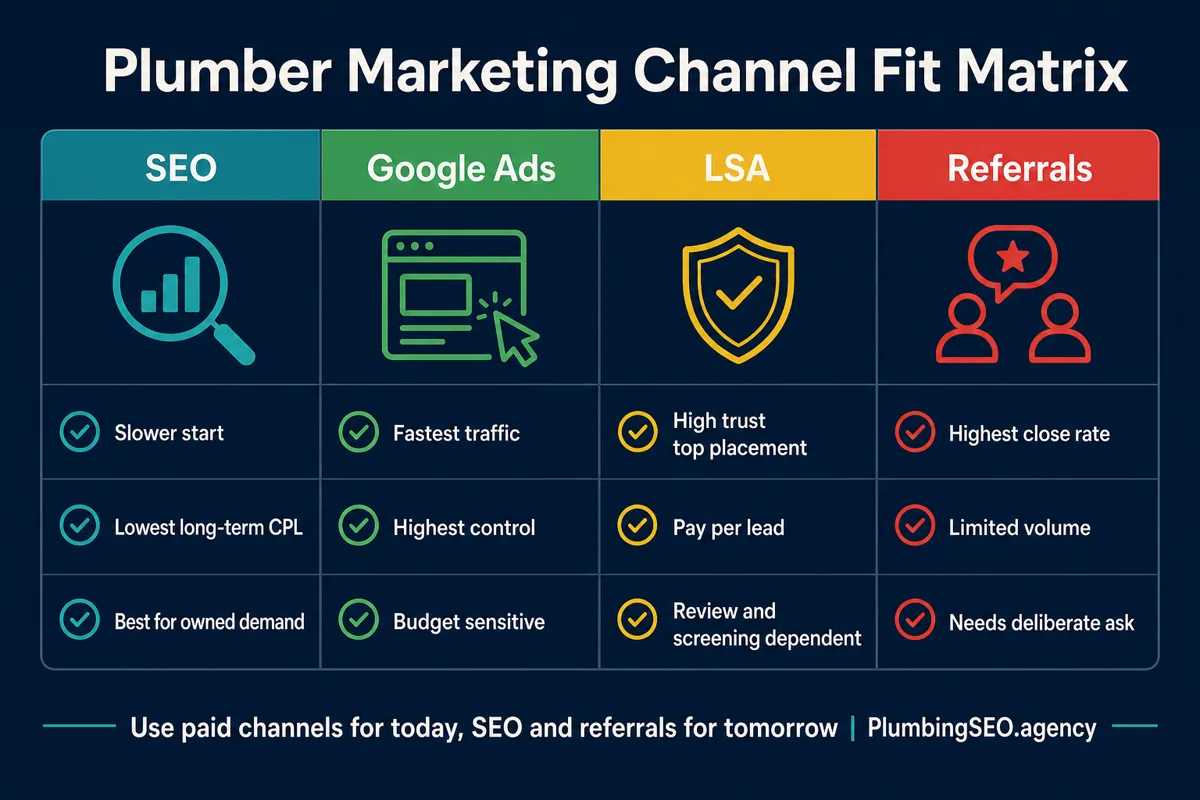
When a higher cost per lead is still profitable
A $225 drain lead can be fine if it turns into a hydro jetting job, a sewer camera inspection, or a long-term maintenance customer. A $40 lead can be terrible if it is outside your route, asks for free advice, and never books.
Use this owner-side test before you cut a channel:
| Question | Why it matters | What to do next |
|---|---|---|
| Are these leads in our service area? | Bad geography wastes dispatch time and ad budget. | Tighten geo targeting, service-area copy, and call screening. |
| Do these calls match profitable services? | A cheap clogged-sink lead and a sewer replacement lead are not equal. | Separate reporting by service line, not just by channel. |
| Are we answering and booking quickly? | Slow response can make a good channel look bad. | Review missed calls, after-hours handling, CSR scripts, and follow-up. |
| Can we see revenue by source? | CPL alone hides whether the work was actually worth it. | Connect call tracking, CRM outcomes, invoices, and close rate. |
The practical mix I would run
If I owned a plumbing company and had to keep trucks moving without lighting money on fire, I would not bet the whole shop on one channel.
For SEO, build the pages and authority that let you earn calls without paying for every click forever. For paid channels, use tight service targeting, clean landing pages, and call tracking. For referrals, turn happy customers and partners into a deliberate habit.
That is not fancy. It is the marketing version of checking the shutoff before you pull the line apart. Boring can save you a lot of money.
How to lower plumber cost per lead without starving the schedule
- Separate raw leads from qualified leads. If a channel sends bad-fit calls, fix targeting before judging the whole channel.
- Measure cost per booked job. Leads are only the front door. Booking rate decides the real cost.
- Improve service-page fit. Drain, sewer, water heater, leak detection, and emergency pages should answer the exact job the customer needs.
- Use reviews as conversion fuel. Strong reviews help SEO, LSA, paid landing pages, and referrals.
- Keep paid search narrow at first. Spend where intent is obvious. Expand after booked jobs prove the math.
- Strengthen follow-up. Missed calls, slow quotes, and no callbacks make every channel look worse than it is.
If you need the broader channel plan behind this article, start with Google Ads for plumbers for paid demand and clear plumbing SEO pricing for the owned-growth side.
Frequently Asked Questions
A good plumber cost per lead depends on service type, market, and booking rate. Broad home-services benchmarks often land around $29 to $144, but competitive emergency plumbing leads can cost much more. Judge the lead against booked-job cost and job value, not CPL alone.
SEO is usually cheaper per lead after rankings, reviews, and service pages are established. Google Ads is faster but you keep paying for traffic. Most plumbing companies need both at different stages: paid search for speed, SEO for long-term cost control.
Local Services Ads can work well because they sit high on the page and charge per lead instead of per click. Google Ads gives more control over keywords, landing pages, and service-line testing. The better choice depends on reviews, screening, budget, call handling, and your service area.
Purchased leads can fill short-term schedule gaps, but they should not be the whole growth plan. Watch for shared leads, weak intent, unclear billing rules, and low booking rates. If you buy leads, track booked jobs and revenue separately from raw lead count.
First divide spend by qualified leads to get cost per qualified lead. Then divide that CPL by your booking rate. For example, a $150 CPL at a 50% booking rate becomes about $300 per booked job.
Track qualified leads, missed calls, booking rate, cost per booked job, average ticket, gross margin, and revenue by channel. CPL is only useful when it connects to the jobs your company actually completes.
Want to know which leads are actually paying you back?
We will inspect your plumbing website, Maps presence, paid-channel fit, and tracking setup so you can see where calls are leaking before you spend more.
Run My Free SEO Leak Check