
- Backlinks for plumbers should prove a real local relationship: suppliers, chambers, associations, schools, events, local press, property managers, non-competing trades, and useful neighborhood resources.
- Buying backlinks is risky when the link exists mainly to manipulate rankings. Legitimate sponsorships, directories, and advertising are different, but paid placements should be transparent and qualified when needed.
- The right destination matters. Point broad trust links to your homepage, offer/service links to the matching service page, and educational links to a useful guide that can convert readers into audit requests.
- The easiest first move is a relationship audit. List everyone you already pay, help, sponsor, refer, or work beside, then turn the best ones into clean local mentions.
If you own a plumbing company, you already know the awkward part of link building.
Somebody tells you, "Just reach out and ask other websites for backlinks." Sounds simple. Then you email a local business owner, use the word backlink, and suddenly you sound like the same spammer who keeps offering to rank their cousin's website for $99.
That is the problem. Good local backlinks do help. But begging strangers for links is a bad way to spend an afternoon, right up there with digging through a truck for the one fitting you swear was there yesterday.
The way I see it, plumbing companies should build local backlinks the same way they build local trust. Do real work in the market, document it, make it useful, and ask for links only when the link makes sense for both sides.
Why local backlinks still matter for plumbers
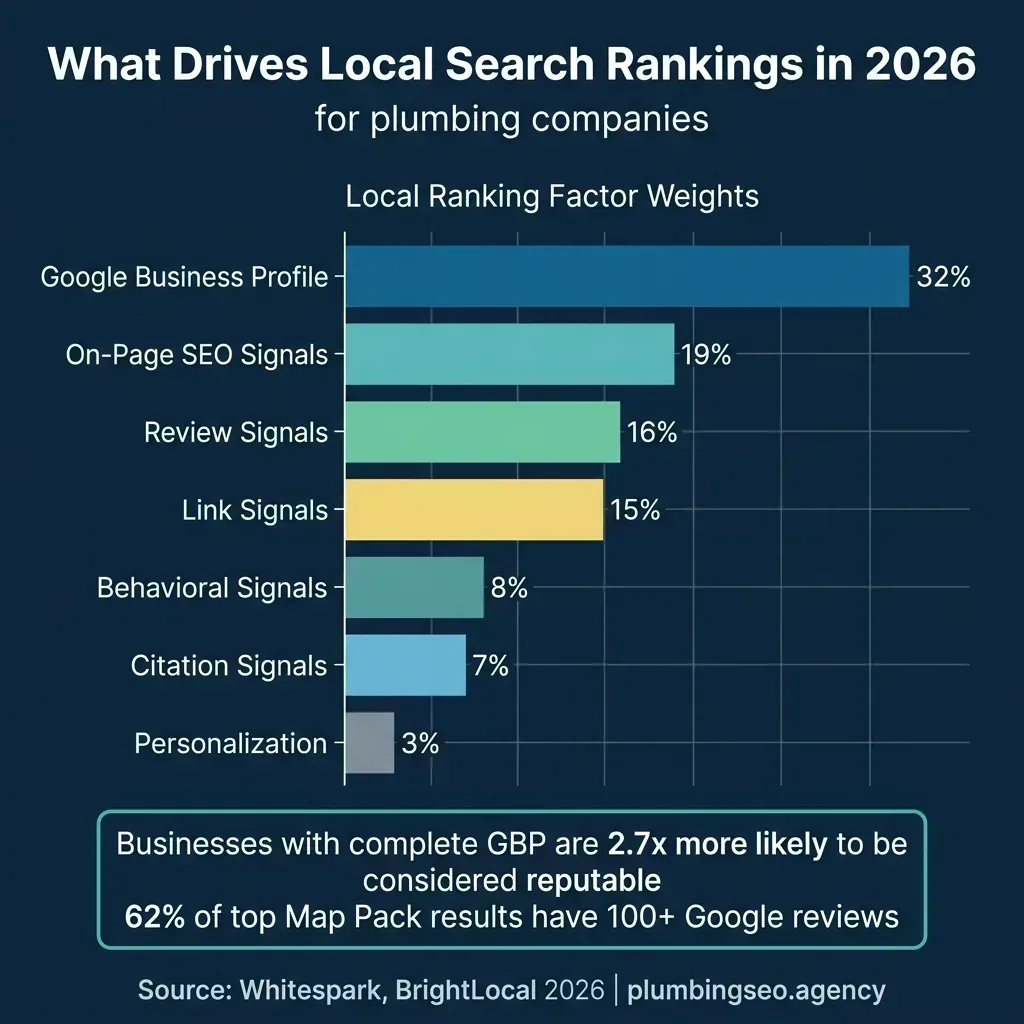
Google says local results are mainly based on relevance, distance, and prominence. Prominence includes information from across the web, including how many websites link to your business and how many reviews you have. That comes straight from Google's local ranking documentation.
For a plumbing owner, that means links are not just SEO decorations. They are proof that your company exists in a real service area, works with real people, and belongs in the local conversation when a homeowner searches for help.
Share of local search results that show business websites in Google's first ten organic results.
Local SERPs still show plenty of directory results, which is why citation cleanup is not dead work.
Business mentions also show up in local results, even when they are not traditional service pages.
Community discussions have a smaller slice, but they can shape trust before a customer calls.
Source: BrightLocal local SEO statistics.
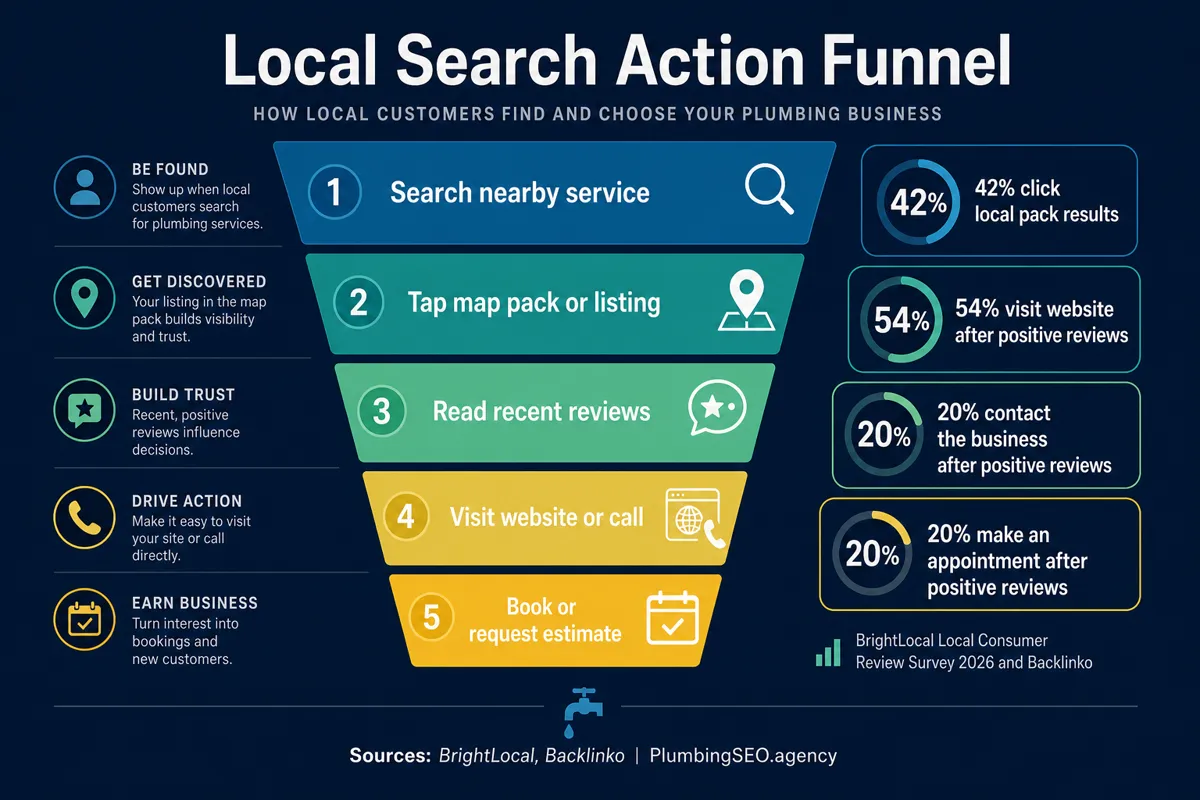
Here is the owner-side translation: your website is one signal, but it is not the only signal. Google sees directories, local mentions, reviews, press, and community pages around you. If all of those signals point to the same company, same service area, same phone number, and same type of plumbing work, your local SEO starts looking much cleaner.
Stop chasing "more links." Chase better proof.
Most bad link building starts with the wrong scorecard. An agency shows you domain authority, link count, anchor text, and a graph with enough lines to make it look important. Then the phone does not ring.
For a plumbing company, a useful backlink has four jobs:
The site is tied to your city, county, neighborhood, trade area, or service territory.
The site connects to plumbing, homes, property, construction, local business, or community life.
A real editor, association, supplier, customer, or organization chose to mention you.
If no homeowner, manager, realtor, or business owner would ever click it, be careful.
If a link does none of those things, it may still look nice in a report. That is not the same as helping you book jobs.
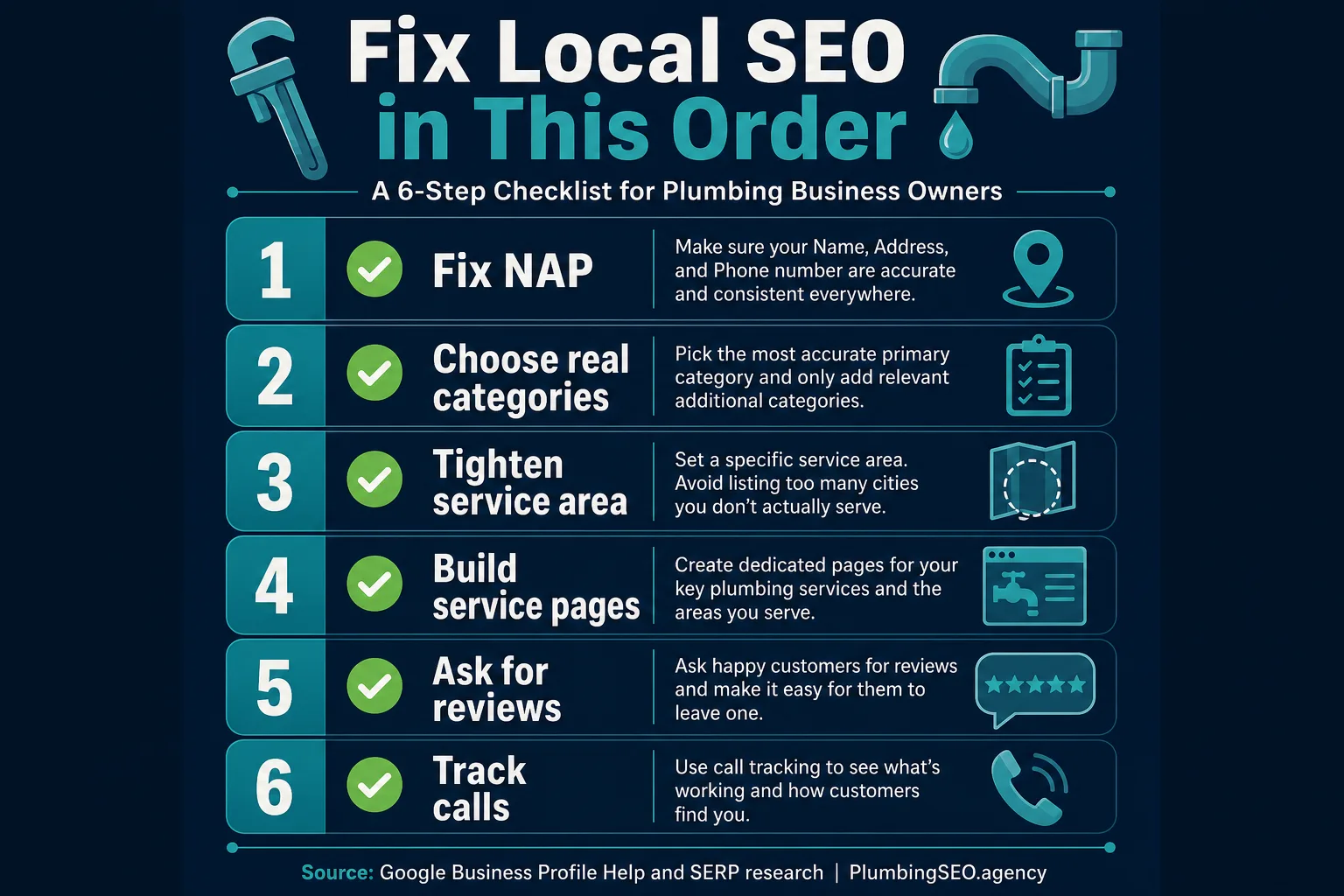
This is also where your NAP citations matter. Citations are not glamorous, but they clean up the basics: name, address, phone, website, categories, and service area. If those are wrong, earned links have to work uphill.
Match the link-building intent before you spend money
Searches like "backlinks for plumbers," "best backlinks for plumbers," and "buy backlinks for plumbers" usually come from owners who already believe they need links. The gap is not motivation. The gap is knowing which links are worth the risk, which links are just dressed-up spam, and how to turn link work into booked jobs instead of another agency report.
Use this intent filter before any campaign:
- If you need trust fast: clean citations, supplier profiles, chamber pages, association listings, and Google Business Profile consistency should come before creative outreach.
- If you need local relevance: prioritize links from the same city, county, service area, neighborhood groups, schools, events, local media, and property networks.
- If you need service relevance: earn links from manufacturers, installer directories, home-service partners, inspection resources, and guides tied to the specific plumbing work you want to rank.
- If you need conversion: make sure the destination page has a clear next step, such as the free plumbing SEO audit, a service explanation, or a useful checklist.
That is why this guide does not stop at "get links." A plumbing company needs a link plan that connects source, page, search intent, and customer action. Otherwise, the campaign may technically work while still failing the business.
Start with the relationships already on your invoice list
Cold outreach is hard because the other person has no reason to care. Warm outreach works because there is already a relationship. You buy from them, refer to them, sponsor them, work beside them, or solve problems for the same customers.
One Reddit thread about getting non-spammy links for a local plumbing business kept circling back to the same practical advice: use partnerships, supplier relationships, local providers, newsworthy local topics, and referral partners. In another local SEO discussion, people said the realistic plays for small local businesses were chambers, sponsorships, supplier links, niche directories, partnerships, and local newspapers.
That sounds plain because it is plain. Good local link building usually looks boring from the outside. Then six months later, your competitor is wondering why your drain cleaning page is above theirs.
The seven local backlink plays that do not feel like begging
Do these in order. The order matters because the first few are usually closest to money, easiest to explain, and least likely to waste your time.
1. Supplier and manufacturer listings
If you install Bradford White, Rheem, Navien, Moen, Kohler, or any other brand with a dealer or contractor finder, ask your rep whether your company can be listed. This is one of the cleanest plumbing backlinks you can get because it is industry-relevant and tied to work you already do.
The ask is not "can you give me SEO juice?" The ask is, "Can customers find us on your authorized installer page?" That is normal business language. Use that.
2. Trade associations, licensing bodies, and chambers
Chambers and trade associations are not magic, but they are steady local trust signals. BrightLocal's local link building guide points to chambers, directories, events, sponsorships, local media, and community organizations as common local link sources. For plumbers, I would check PHCC chapters, local contractor associations, state trade groups, municipal business directories, and the local chamber.
If membership costs money, judge it like an owner. Will it help recruiting, referrals, trust, bids, networking, or visibility? If the only value is "maybe a link," slow down and run the numbers.
3. Cross-trade partner pages
Plumbers work around HVAC companies, electricians, remodelers, restoration companies, builders, septic companies, waterproofing companies, and property managers. Some of those people already refer jobs back and forth.
Create a useful "trusted local partners" page on your own site first. Then ask your real partners if they have a similar page or resource list. Do not force exact-match anchor text. A branded link from a relevant local partner is cleaner than a weird anchor nobody would naturally write.
4. Local sponsorships with a useful landing page
Sponsoring a team, school fundraiser, neighborhood event, charity run, or trade school program can earn a link from a sponsor page. But the link gets stronger when it points somewhere useful.
Instead of sending every sponsorship link to your homepage, build a simple local landing page tied to the audience. Example: "Water shutoff checklist for families in [City]" for a school fundraiser, or "Spring hose bib checklist for [City] homeowners" for a community newsletter.
5. Local press with a real service angle
Local reporters do not need another article titled "Plumber Offers Great Service." They need timely local angles. Think frozen pipes before a cold snap, sump pump checks before heavy rain, lead service line updates, water conservation rules, sewer backup prevention, or what homeowners should do before calling for emergency service.
A Reddit commenter in the plumbing backlink thread suggested local stories around lead pipes and regional plumbing issues. That is the right idea. Your trade knowledge becomes linkable when it helps the whole community.
6. Unlinked mentions and broken old links
Search your company name, owner name, old sponsorships, awards, photos, and event pages. If a site mentions you but does not link, politely ask for the link. If an old link points to a dead page, ask them to update it.
This is not begging. It is housekeeping. Nobody likes broken links, and most editors would rather fix a citation than leave readers stranded.
7. Local resources worth sharing
Most plumbing blogs do not earn links because they answer generic questions already answered 500 times. "How to unclog a drain" is not enough. A local resource has a better shot.
Examples that can earn local links:
- Winter pipe protection checklist for older homes in your city.
- Neighborhood guide to hard water symptoms and fixture damage.
- Storm prep checklist for basements, sump pumps, and floor drains.
- Homebuyer plumbing inspection checklist for local realtors.
- Water heater permit and code basics for your service area.
Once the page exists, send it to people who already serve that audience: realtors, HOAs, property managers, city resource pages, local blogs, and neighborhood newsletters. If the page is useful, the ask does not feel dirty.
Suppliers, associations, chamber, BBB, major citations, existing profiles.
Partners, property managers, vendors, referral sources, non-competing trades.
A checklist, city guide, seasonal resource, or realtor-facing inspection page.
Local press, newsletters, event organizers, schools, podcasts, and resource pages.
What to avoid, even when competitors are doing it
Plumbing is competitive. I understand why owners get tempted when a competitor seems to be buying links and winning. But the short road can get expensive fast.
Google's spam policies call out buying or selling links for ranking purposes, excessive link exchanges, automated link creation, low-quality directory links, hidden links, and low-value content made mainly to manipulate ranking signals. Google also says paid advertising and sponsorship links are fine when they use rel="nofollow" or rel="sponsored".
They usually produce random links nobody local will ever see.
If the site exists mainly to pass links, it is not a real local trust signal.
Partner links are fine when they make sense. A link ring is a different animal.
If money changed hands, keep it honest with proper nofollow or sponsored attributes.
In my opinion, the safest rule is this: if you would be embarrassed to explain the link to a customer, do not build it.
Can plumbers buy backlinks safely?
The honest answer: plumbing companies can pay for legitimate exposure, but they should not buy ranking links. Those are different things. A chamber membership, charity sponsorship, local newspaper ad, industry association listing, or event sponsor page can be legitimate business activity. A bulk package promising "50 high DA backlinks" for a plumbing website is usually a warning sign.
Use this owner test before paying for anything that includes a link:
| Question | Healthy answer | Risky answer |
|---|---|---|
| Would the placement make sense without SEO? | Yes, customers, partners, or local readers may see it. | No, the site exists mostly to sell links. |
| Is the site relevant? | Local, plumbing, home services, business, property, or community relevance is clear. | Random blog with unrelated posts and no local audience. |
| Is payment transparent? | Sponsorship or advertising is clear, with nofollow or sponsored attributes when appropriate. | The seller promises hidden ranking power or exact-match anchors. |
| Can it send a real lead? | A homeowner, realtor, manager, or local organization might click. | No plausible customer would ever visit the page. |
If a vendor cannot explain the link source, audience, destination, and risk in plain English, do not buy it. Spend that money on fixing your local SEO foundation, creating a useful service-area resource, or getting a legitimate local sponsorship that earns trust outside of Google too.
Where to send local backlinks
Most plumbing companies point every link to the homepage. That is easy, but it leaves money on the table.
Send links to the page that best matches the reason for the mention:
| Link source | Best destination | Why it works |
|---|---|---|
| Manufacturer installer page | Water heater or fixture service page | Matches the brand and service the customer is checking. |
| Chamber or association | Homepage or about page | Supports broad local business trust. |
| School or event sponsorship | Local resource page | Gives that audience something useful instead of a sales page. |
| Realtor or property manager | Inspection checklist or emergency plumbing page | Fits the referral relationship and drives qualified calls. |
| Local press quote | Related blog post or service guide | Lets readers continue learning from the same expert. |
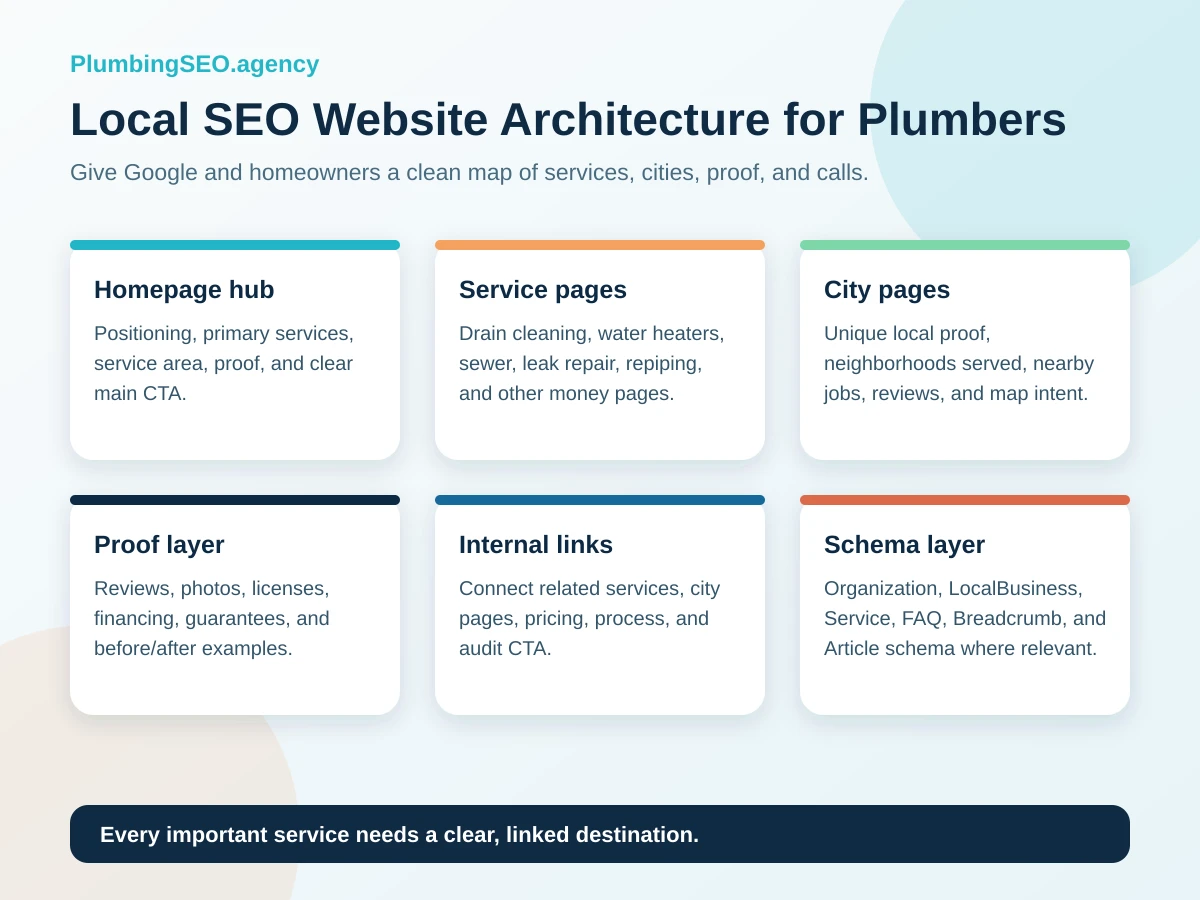
If you are building links to service pages, make sure those pages deserve the attention. A thin drain cleaning page with no local proof, no photos, no FAQs, and no clear call button is like sending a truck to a job with half the fittings missing. Fix the page first. Our guide to building service pages that rank walks through that foundation.
For PlumbingSEO.agency's own conversion path, this guide supports three internal destinations: the homepage for broad plumbing SEO intent, the services hub for owners comparing SEO help, and the plumbing SEO service page for buyers who want the full done-for-you program. The free audit link stays in the CTA because link-building intent should end with a practical next step, not a vague sales pitch.
A 30-day backlink plan for a plumbing company
You do not need 100 links this month. You need momentum, clean records, and a few links that make sense in the real world.
Export current backlinks, citations, brand mentions, sponsorships, supplier pages, association memberships, and partner lists.
Correct NAP issues, reclaim broken links, request links on existing mentions, and complete major local profiles.
Create a local checklist or guide tied to weather, homes, plumbing risk, realtors, landlords, or property managers.
Contact suppliers, partners, associations, local editors, event pages, and community groups with a specific reason.
How to measure whether it is working
Do not measure this by link count alone. That is how owners get talked into junk.
Track these instead:
- Local referring domains: how many are tied to your city, trade, service area, or customer base.
- Destination page movement: whether linked service pages and city pages move for real search terms.
- Google Business Profile actions: calls, direction requests, website clicks, and profile interactions.
- Referral visits: whether local links send actual people, not just crawler activity.
- Booked jobs: the number that pays the crew and keeps trucks on the road.
If you are not already tying SEO work to calls and jobs, start there. The plumber marketing ROI guide will help you sort call tracking, booking rate, close rate, and cost per booked job.
Backlink qualification checklist for plumbers
Before you approve a link-building opportunity, score it with this quick checklist. A good opportunity does not need to pass every line, but it should pass enough that an owner can defend it without needing SEO jargon.
- Local proof: the source is tied to your service area, customer base, or local business community.
- Trade proof: the source connects to plumbing, homes, property, construction, real estate, facilities, or emergency repair.
- Editorial proof: someone real chose the placement because it helps their audience.
- Destination fit: the link points to the page that answers the reader's next question.
- Anchor fit: the anchor text is natural, usually branded, URL-based, or descriptive without looking forced.
- Customer value: a homeowner, property manager, realtor, or local business could reasonably click.
- Policy fit: paid sponsorships are disclosed or qualified when appropriate; manipulative paid links are rejected.
That checklist is stricter than most backlink packages, and that is the point. Plumbing SEO is local reputation work. The closer the link is to a real relationship, the safer it usually is.
The practical takeaway
Local backlinks are not about begging. They are about making your real-world reputation visible online.
Start with the people who already know your work. Clean up your listings. Get listed where customers already look. Build one genuinely useful local asset. Then ask for links where the link helps the reader, the publisher, and your company.
That is slower than buying a pile of links. It is also the kind of slow that compounds. Around here, we like slow when it keeps the phone ringing for the right reasons.
Local Backlink FAQs for Plumbing Companies
Want to know which local links your plumbing company is missing?
We will look at your citations, local competitors, service pages, and backlink gaps, then show you the practical wins worth chasing first.
Run My Free SEO Leak CheckNo spammy link packages. No mystery reports. Just the next useful move.