
- HomeAdvisor and Angi can fill a slow week, but rented leads are not the same as lead flow you own.
- The strongest alternatives for plumbers are Google Local Services Ads, Google Business Profile, local SEO pages, reviews, referrals, and call tracking.
- Do not quit paid lead sources cold. Track booked jobs first, then shift budget toward channels that send calls directly to your shop.
If your plumbing company depends on HomeAdvisor, Angi Leads, or another shared-lead marketplace, you already know the feeling. The phone rings, but it is not really your phone ringing. It is the platform sending the same homeowner around town while you race three other contractors to call first.
That can help when the board is empty. It can also make a busy week look better than it really is. You paid for the chance to chase the job. You did not build a system that makes homeowners ask for your company by name.
In my opinion, the best HomeAdvisor alternative for plumbers is not one single platform. It is a lead mix you control. Keep the fast channels that produce booked work. Build the owned channels that make your company less dependent on rented leads every month.
This guide is for plumbing owners who want calls, booked jobs, and a little less nonsense in the marketing budget. Fancy dashboard talk can wait. The phone tells the truth.
First, be honest about what HomeAdvisor is doing for you
HomeAdvisor can create demand because homeowners already search there. That is the good part. The hard part is the model. You are usually paying before you know whether the homeowner is serious, whether the job fits your service area, and whether another company already called them.
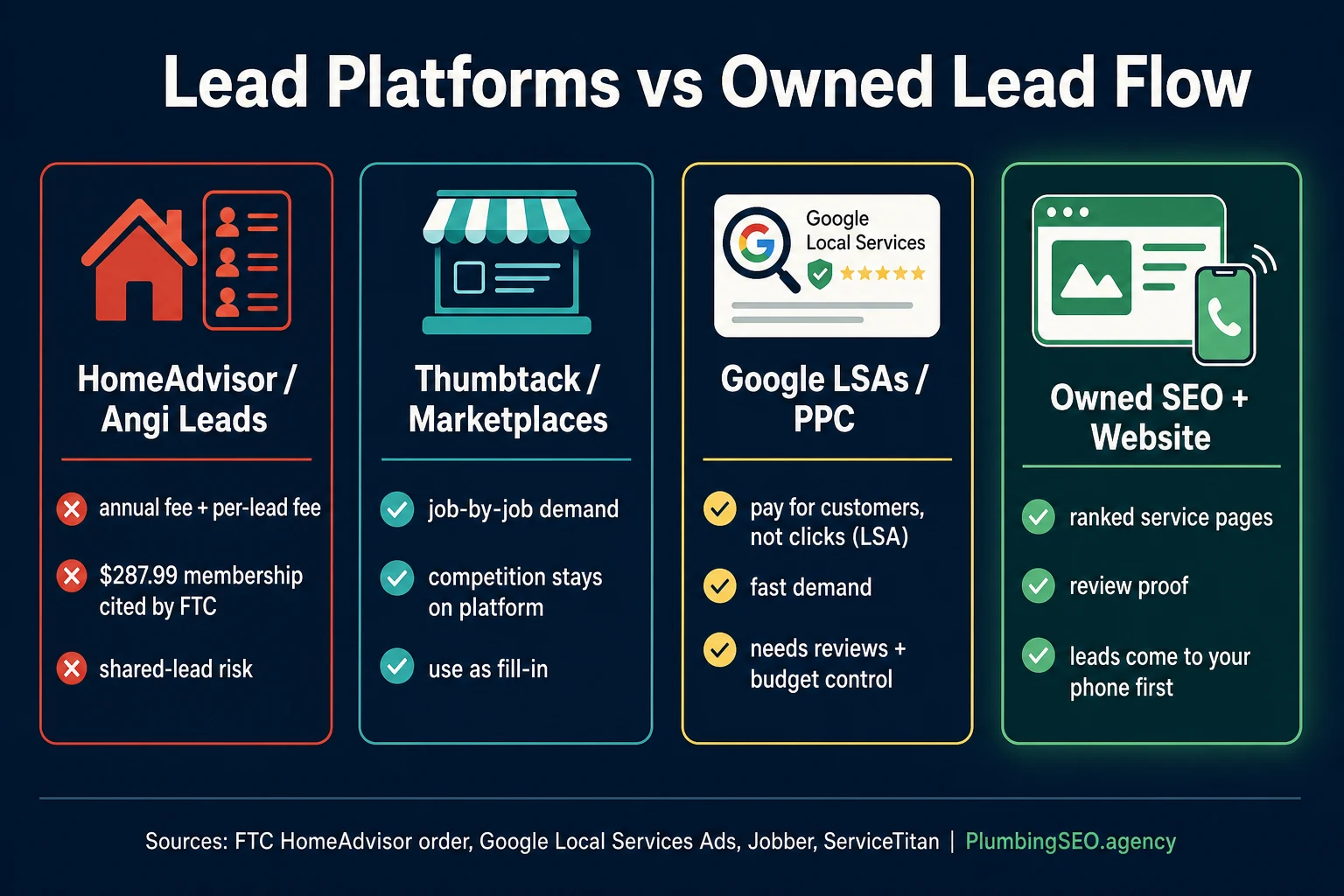
The FTC's HomeAdvisor order is worth reading because it explains why contractors have been skeptical about lead quality claims. The FTC said HomeAdvisor, also doing business as Angi Leads, generally charged service providers a $287.99 annual membership fee plus separate lead fees, and the order required up to $7.2 million in redress for deceptive lead marketing claims.
That does not mean every lead source is useless. It means you should measure lead sources like an owner, not like a platform sales rep.
| Question to ask | Why it matters for a plumber | What to track |
|---|---|---|
| Did the call connect? | A paid lead that never answers still burns budget. | Connected calls vs missed or dead leads |
| Was the job in your service area? | Wrong-area calls waste dispatch time and office time. | ZIP code, city, drive time, service type |
| Was it the right job type? | A $99 drain job and a water heater replacement should not be valued the same. | Job category, invoice value, gross profit |
| Did it book? | The lead cost is not the real number. Cost per booked job is. | Booked jobs, sold jobs, cancelled appointments |
The plumber-friendly alternative stack
The goal is not to replace one rented platform with another rented platform and call it fixed. The goal is to build a stack where each channel has a job.
1. Google Local Services Ads for fast, high-intent calls
Google Local Services Ads can be a better short-term replacement when you need calls now. Google describes LSAs as a way to reach local customers where businesses pay for customers, not clicks. For plumbers, that matters because emergency searches are high intent. Somebody with water on the floor is not reading ten blog posts before they call.
Use LSAs carefully. Set service areas tightly. Watch dispute rules. Track which calls become booked jobs. If your review count is weak or your intake team is slow, LSAs will expose that fast.
2. Google Business Profile and reviews for local trust
A strong Google Business Profile is not a lead marketplace. It is your local proof. Photos, services, reviews, service areas, Q&A, and recent updates all help a homeowner decide whether you look like the shop to call.
If your profile is thin, start there before you buy more leads. Add real truck photos, crew photos, completed job photos, service categories, and answers to common questions. If you need a deeper checklist, use our guide to optimizing a plumber Google Business Profile.
3. Local SEO pages that catch jobs before marketplaces do
Local SEO is how you stop waiting for a platform to rent you the customer. Build pages around the work you actually want: emergency plumbing, drain cleaning, water heaters, sewer repair, repiping, and the cities you serve.
This is where a real plumber digital marketing plan earns its keep. The page has to answer the homeowner's problem, prove you serve their area, show trust signals, and make calling easy. A ranking that does not turn into a call is just a shiny wrench you never use.
4. Call tracking and lead scoring so you know what to cut
Most wasted lead spend hides in messy tracking. The owner sees a bill. The office remembers a few calls. Nobody knows which source actually filled the schedule.
Put every source through the same simple scorecard. You do not need a complicated dashboard to start. You need source, call status, job type, booked status, invoice value, and notes from the dispatcher. If you want a full setup, read our lead tracking guide for plumbers.
Keep a lead source when it:
- Produces connected calls in your service area.
- Books profitable job types, not only tire-kickers.
- Lets you control budget, categories, and geography.
- Shows a real cost per booked job you can live with.
Cut or cap it when it:
- Sends repeated dead leads or wrong-area requests.
- Creates price shoppers who never book.
- Locks you into spend without clear job-level proof.
- Distracts the office from higher-quality direct calls.
Use marketplaces as fill-in, not your foundation
Thumbtack, Porch, Houzz, Nextdoor, Yelp, Facebook groups, and trade-specific lead companies can all have a place. The mistake is treating them like the main pipe feeding the whole company.
That pipe can clog whenever pricing changes, lead quality drops, a category gets more competitive, or the platform decides your profile is less visible this month. Nobody from a platform is coming to help you make payroll if the calls dry up.
Here is a practical way to think about it:
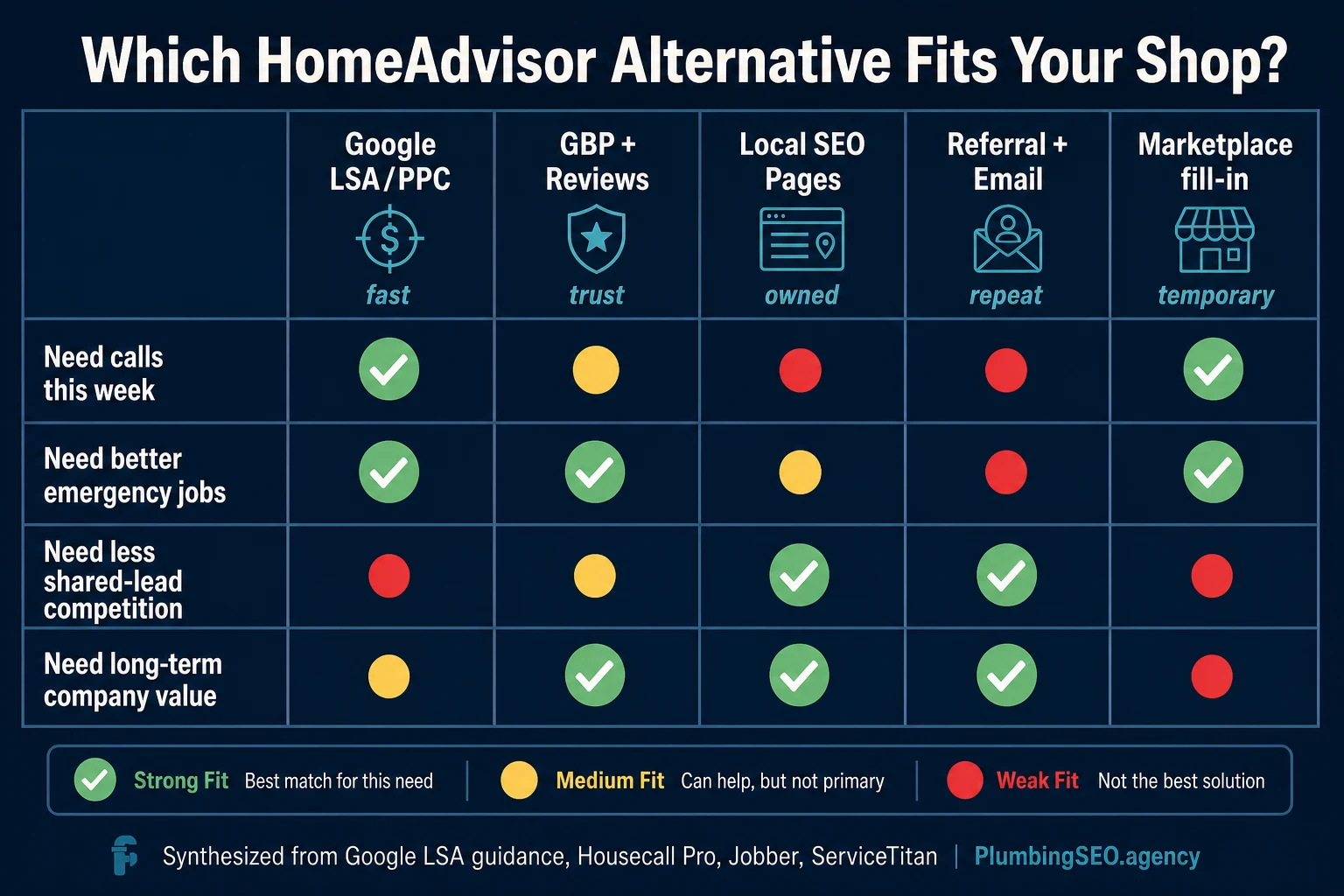
| Channel | Best use | Owner warning |
|---|---|---|
| Google LSAs | Fast local calls for urgent work. | Review strength and call handling matter a lot. |
| Thumbtack or marketplaces | Filling short gaps or testing small job demand. | Do not confuse activity with profitable booked work. |
| GBP and reviews | Trust building for Maps and branded searches. | Needs weekly upkeep, not once-a-year attention. |
| Local SEO pages | Compounding direct calls from service and city searches. | Takes time, but builds an asset you own. |
| Referral and email | Repeat work, maintenance plans, and customer reactivation. | Only works if the customer list is clean and used. |
Build owned lead flow in the right order
If HomeAdvisor is currently feeding part of your schedule, do not unplug it in a fit of rage on a Tuesday morning. That feels good for about ten minutes. Then the board looks light and everyone starts blaming the website.
Shift the budget in stages. Track the truth first. Fix the direct-call assets second. Then cut the sources that fail the scorecard.
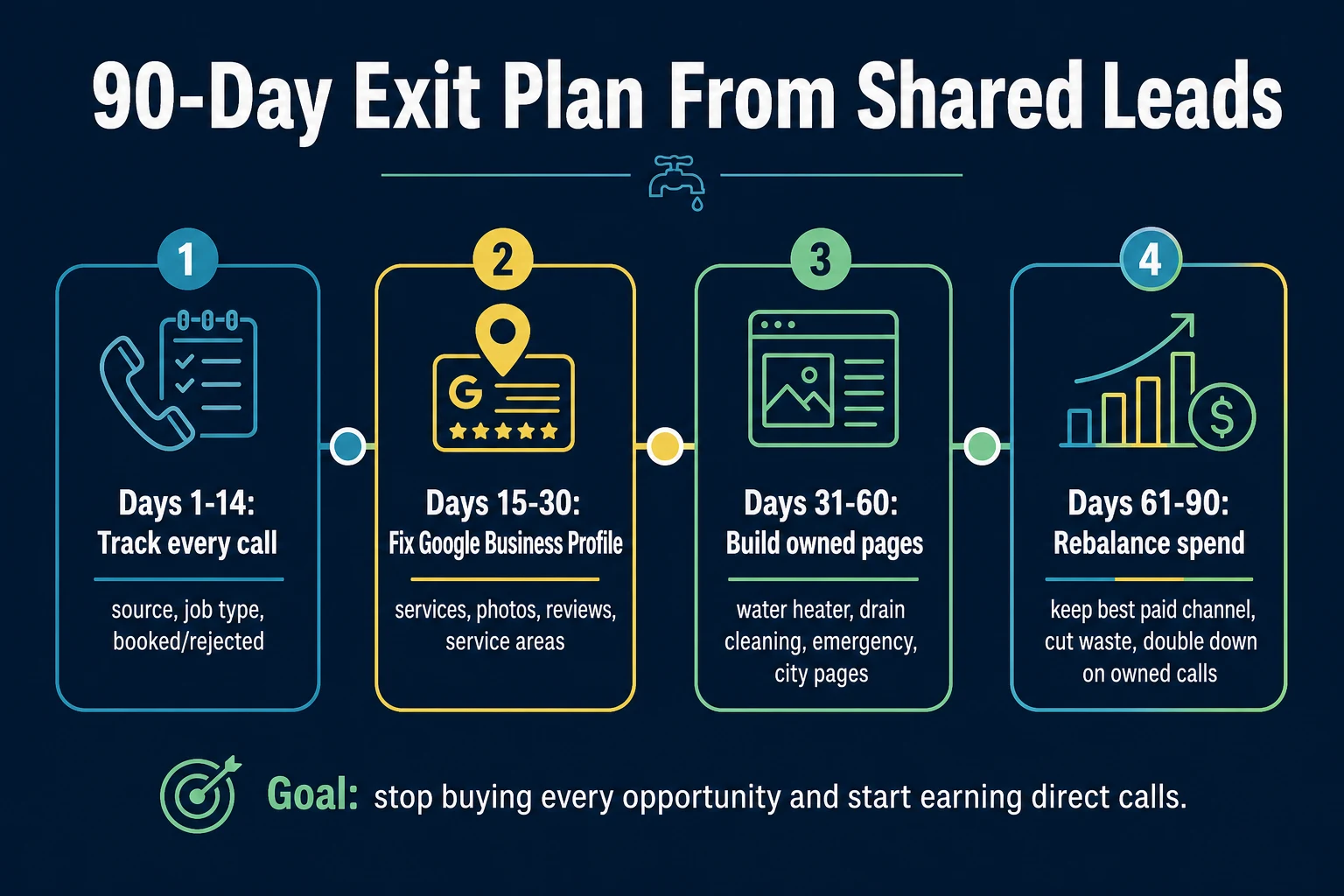
Days 1 to 14: label every lead
Start with simple call source tracking. If you use call tracking numbers, make sure the office still asks how the caller found you. Human notes catch things software misses. Write down whether the call connected, what the customer needed, where they were, and whether the job booked.
Days 15 to 30: tighten your Google presence
Update your Google Business Profile categories, services, photos, service areas, and review process. Add answers to the questions homeowners ask before they call. If your profile looks abandoned, a homeowner may assume the truck is too.
Days 31 to 60: publish the pages that match real jobs
Use your call notes to decide what pages to build first. If drain cleaning calls are profitable, build a better drain cleaning page. If water heater replacements are the work you want, make that page stronger. If certain towns produce good jobs, support them with local proof and service-area content.
Good SEO for plumbers is not a pile of blog posts with city names swapped in. It is a set of useful pages that make a homeowner feel, "These people handle my problem in my area." That is the point where search visibility starts turning into calls.
Days 61 to 90: rebalance spend
Now compare sources by booked jobs, not lead volume. Keep what works. Cap what only works sometimes. Cut what creates office chaos. Put the savings into the next owned asset: service pages, reviews, content, call tracking, or a better intake process.
What I would not do
I would not replace HomeAdvisor with three more platforms and call it strategy. That only spreads the same problem across more invoices.
I would not buy SEO without call tracking. If nobody can show which calls turned into jobs, you are back to guessing.
I would not chase every city and every service at once. Pick the profitable jobs first. Emergency plumbing, drain cleaning, water heaters, sewer work, leak repair, and repiping all need different proof. One strong page that books jobs beats ten thin pages that make Google shrug.
I would not let a marketing company talk only about rankings. Rankings matter because they help the right customer call before they call another shop. If the report looks good but the phone is quiet, something is leaking.
The simple scorecard for replacing HomeAdvisor
Before you move serious budget, grade every alternative with this scorecard. Keep it boring. Boring numbers beat exciting sales calls.
| Scorecard item | Green flag | Red flag |
|---|---|---|
| Lead ownership | The caller contacts your company directly. | The platform controls the relationship and remarkets the lead. |
| Job fit | Calls match your best services and service area. | Lots of low-value, wrong-area, or non-service calls. |
| Speed to results | Paid channels can create calls while SEO ramps up. | You cut everything before owned channels are ready. |
| Long-term value | Reviews, pages, and brand searches keep compounding. | Every month starts at zero unless you keep paying. |
If you need a broader channel comparison, our guide to getting plumbing leads breaks down the wider mix. If you are trying to understand the real math, compare each source against your plumber cost per lead and cost per booked job.
Bottom line
HomeAdvisor alternatives are useful only if they move you toward control. Google LSAs can help now. GBP and reviews help customers trust you. Local SEO pages help homeowners find you before they reach a marketplace. Referrals and email bring past customers back. Marketplaces can fill gaps.
The goal is not to be anti-platform. The goal is to stop depending on a platform for every opportunity. Build the channels that make your plumbing company easier to find, easier to trust, and easier to call directly.
Frequently Asked Questions
The best alternative is usually a mix of Google Local Services Ads for fast calls, Google Business Profile and reviews for trust, and local SEO pages for long-term direct leads. One platform rarely solves the whole problem.
Not without tracking. If it books profitable jobs, cap it and measure it. If it sends dead leads, wrong-area calls, or low-margin jobs, reduce spend and shift budget into owned channels.
They can be better for plumbers who have strong reviews, tight service areas, and good call handling. LSAs still need budget control and tracking because fast calls do not always mean profitable booked jobs.
Expect SEO to build over months, not days. A practical plan is to keep the best paid source running while you improve GBP, reviews, service pages, city relevance, internal links, and call tracking.
Track source, connected calls, service area, job type, booked jobs, sold jobs, invoice value, and notes from the dispatcher. Lead volume alone is not enough.
Yes, when it has strong service pages, local proof, reviews, clear calls to action, tracking, and useful content around the problems homeowners search for. The website has to work like a sales asset, not an online brochure.
Want lead flow you own?
We can review where your plumbing leads are coming from, which sources are wasting budget, and which SEO pages should be built first.
Run My Free SEO Leak Check