
- CRO is not a marketing buzzword for plumbers. It is the work of turning more existing visitors into phone calls, quote forms, chats, and booked jobs before you buy more traffic.
- The first fixes are usually practical: click-to-call above the fold, proof near the CTA, shorter forms, faster mobile pages, and call tracking that separates real jobs from junk leads.
- Do not test random button colors. Start with GA4 key events, Google Ads call conversion tracking, and a weekly leak report so every change is tied to booked plumbing revenue.
If your plumbing website gets visitors but the phone still feels quiet, conversion rate optimization is where you look next. SEO earns attention. Local SEO earns visibility in the right service areas. CRO makes sure that attention turns into calls from homeowners who actually need a plumber.
For a plumbing company, a conversion is usually not an online checkout. It is a tap on the phone number, a quote form, a booking request, a chat that becomes a dispatch, or a tracked call long enough to count as a real lead. Google Analytics describes events as specific interactions on a website, and lets important business actions become key events in reports. Google Ads also documents phone call conversion tracking so advertisers can see which ads, keywords, and campaigns drive valuable calls. Those two ideas matter because plumber owners need more than traffic; they need measured demand.
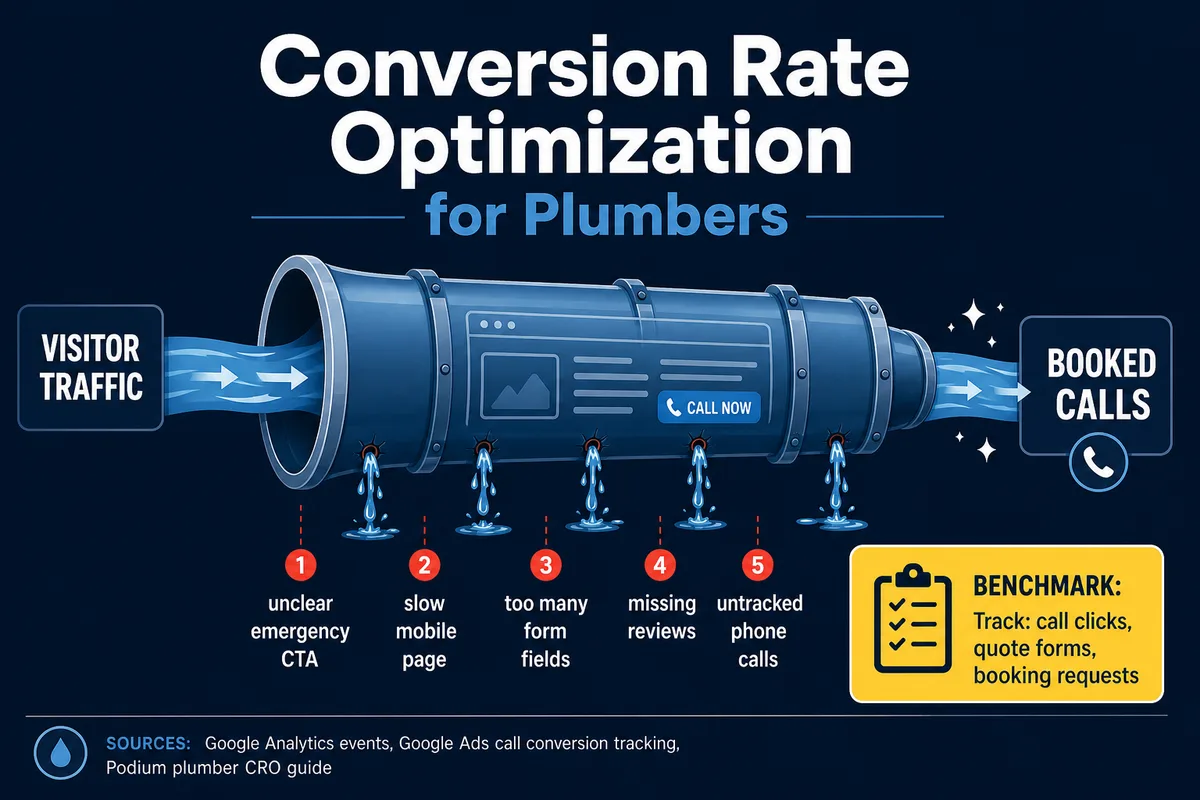
What conversion rate optimization means for a plumbing company
Conversion rate optimization for plumbers means improving the pages, calls to action, proof, forms, tracking, and follow-up path that turn website visitors into revenue opportunities. It is different from simply buying more leads. If 100 homeowners visit a drain cleaning page and only two call, the owner can either pay for more traffic or fix the page so more of those same visitors take action.
That is why CRO sits next to SEO for plumbers, not after it as an optional extra. A plumber can rank well and still lose calls if the mobile page hides the phone number, the headline does not match the emergency search, reviews are buried, or the form asks for too much before the homeowner trusts the company.
| Plumbing visitor intent | What they need to see fast | Best conversion action |
|---|---|---|
| Emergency leak, clog, no hot water | Availability, service area, phone number, trust proof | Tap-to-call or urgent booking |
| Price shopper comparing plumbers | Clear service scope, reviews, financing or estimate language | Quote request or call |
| Researching a bigger job | Photos, process, licenses, case examples, next-step CTA | Estimate form or consultation |
| Local SEO visitor from Maps or organic | Nearby proof, neighborhood language, consistent NAP | Call, directions, or service-area page click |
What generic CRO advice misses for plumbers
Generic CRO guides often talk about funnels, tests, personalization, and checkout design. That is useful, but a plumber's conversion path is more urgent and phone-heavy. The homeowner may be standing in water, comparing three companies on a phone, and ready to call the first trustworthy option that looks available.
Current conversion-rate guides commonly recommend stronger CTAs, simplified forms, reviews, live chat, better UX, and clearer benefits. Podium's plumber-specific CRO article frames conversion rate as the percentage of people who complete intended actions such as forms, and notes that website CRO focuses on getting more customers from existing traffic instead of only chasing more visitors. That is a good starting point, but plumber owners also need call quality, dispatch fit, service-area matching, and close rate in the same conversation.
The plumber-specific CRO checklist
- Make calling obvious. Put the phone CTA in the header, mobile sticky bar, hero section, and service-page decision points.
- Match the emergency. A water heater page should not use the same promise as a sewer repair page. The headline should match the job and the service area.
- Place trust before the ask. Reviews, licenses, years in business, real job photos, financing, and guarantee language should appear before or beside major CTAs.
- Shorten forms. Ask for the minimum needed to respond: name, phone, service needed, ZIP or city, and urgency. Long diagnosis forms belong after contact, not before it.
- Separate leads from jobs. Track call clicks, form submissions, qualified calls, booked jobs, and sold jobs separately. Otherwise a page can look successful while dispatch gets poor-fit calls.
How to implement CRO without guessing
Start with a simple measurement loop. In Google Analytics, mark important actions as key events after you create or identify events that represent the action. For plumbers, that usually means click-to-call, form submit, booking request, chat started, and thank-you page visits. In Google Ads, use phone call conversion tracking so calls from ads, calls to website numbers, and mobile number clicks can be measured with the right minimum call length.
- Define the money actions. Decide what counts as a lead, a qualified lead, a booked job, and a sold job.
- Audit the top five pages. Usually homepage, drain cleaning, water heater, emergency plumbing, and the highest-traffic blog or location page.
- Fix obvious friction first. Mobile phone visibility, page speed, headline clarity, reviews near CTAs, and form length normally beat advanced testing.
- Connect CRO to local visibility. When discussing service areas, review proof, and Maps traffic, use the same location signals described in advanced local SEO for plumbers.
- Review weekly. Compare sessions, calls, forms, booked jobs, and close rate by page. Keep wins; roll back changes that increase junk leads.
Common CRO mistakes that cost plumbers calls
The biggest mistake is treating all conversions as equal. A homeowner who accidentally taps a phone number is not the same as a qualified sewer repair call. A form from outside the service area is not the same as a booked water heater replacement. CRO should improve lead quality as well as lead volume.
| Mistake | Why it hurts | Better fix |
|---|---|---|
| Only tracking form fills | Misses the phone calls that drive emergency plumbing work | Track call clicks, qualified calls, forms, and booked jobs |
| Using one CTA on every page | Emergency, estimate, and research visitors need different next steps | Match CTA language to job type and urgency |
| Hiding reviews below the fold | Homeowners compare trust fast before calling | Place recent reviews near the first call or booking CTA |
| Optimizing for more leads only | Can create more spam, wrong-area, or low-value calls | Measure qualified lead rate and sold-job feedback |
What to measure after the first fixes
Once the obvious leaks are fixed, track the numbers that connect marketing to the dispatch board. At minimum, review page sessions, click-to-call rate, form completion rate, qualified call rate, booked job rate, and revenue by source. If SEO traffic rises but booked jobs stay flat, CRO may be the leak. If calls rise but close rate falls, the page may be attracting wrong-fit visitors or making promises dispatch cannot keep.
For owner-led teams, the next action is simple: pick one high-value service page, run a one-page conversion audit, and fix the first three leaks before buying more traffic. If you want help finding those leaks, contact PlumbingSEO.agency or start with a free SEO leak check.
Conversion rate optimization FAQs for plumbers
It helps the same traffic produce more phone calls, quote forms, chats, and booked jobs. Instead of only paying for more visitors, CRO removes the page-level friction that stops qualified homeowners from contacting the plumbing company.
A plumber can handle the basics: clearer phone CTAs, shorter forms, better reviews, and service-area proof. Hire help when tracking is unreliable, paid traffic is expensive, or you need tests tied to calls, booked jobs, and revenue instead of surface metrics.
Obvious fixes can show movement within days or weeks if the page already gets traffic. Reliable testing takes longer because you need enough visitors and calls to separate real improvement from normal day-to-day swings.
Benchmarks vary by service, traffic source, urgency, and market. Treat public averages as directional only. A better goal is to improve your own page-level call, form, qualified lead, and booked job rates without increasing junk leads.
Track click-to-call, form submissions, booking requests, qualified call duration, source, landing page, service needed, and booked job status. Those metrics show whether a page creates real plumbing opportunities, not just more clicks.
Want to find the leaks before buying more traffic?
We will review your plumbing website, local visibility, call path, and tracking setup so you can see where qualified visitors stop before they book.
Run My Free SEO Leak Check