
- If the phone stopped ringing from Google, first separate the problem: Maps visibility, organic rankings, or conversion tracking. Each has a different fix.
- The most common plumber ranking leaks are weak Google Business Profile signals, missing service/city pages, thin titles, indexation problems, slow mobile pages, weak reviews, and no local authority.
- Do not rebuild everything at once. Run the 30-day checklist below, measure calls and booked jobs, and fix the highest-impact leak first.
First, Diagnose Where You Are Not Ranking
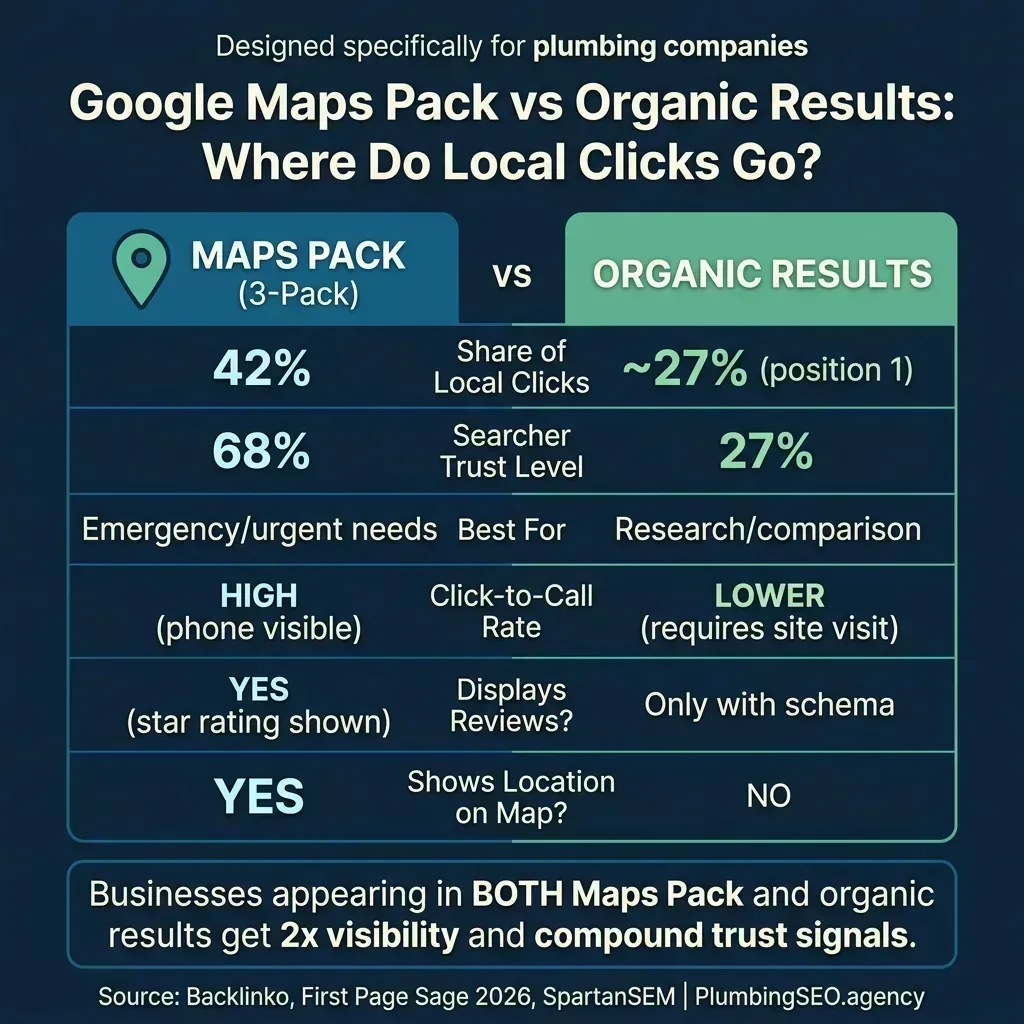
When a plumbing owner says, “we are not ranking on Google,” it can mean three different things. Your company might be missing from the Google Maps pack, buried in normal organic results, or getting impressions but no calls because the page or tracking setup is broken. Treating all three as “SEO is not working” leads to random changes and wasted months.
Start by searching the same way a homeowner would: emergency plumber near me, water heater repair [city], drain cleaning [city], and your brand name. Check desktop and mobile, then compare the results against Google Search Console, your Google Business Profile performance data, and your call tracking. Google explains local ranking as a combination of relevance, distance, and prominence; your checklist needs to test all three.
The 10-Minute Ranking Triage
- Brand search: Search your company name. If the profile or site does not appear, start with verification, indexation, and NAP consistency.
- Core service search: Search “plumber [city]” and “emergency plumber [city]” from inside your service area. Note whether you are missing from Maps, organic, or both.
- Money-service search: Search “water heater repair [city],” “sewer line repair [city],” and “drain cleaning [city].” These reveal missing service-page coverage.
- Lead check: Click your own mobile result once and verify whether the phone number is visible, tap-to-call works, and the landing page answers the exact service problem.
Google Business Profile Problems That Keep Plumbers Out of Maps
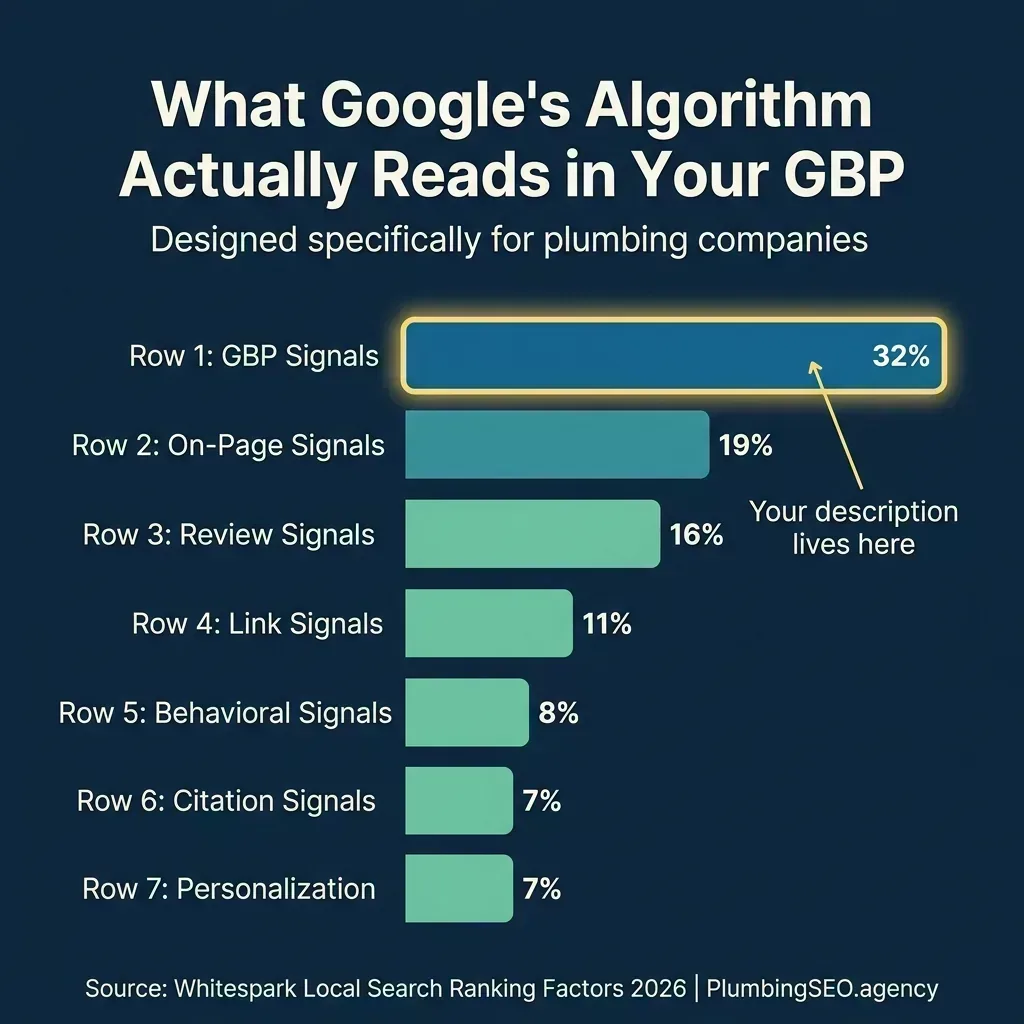
If your website ranks but your Google Business Profile is invisible in the map pack, the leak is usually local relevance or trust. Plumbing is a proximity-heavy category, so you cannot “content” your way around a weak or confusing profile. Your GBP must clearly prove what you do, where you do it, and whether customers trust you enough to call.
Profile Category and Service Area Mismatch
Your primary category should match the core business, not a broad home services label. Then confirm that service areas, business hours, appointment URLs, services, and descriptions are consistent with the actual pages on your website. If your profile says “water heater installation” but the site has no dedicated water heater page, Google receives mixed signals.
Review Velocity and Response Quality
A plumbing company with fresh, genuine reviews may be more useful to customers than one with a large but stale review count. Ask every eligible customer for honest feedback in their own words without supplying the service, city, keywords, or rating. Respond like a real owner, not a templated bot, and keep private job details private.
Suspension and Trust-Risk Signals
Ranking drops sometimes come from compliance risk rather than content weakness. Check whether the profile name is spammy, the address is hidden correctly for a service-area business, the phone number matches your site, and the website URL resolves to a live page. If the profile is suspended or partially disabled, solve that before touching title tags.
Website Problems That Hide Your Plumbing Company in Organic Search
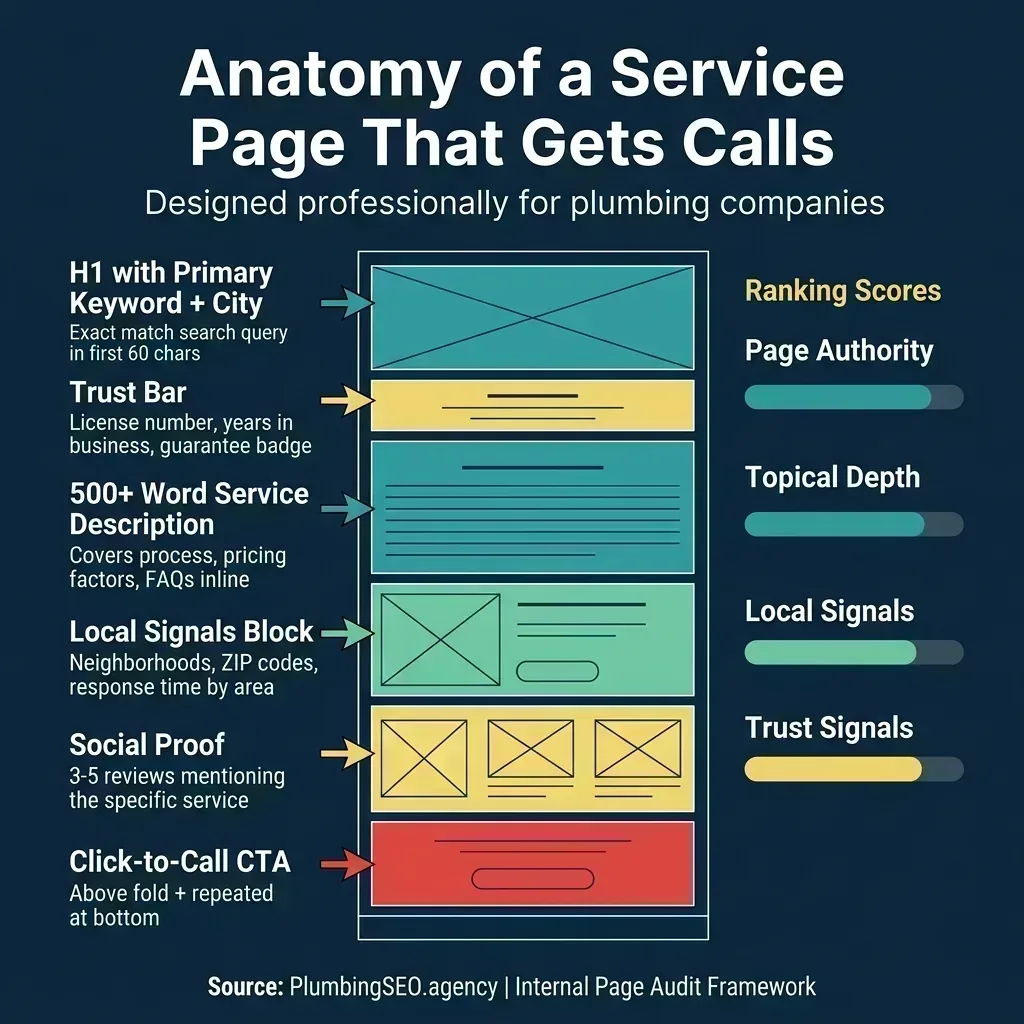
Organic ranking problems usually show up when the site has no page that deserves to rank for the query. A homepage cannot carry every city, service, and emergency intent. Google’s SEO Starter Guide emphasizes making pages useful, descriptive, and easy to navigate; for plumbers, that means every important service should have a page that matches how customers search.
Missing Service Pages
If you want to rank for “tankless water heater installation,” “sewer camera inspection,” “slab leak repair,” or “hydro jetting,” each topic needs a page with pricing context, symptoms, process, service-area proof, FAQs, and a clear call path. A single “services” page with a bullet list is rarely enough in a competitive market.
Missing City and Service-Area Support
City pages are not magic, and thin doorway pages can hurt trust. But a plumbing company serving multiple towns needs a clear service-area structure: main service pages, useful city pages where you have real coverage, and internal links that connect the two. Mention dispatch realities, neighborhoods, permits, water conditions, and real job types where accurate.
Weak Titles and Search Intent Mismatch
A title like “Services | ABC Plumbing” does not tell Google or the customer enough. Use page titles that match intent: “Emergency Plumber in Austin, TX,” “Water Heater Repair in Round Rock,” or “Drain Cleaning for Homes in Plano.” The page itself must then deliver on that promise with the right content and call-to-action.
- List your 10 most profitable services and verify each has a dedicated, indexable page.
- Search each service + main city and note which competitor page type ranks: homepage, service page, city page, directory, or LSA.
- Open the ranking page and ask: does this answer the homeowner’s problem better than yours?
- Add internal links from the homepage, service index, blog posts, and related city pages to the most important money pages.
Technical Problems: Indexed, Fast, Crawlable, and Connected
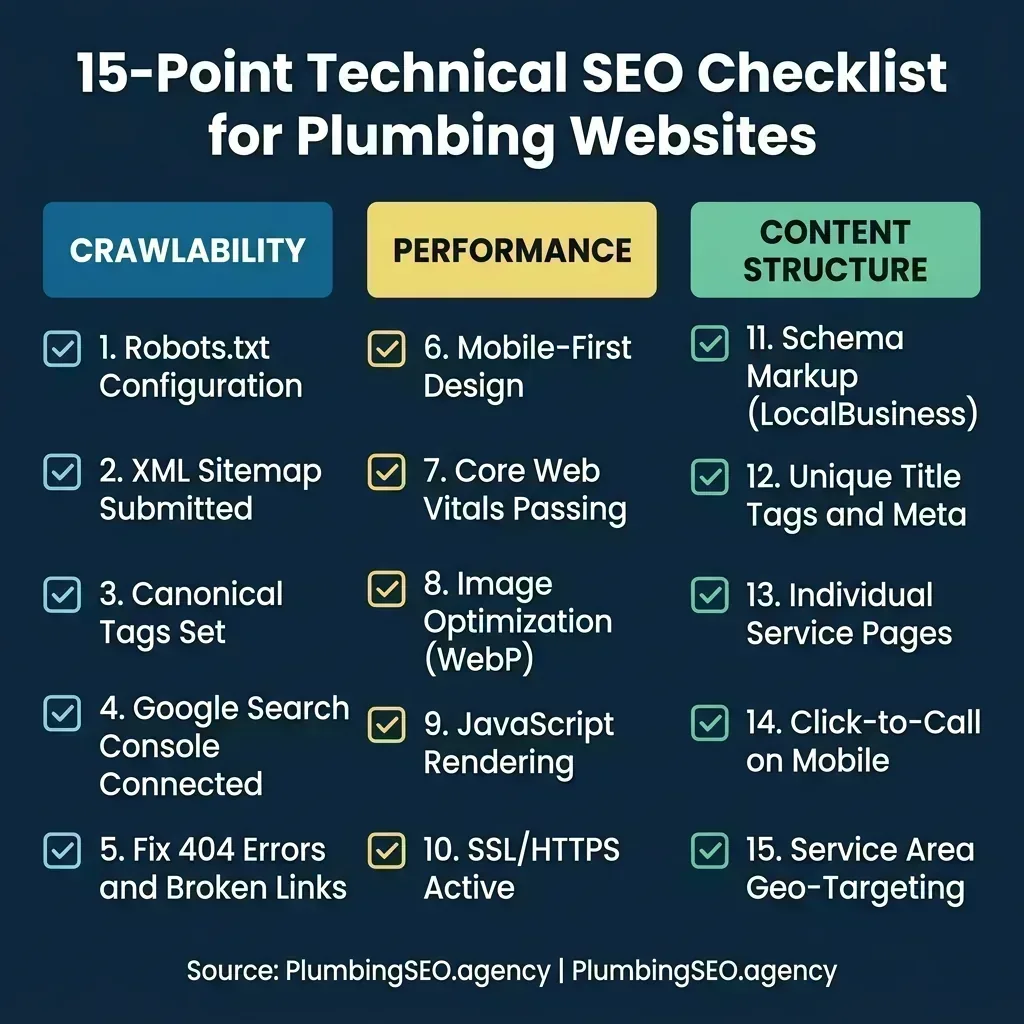
Technical SEO does not need to be mysterious. The question is simple: can Google find the page, understand it, index it, and send a mobile homeowner to a fast page that works? If the answer is no, your content may never get a fair shot.
Indexation and Crawl Checks
Use Google Search Console to inspect your homepage and top service pages. If a page is not indexed, confirm it is not blocked by robots.txt, noindex tags, bad canonicals, redirects, or duplicate content. Google’s recrawl documentation recommends requesting indexing only after you have fixed the page and are ready for Google to see the updated version.
Mobile Speed and Emergency UX
Many plumbing searches happen during stressful moments: a flooded bathroom, no hot water, or a backed-up drain. A slow page, hidden phone number, oversized hero image, or broken mobile menu can erase rankings and calls. The page should load quickly, show the service and city immediately, and keep a sticky or visible tap-to-call option.
Schema and Internal Links
Schema will not rescue a weak page, but it helps search engines understand your business, services, FAQs, and article content. Internal links matter too: your homepage, blog posts, service pages, and city pages should form a clear map instead of isolated pages. Google’s documentation on sitelinks notes that helpful internal links and concise anchor text help Google understand important pages.
Authority Problems: Why Competitors Look More Prominent
When two plumbing companies have similar websites and profiles, the one with stronger prominence usually wins. Prominence comes from reviews, citations, local links, brand mentions, photos, press, sponsorships, and real-world recognition. You do not need spam links; you need proof that the company is a legitimate local option.
NAP and Citation Inconsistency
Check your name, address, phone, website URL, and service categories across major directories, data aggregators, chamber pages, manufacturer dealer listings, and social profiles. Inconsistent phone numbers or old addresses confuse both customers and search engines. For service-area businesses, make sure the public profile information follows Google’s rules and matches the website.
Local Links and Mentions
Good plumber links often come from boring but real places: local sponsorships, trade associations, supplier pages, community events, neighborhood publications, local podcasts, and partner businesses. One real local link from a chamber, builder, restoration company, or charity page can be more useful than dozens of irrelevant directory links.
Tracking the Right Keywords Before Changing Everything
Do not judge SEO from one vanity search. Track a basket of keywords by service and city: emergency plumber, plumber near me, drain cleaning, water heater repair, sewer line repair, leak detection, sump pump repair, and your most profitable add-ons. Measure Maps and organic separately, then tie the results to calls and booked jobs. If rankings improve but booked jobs do not, the next leak is conversion or lead quality.
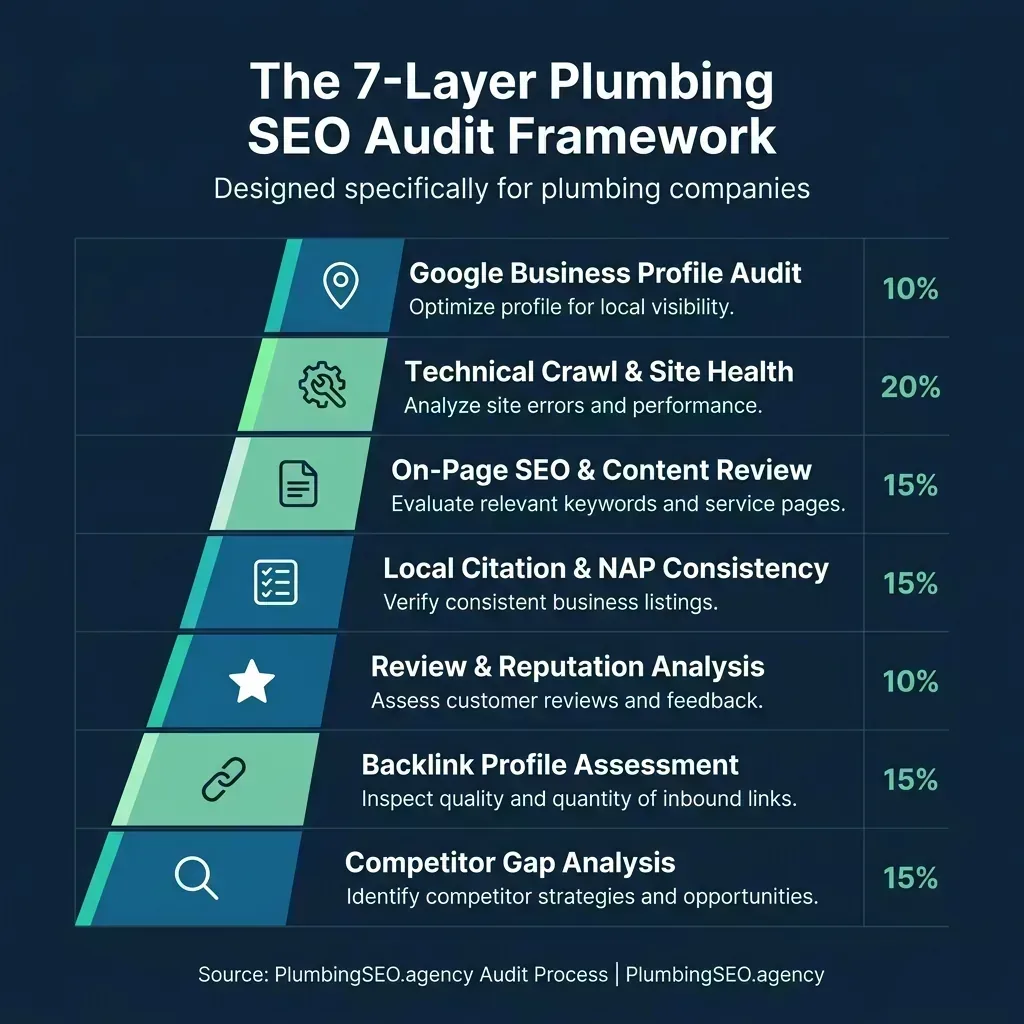
The 30-Day Recovery Action Plan
Once you know where the leak is, fix the highest-impact items in order. This plan is intentionally practical: one month of focused work that gives you cleaner data, better pages, and fewer ranking blind spots.
Week 1: Visibility and Tracking Baseline
- Export your top Google Search Console queries and pages for the last 3 months.
- Document current Maps and organic positions for your top services and cities.
- Verify call tracking, form tracking, GBP calls, and booked-job attribution.
- Fix obvious profile problems: categories, services, hours, phone number, website URL, and photos.
Week 2: Technical and Indexation Fixes
- Inspect homepage, service pages, and city pages in Search Console.
- Resolve noindex, canonical, redirect, sitemap, robots, and broken-link issues.
- Improve mobile speed on the highest-value landing pages first.
- Add or repair LocalBusiness, Service, Breadcrumb, Article, and FAQ schema where appropriate.
Week 3: Service and City Page Improvements
- Build or improve pages for the top five services that actually produce profitable jobs.
- Add service-specific FAQs, trust proof, city context, process details, and clear tap-to-call CTAs.
- Link from relevant blog posts to money pages using descriptive anchors.
- Remove or consolidate thin duplicate pages that do not help customers.
Week 4: Prominence and Review Flywheel
- Ask recent happy customers for reviews using a simple, compliant post-job process.
- Clean up top citations and supplier/manufacturer profiles.
- Pitch one local sponsorship, community page, partner link, or press mention.
- Review the keyword and call data, then choose the next month’s highest-impact fixes.
Want Us to Find the Ranking Leak?
If your plumbing business is not showing up in Maps, organic results, or call reports, we can audit the profile, website, tracking, and service-page structure before you spend another month guessing.
Run My Free SEO Leak CheckFrequently Asked Questions
Your profile may have weak relevance, distance, or prominence signals. Check your primary category, service areas, reviews, business information, profile health, website URL, and whether your service pages support the same services listed on the profile.
Simple technical or profile fixes can show movement within days or weeks, but competitive local SEO usually needs 60 to 180 days of consistent service-page improvements, review growth, citation cleanup, and authority building.
A new plumbing website can rank for branded and low-competition long-tail searches quickly if it is crawlable and well structured. Ranking for “plumber near me” or major city service terms takes longer because Google needs trust, reviews, local relevance, and authority signals.
Ask for a diagnosis that separates Maps, organic rankings, technical health, content gaps, tracking, and booked-job conversion. Avoid agencies that prescribe blogs, backlinks, or a redesign before showing which ranking leak is actually costing calls.