
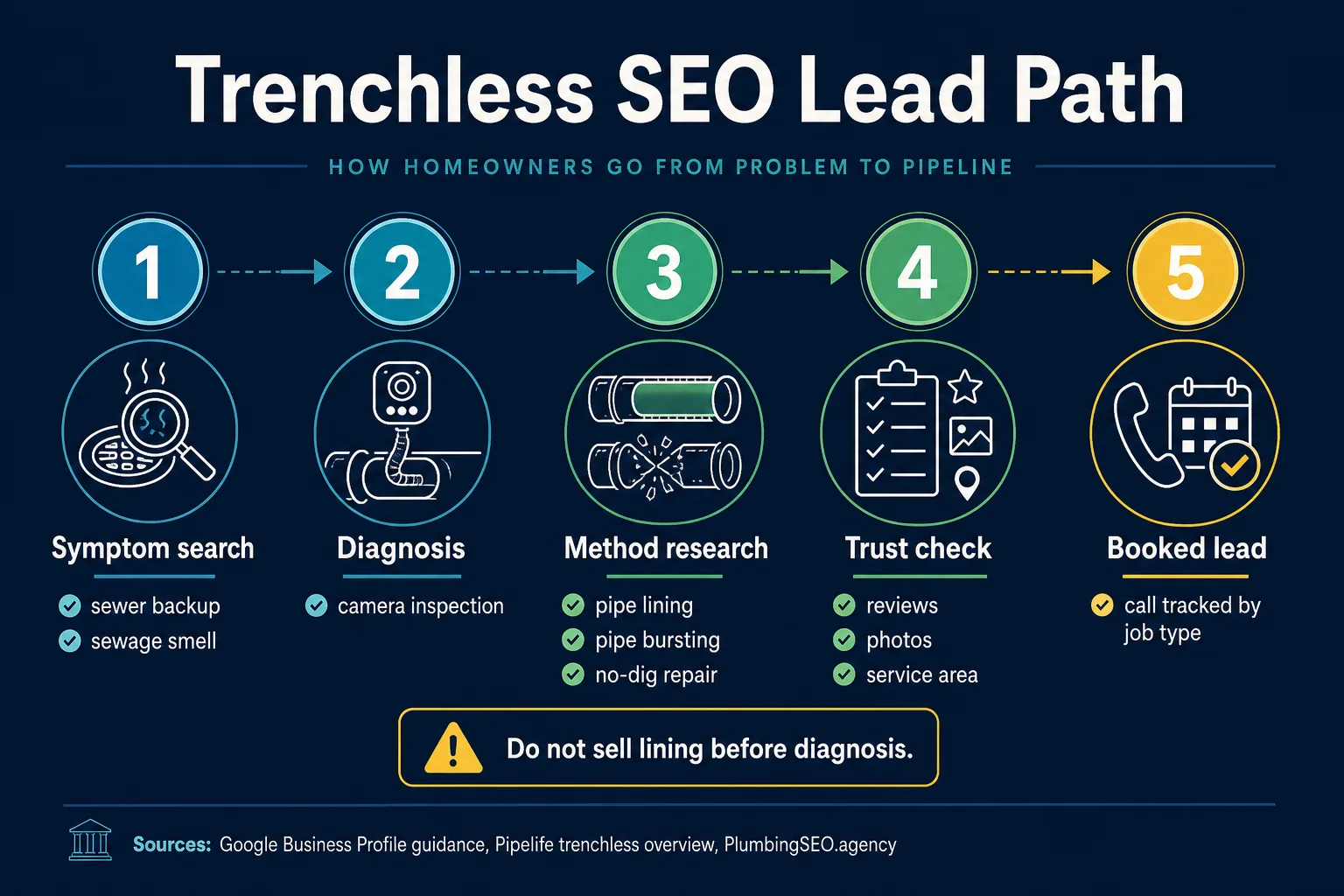
- Trenchless sewer SEO has to sell diagnosis first. Customers want no-dig options, but they need proof, camera inspection language, and honest limits before they trust a pipe lining quote.
- Build the content path around high-margin intent: Maps visibility, trenchless service pages, city proof, reviews that mention sewer work, and internal links to your main plumbing SEO service page.
- Measure the work by qualified calls, booked inspections, and lining or replacement jobs. Traffic that never reaches dispatch is just another leak to fix.
If you offer pipe lining, pipe bursting, or no-dig sewer repair, you already know the hard part. The customer does not wake up wanting trenchless technology. They wake up because the toilet gurgles, the basement smells wrong, or another plumber shoved a camera down the line and gave them a number that made breakfast taste bad.
That is why trenchless sewer SEO needs a different plan than a normal drain cleaning page. The job is not just to rank for a fancy method. The job is to help the right homeowner understand the problem, trust the diagnosis, compare repair options, and call the company that looks most prepared to handle the line without tearing up half the property.
The mistake I see is simple. A plumbing site adds one sentence that says, "We offer trenchless sewer repair," then expects Google and the customer to connect every dot. That is not a strategy. That is a note on the side of the truck.
Why trenchless sewer searches are different
General plumbing searches are often urgent and broad. "Plumber near me" can mean anything from a faucet leak to a failed water heater. Trenchless searches are narrower. The customer is usually comparing repair methods, checking cost, trying to avoid excavation, or looking for a contractor who has the right equipment and experience.
That makes the content job more serious. You have to educate without sounding like a brochure. Pipelife's overview of trenchless methods explains that no-dig work can reduce surface disruption compared with open-cut excavation and is used for rehabilitation, replacement, and infrastructure work. For a homeowner, that translates into a plain question: can you fix this without wrecking my driveway, yard, or walkway?
Your page has to answer that question honestly. Sometimes lining is right. Sometimes bursting is right. Sometimes excavation is still the cleanest answer. Good SEO does not hide the limits. It explains them before the call, so the customer is not surprised when your technician recommends a camera inspection first.
| Search intent | What the customer is really asking | Content that earns the call |
|---|---|---|
| "trenchless sewer repair near me" | Can I avoid digging and still fix the line? | Local trenchless page with methods, limits, photos, reviews, and service-area proof. |
| "pipe lining cost" | How bad is the bill going to be? | Cost factors, inspection requirements, access issues, warranty language, and financing if offered. |
| "pipe bursting vs lining" | Which method fits my problem? | Plain comparison of lining, bursting, spot repair, replacement, and when each one fails. |
| "sewer camera inspection" | Can someone show me what is wrong first? | Diagnosis process, camera footage expectations, and what happens after the inspection. |
Start with diagnosis, not the repair method
Here is the practical position: a trenchless SEO page should not lead with "buy pipe lining." It should lead with diagnosis. The customer may want no digging, but the pipe decides what is possible. Roots, bellies, collapses, offsets, cracks, pipe material, access, and depth all matter.
NuFlow's 2026 guide to sewer line replacement alternatives makes the same point from the repair side. It notes that modern trenchless methods can reduce digging, but the right option depends on what is actually wrong with the line and should be confirmed by a video camera inspection. That is the kind of message customers need before they trust a quote.
For SEO, this gives you a better page structure. Do not just write one block called "trenchless repair." Build a diagnosis-first path: symptoms, camera inspection, repair options, cost factors, local proof, then a clear call to schedule the inspection. That path feels like a plumber explaining the job, not a marketer trying to trap a keyword.
Build a content map around pipe lining leads
Pipe lining leads usually come from a few different searches. Some people search the symptom. Some search the method. Some search cost. Some search the company after getting a referral. Your site should connect those paths instead of leaving each page to fend for itself.
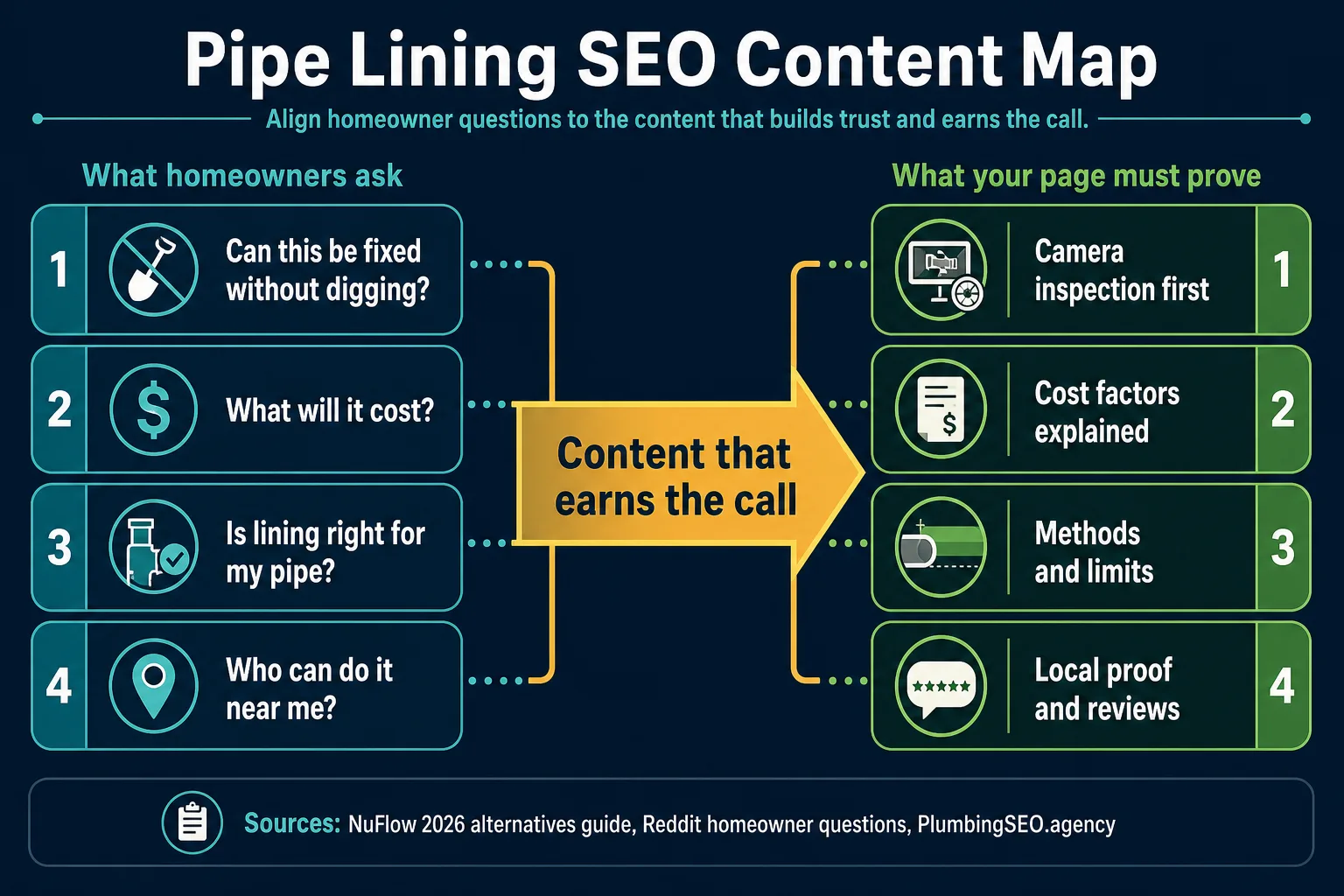
Start with the money page. If trenchless work is a serious service line, it deserves a dedicated service page or a strong sewer repair page section. Then support it with blog content that answers related questions. For example, your main sewer repair page can convert the lead, while supporting posts explain lining vs replacement, sewer camera inspections, and what homeowners should ask before approving a no-dig repair.
This post supports our main plumbing SEO services page because trenchless work is exactly the kind of high-margin service line that should not be hidden under generic plumbing copy. If your company wants more of those jobs, the whole site has to point in that direction.
Local SEO matters because trenchless jobs are still local jobs
A homeowner may research pipe lining like a big technical purchase, but they still need someone who can show up in their city. That means Google Business Profile, reviews, service areas, photos, and local page signals all matter.
Google's Business Profile guidelines tell businesses to represent themselves accurately and choose categories that describe the business. For plumbers, the lesson is not to stuff every possible term into the profile. The lesson is to make your real trenchless capability visible through services, photos, posts, reviews, and website content that all line up.
Signals that help trenchless leads
- Service page explains camera inspection, lining, bursting, and replacement in plain language.
- Reviews mention sewer line work, inspections, roots, no-dig repair, or cleanup.
- Photos show real equipment, access points, camera work, crews, and completed jobs.
- City pages and service-area copy reflect where the crew actually dispatches.
- Calls are tracked by job type, not only by source.
Signals that leak trust
- Generic sewer copy copied across every city with no local proof.
- Claims about no-dig repair with no explanation of when lining does not fit.
- Stock photos that do not look like your crew, truck, market, or equipment.
- Reviews only talk about clogged toilets while the page chases pipe lining leads.
- No clear next step after the customer finishes reading.
Use cost content carefully
Cost content brings traffic, but it can also bring the wrong calls if it is sloppy. Homeowners want a number. You know the real answer depends on inspection, length, depth, pipe condition, access, permits, restoration, and whether lining is even possible.
Research and Markets reports the trenchless pipe rehabilitation market growing from $5.02 billion in 2025 to $5.38 billion in 2026, with growth tied to infrastructure rehabilitation and newer curing technologies. That does not mean a local plumber should turn a blog into a stock report. It means homeowners are seeing more no-dig language, more options, and more reasons to compare providers before calling.
Write cost sections around factors, not fake certainty. Explain what changes the price, what inspection reveals, why access matters, and why a cheap quote that skips diagnosis can cost more later. If you offer financing, warranty language, or written inspection reports, mention it. Those details can calm the customer down enough to call.
Link trenchless content to the rest of the plumbing SEO system
A trenchless post should not sit alone. It should connect to your sewer repair, drain cleaning, Maps, pricing, and service-area content where it naturally helps the reader.
If you are building this on your own site, link from drain cleaning content when a clog may lead to a camera inspection. Link from sewer repair content when the discussion moves into lining, bursting, and replacement. Link from local SEO content when you explain how reviews and Maps help high-ticket work. That is how a customer moves from learning to calling without feeling shoved.
On this site, related support includes our sewer repair SEO guide, our drain cleaning SEO guide, and our Google Maps SEO for plumbers article. Each one supports a different part of the same call path.
Track pipe lining SEO by jobs, not page views
For trenchless work, traffic is not the scoreboard. The scoreboard is qualified calls, booked inspections, estimates, sold jobs, and service areas that make sense for your crew.
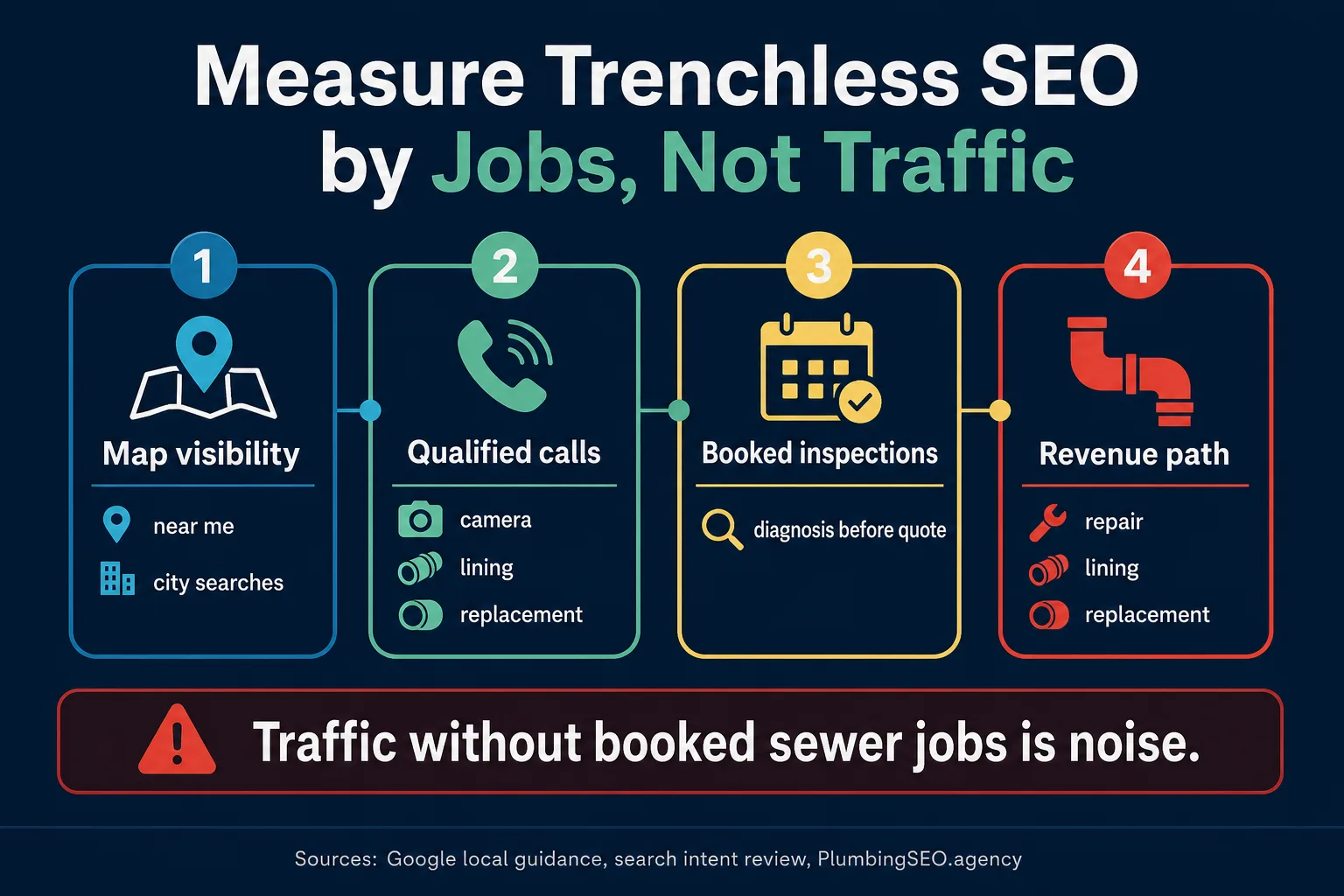
That tracking does not need to be fancy on day one. Start with the basics. Ask how the caller found you. Tag calls that mention camera inspection, lining, bursting, replacement, roots, sewer smell, or no-dig repair. Review which pages helped those calls. Then improve the pages that send real work, not just visits.
A useful trenchless SEO report should answer questions like:
- Which pages generate calls about sewer inspections and no-dig options?
- Which cities produce profitable trenchless jobs instead of long drives and tire wear?
- Which reviews mention sewer work and can support local trust?
- Which searches lead to diagnosis calls instead of low-value clog-only calls?
- Which service pages need stronger internal links or clearer next steps?
That is where a lot of marketing gets sideways. A report can show ranking gains and still leave the crew waiting. I would rather see fewer visitors and more qualified sewer calls than a pretty traffic chart that never makes it to dispatch.
A practical 30-day trenchless SEO cleanup
If I were fixing this for a plumbing company this month, I would not start by writing ten random posts. I would tighten the money path first.
- Audit the sewer and trenchless page. Confirm it is indexable, unique, linked from the services area, and clear about diagnosis before repair.
- Add method clarity. Explain pipe lining, pipe bursting, spot repair, replacement, and when each one does not fit.
- Strengthen local proof. Add real photos, service areas, job examples, review language, and dispatch details.
- Update Google Business Profile support. Use accurate services, posts, photos, and review prompts that reflect real sewer work.
- Build internal links. Connect drain cleaning, sewer repair, trenchless, Maps, pricing, and service-area content naturally.
- Track calls by job type. Separate camera, drain, lining, bursting, repair, and replacement calls so you know what SEO is actually bringing in.
Do that before chasing another shiny keyword. Bad SEO is like a slow drain. You can ignore it for a while, but eventually it backs up somewhere ugly.
Final take
Trenchless sewer SEO works when it respects how customers actually decide. They start with a scary symptom or a big quote. They want less digging, but they need a company that can inspect first, explain the options, prove local experience, and make the next step easy.
Build content around that path. Link it to your main service pages. Support it with Maps proof and reviews. Then measure whether the phone is bringing in the kind of sewer work you actually want.
If you want help finding the leaks in that system, start with a free plumbing SEO audit. We will look at your pages, Maps signals, internal links, and call path without burying you in agency jargon.
Frequently Asked Questions About Trenchless Sewer SEO
Trenchless sewer SEO helps a plumbing company rank for no-dig sewer repair, pipe lining, pipe bursting, sewer camera inspection, and related local searches. The goal is qualified calls from homeowners who need diagnosis and sewer repair options, not traffic for its own sake.
If pipe lining or pipe bursting is a real service line for the company, yes. A focused page can explain inspection, method fit, cost factors, service areas, proof, reviews, and next steps better than one short mention on a generic plumbing page.
Start with local terms such as trenchless sewer repair near me, pipe lining near me, sewer camera inspection, pipe bursting, no-dig sewer repair, sewer line replacement, and city-specific variations. Add symptom searches when the page clearly answers the customer's problem.
Google Business Profile supports local trust when services, photos, reviews, posts, and the linked website all show the company performs real sewer and trenchless work. The profile should be accurate, not stuffed with categories or claims the company cannot support.
Include symptoms, camera inspection, pipe lining, pipe bursting, spot repair, replacement, cost factors, method limits, photos, service areas, reviews, warranty language if offered, and a clear call to schedule an inspection or request a quote.
Track rankings and visibility, but judge success by qualified calls, booked camera inspections, lining or bursting estimates, sold sewer jobs, close rate, and service areas that produce profitable work. Traffic without booked jobs is not enough.
Want more pipe lining leads without guessing?
Get a plumbing SEO audit that checks your service pages, Maps signals, internal links, reviews, and call path. We will show you what to fix first so trenchless calls stop leaking away.
Run My Free SEO Leak Check