
- Sewer repair SEO is not just another plumbing keyword. It targets camera inspections, trenchless repair, and replacement jobs that can fill the board with better work.
- Build one clear sewer repair content path: Google Business Profile services, a focused service page, city proof, review language, and tracking back to booked jobs.
- Link this support article to your main plumbing SEO service page, then measure calls by job type instead of celebrating rankings that never reach dispatch.
If your shop does sewer line work, the phone call usually starts before the customer knows what they need. They search because the basement smells wrong, the tub is backing up, or the camera inspection from another company scared them half to death.
That is why sewer repair SEO needs its own plan. A homeowner searching for sewer repair SEO from the business side is usually asking a bigger question: how do I rank for the searches that turn into camera inspections, hydro jetting, trenchless work, spot repairs, and full sewer line replacement?
The short answer is this: do not bury sewer work inside one generic plumbing page and hope Google figures it out. Sewer jobs have their own symptoms, search terms, proof points, cost questions, and trust problems. Treat them that way.
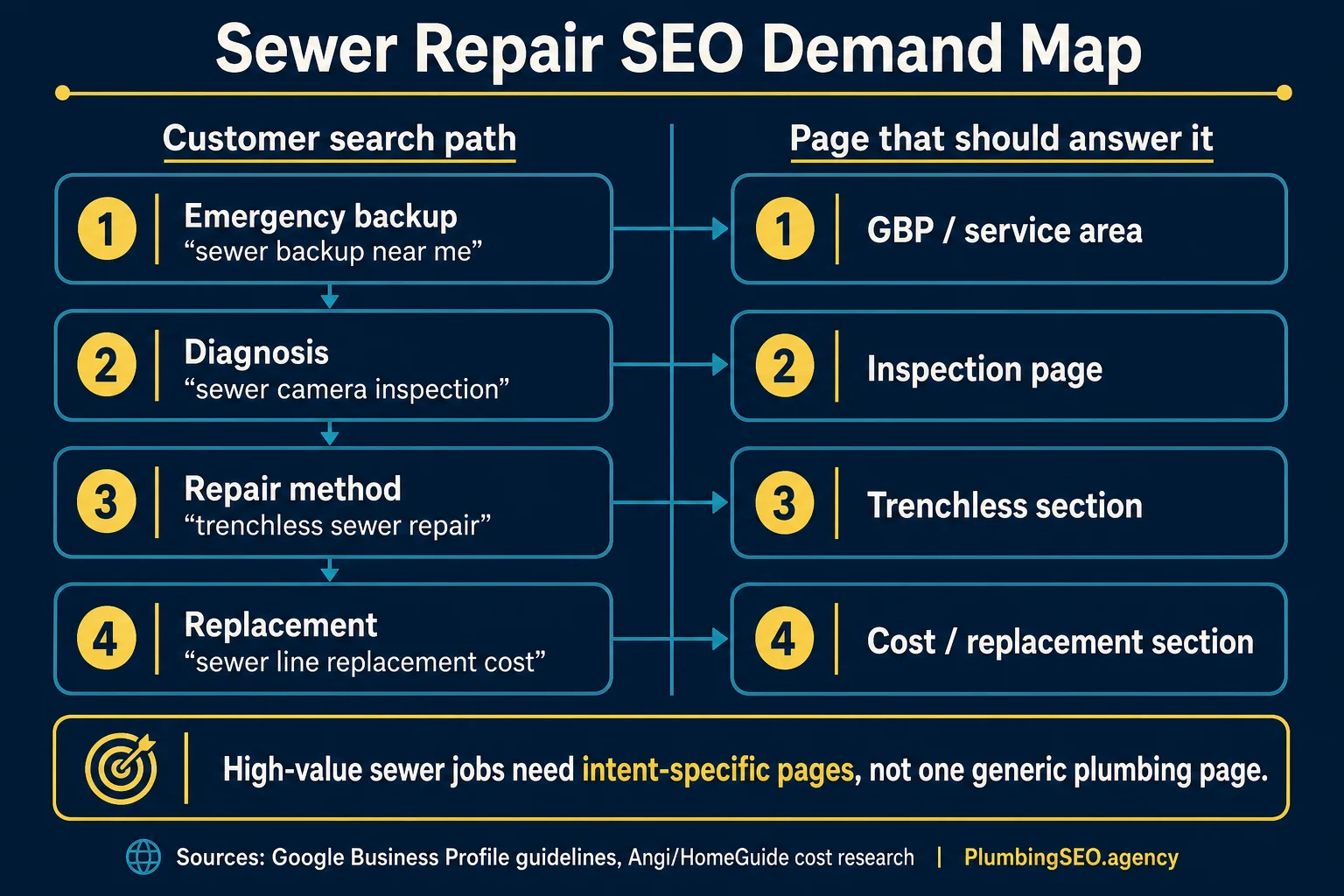
Why sewer repair searches deserve their own SEO plan
Most plumbing SEO starts with big obvious terms: plumber near me, emergency plumber, drain cleaning, water heater repair. Those matter. But sewer line repair is different because one call can become a much larger job after inspection.
HomeGuide reports that sewer line replacement often ranges from $2,000 to $10,000 for 40 linear feet, with smaller repairs and methods priced differently. Angi's 2026 sewer replacement guide lists common replacement costs between $1,388 and $5,323, depending on line length, material, and access.
Those numbers are homeowner cost ranges, not your guarantee of revenue. Still, they show why this category deserves more care than a single bullet on a services page. When a customer has a collapsed line, roots, a repeated backup, or a bad inspection, they are not casually shopping. They need a plumber they trust enough to dig, line, burst, repair, or replace something expensive.
| Search type | What the customer means | SEO asset needed |
|---|---|---|
| "sewer backup near me" | Urgent mess, fast dispatch | GBP, emergency copy, service-area proof |
| "sewer camera inspection" | Diagnosis before repair | Inspection content, photos, process explanation |
| "trenchless sewer repair" | Wants less digging | Method page or strong section with qualifications |
| "sewer line replacement cost" | Price anxiety | Cost factors, ranges, permits, restoration notes |
The rankings that matter are not always the biggest keywords
A sewer company can get excited about ranking for a broad phrase and still miss the calls. The better question is whether the site ranks for the phrases people use at each stage of the job.
Some customers search symptoms. Some search equipment. Some search the repair method. Some search cost after another contractor gives them a number that made them sit down. Your SEO has to meet all of them without sounding like a dictionary swallowed a dispatch board.
Build the sewer job value ladder into your content
In the real world, sewer work often starts smaller than it ends. A drain clog call can uncover a camera inspection. A camera inspection can lead to hydro jetting, pipe lining, spot repair, or replacement. If your content only chases the first symptom, you may win the low-value click and lose the high-value job.
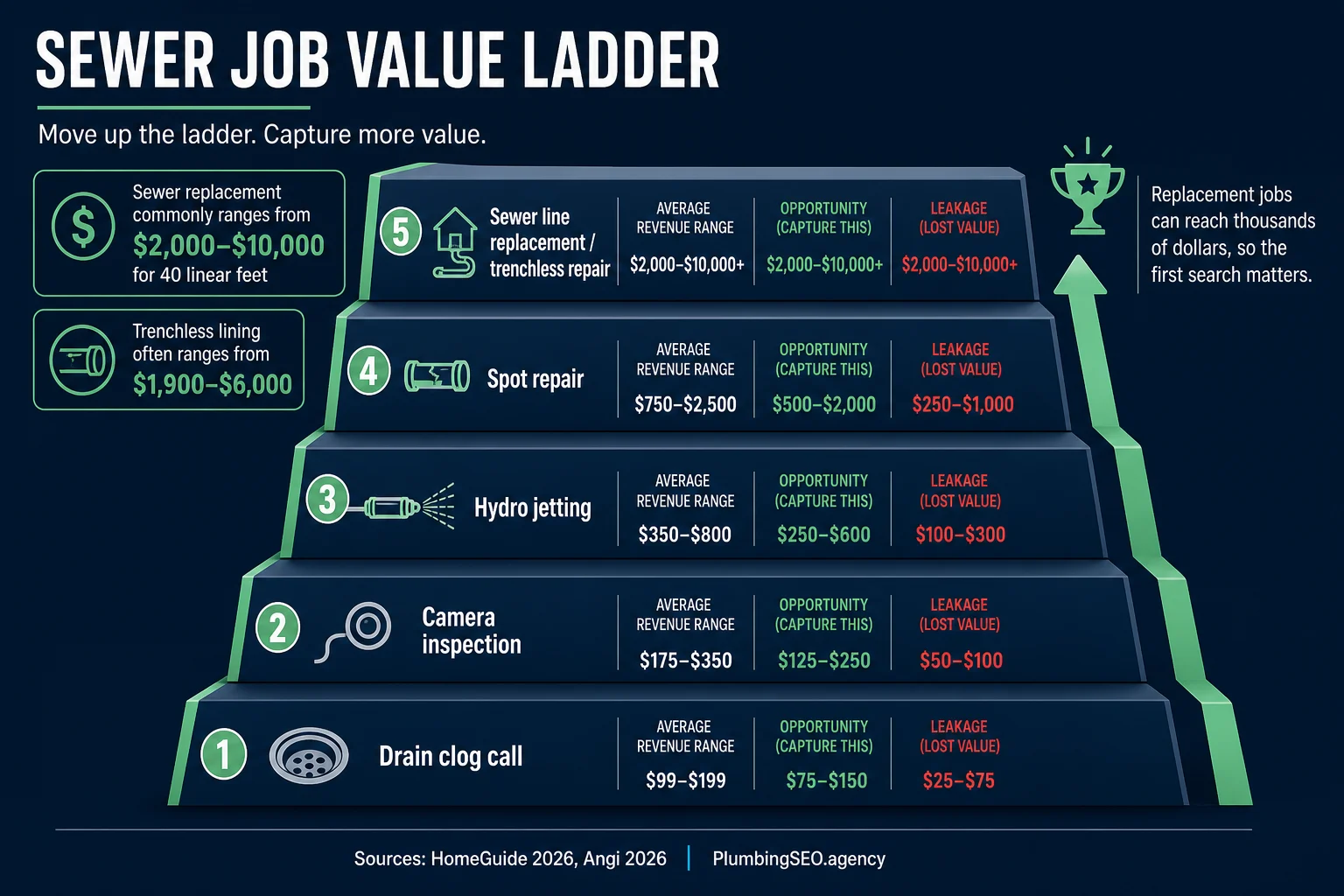
The way I see it, sewer SEO should explain the ladder without making the customer feel pushed. A page that screams replacement before diagnosis feels like a sales trap. A page that explains inspection, options, and when each repair makes sense feels like a company that has done the work before.
That matters for rankings, but it matters even more for trust. A homeowner facing a sewer issue is already worried about money, damage, yard restoration, permits, and whether the first contractor is telling the truth. Your content should slow the decision down just enough to make them comfortable calling you.
What should be on a sewer repair page?
A strong sewer repair SEO page should do more than repeat city names. It should prove that your company can diagnose the problem, explain the options, and handle the job safely.
Include this
- Clear list of sewer services: camera inspection, jetting, spot repair, trenchless, replacement.
- Photos or plain-language examples from real service work.
- Cost factors such as pipe length, access, depth, permits, landscaping, and restoration.
- Service-area proof for the cities where you actually dispatch trucks.
- FAQ answers that match customer questions before they call.
Avoid this
- One thin paragraph copied onto every city page.
- Ranking claims with no explanation of the work.
- Stock sewer photos that look like they came from another country.
- Cost promises that ignore inspection, permits, depth, or line condition.
- Pages that do not connect to Google Business Profile, reviews, or call tracking.
Google says local business information should represent the business accurately and consistently. Its Business Profile guidelines also warn businesses to choose the fewest categories needed to describe the company. For plumbers, that means you should not stuff the profile. You should make the actual service details, photos, posts, and website content line up with the work you want to win.
Internal links should move authority toward the money page
This article is a support page. Its job is to help a plumbing owner understand sewer repair rankings and then point them toward the main plumbing SEO services page when they are ready to fix the bigger system.
That is the same way your plumbing site should work. Educational blog posts can answer buyer questions. Service pages should convert. Your internal links should connect the two without forcing it.
If a sewer repair page mentions local visibility, it can naturally link to your local SEO guide. If it talks about Maps, it can link to your Google Business Profile content. If it talks about pricing anxiety, it can link to a transparent pricing page. Good internal links are like good fittings. You notice them when they are missing.
Before chasing rankings, fix the leaks that block them
Here is what most agencies miss: sewer repair rankings are not only about writing more words. If the page is not indexed, the profile is thin, reviews never mention sewer work, or calls are not tracked by job type, you are guessing.
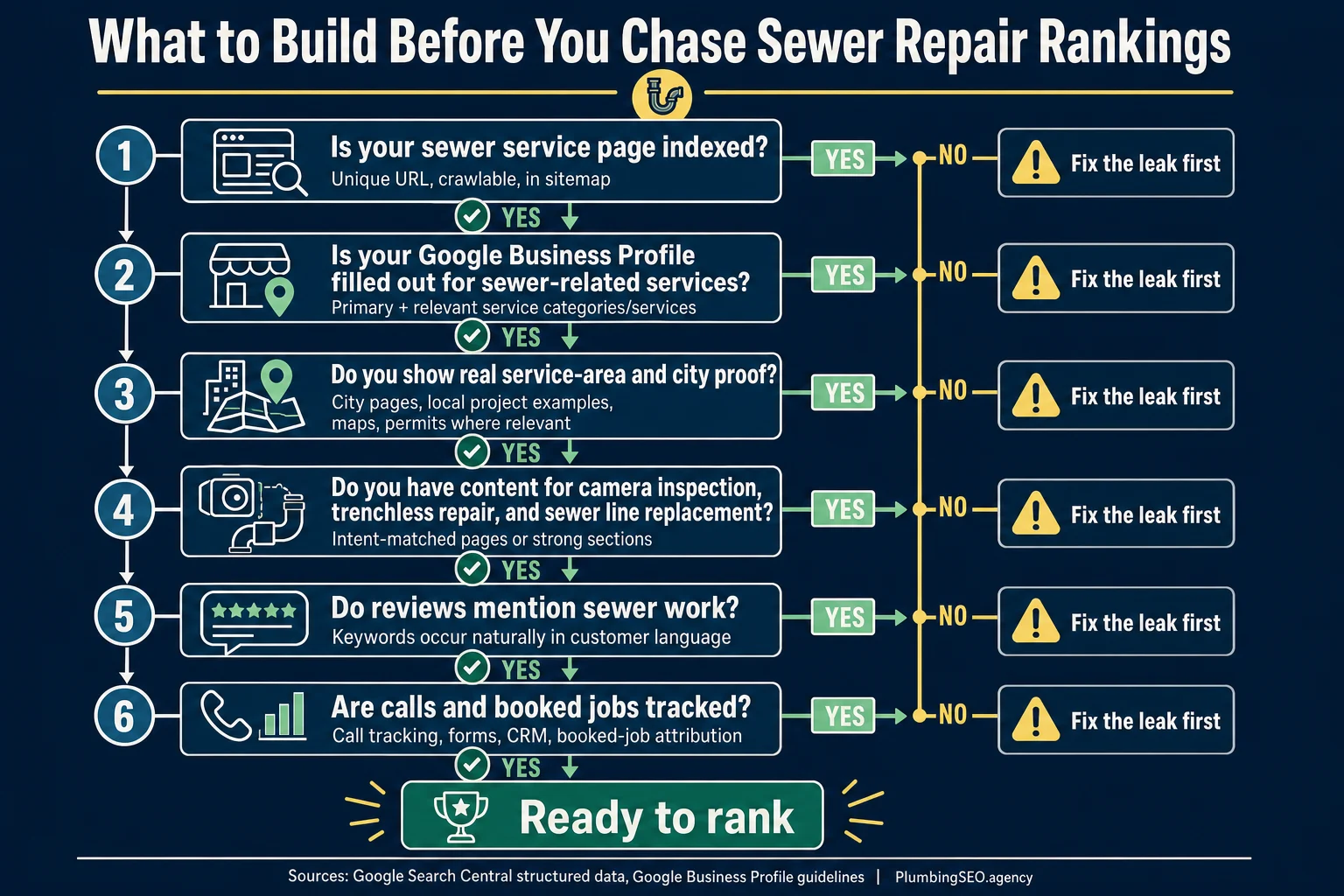
Google's structured data documentation explains that LocalBusiness structured data helps search engines understand business details such as hours, departments, and other facts. Schema will not save a weak page, but it can support a clean page that already gives customers useful information.
How to measure sewer repair SEO without fooling yourself
Rankings are useful, but they are not the scoreboard. The scoreboard is booked sewer work. Track the whole path if you can:
- Which pages generated sewer calls.
- Which calls became camera inspections.
- Which inspections became jetting, lining, repair, or replacement.
- Which cities produce profitable jobs instead of long drives and tire wear.
- Which keywords bring the wrong work, such as bargain shoppers outside your service area.
A Reddit post from a sewer and drain advertiser described spending heavily in Google Ads across two large markets while chasing daily drain and sewer calls. The useful lesson is not the platform. It is the pressure: sewer businesses need the right calls, not just more form fills. SEO should be judged the same way.
A practical 30-day sewer repair SEO cleanup
If I owned the shop and had to start this month, I would not begin with a 40-page content calendar. I would do this first:
- Audit the current sewer page. Make sure it is indexable, unique, and linked from the main services area.
- Add diagnosis content. Explain camera inspections, symptoms, and what happens before repair recommendations.
- Clarify repair methods. Separate jetting, spot repair, lining, bursting, and replacement in plain English.
- Strengthen local proof. Add service areas, project examples, photos, reviews, and dispatch language.
- Update Google Business Profile support. Use accurate services, photos, posts, and review requests that reflect real sewer work.
- Track calls by job type. Tie rankings to booked work so you know whether SEO is keeping trucks busy.
Do that before buying another shiny tool or arguing with a ranking report. The report may look good, but the phone tells the truth.
Final take
Sewer repair SEO works when it matches how customers search and how plumbing companies actually make money. Build the path from symptom to diagnosis to repair option to booked job. Support it with local proof. Link it to your main plumbing SEO offer. Then measure whether the calls are worth answering.
If you want help finding the leaks in that system, start with a free plumbing SEO audit. We will look at the pages, rankings, local signals, and call path without burying you in agency jargon.
Frequently Asked Questions About Sewer Repair SEO
Sewer repair SEO is the process of helping a plumbing company rank for searches related to sewer backups, camera inspections, trenchless sewer repair, sewer line repair, and sewer line replacement. The goal is not traffic alone. The goal is qualified calls that can become booked sewer jobs.
Usually, yes. If sewer work is a meaningful service line, it deserves a focused page that explains symptoms, diagnosis, repair methods, service areas, and cost factors. A short mention on a generic plumbing page is rarely enough for competitive local searches.
Start with service and intent terms such as sewer repair, sewer line repair, sewer line replacement, sewer camera inspection, trenchless sewer repair, main sewer line repair, and city-specific variations. Add symptom searches such as sewer backup or sewage smell when the page answers them clearly.
Your Google Business Profile supports local visibility when the business information, services, photos, reviews, and website all point in the same direction. Do not stuff categories. Make sure the profile accurately reflects the sewer work you perform and links to helpful service content.
It depends on market competition, site authority, local proof, reviews, content quality, and technical health. Some improvements can help indexing and conversions quickly, but competitive local rankings usually need consistent page improvements, GBP work, reviews, links, and tracking over time.
Measure rankings, but also track calls, forms, booked camera inspections, booked sewer repairs, replacement estimates, close rate, and revenue by service type. A ranking that does not create qualified sewer calls is not enough.
Want to know why sewer repair calls are leaking away?
Get a plumbing SEO audit that checks your service pages, Maps signals, internal links, rankings, and call path. No generic agency report. Just what to fix first.
Run My Free SEO Leak Check