
- Repiping SEO is not just another plumbing keyword. Whole-house repipe buyers research cost, materials, trust, permits, and proof before they call.
- The strongest repipe pages match the job journey: symptoms, PEX vs copper, pricing ranges, project photos, reviews, FAQs, and a clear estimate path.
- Link the new repipe content back to your main plumbing SEO strategy so Google and homeowners understand the service, the location, and why your shop is credible.
If your plumbing company wants whole-house repipe jobs, you cannot treat repiping like a tiny add-on under a generic plumbing page. A homeowner facing rusty water, bad pressure, polybutylene pipes, or slab leaks is not shopping the same way someone shops for a dripping faucet repair.
They slow down. They compare materials. They ask about permits, drywall, warranties, cleanup, financing, and whether the crew has done this exact kind of work before. That is why repiping SEO deserves its own plan.
The page has to help the right customer find you, trust you, and call before they fill out three other estimate forms. The phone tells the truth here. A ranking that brings bargain pipe-repair calls all day is not the same as a ranking that brings booked whole-house repipe estimates.
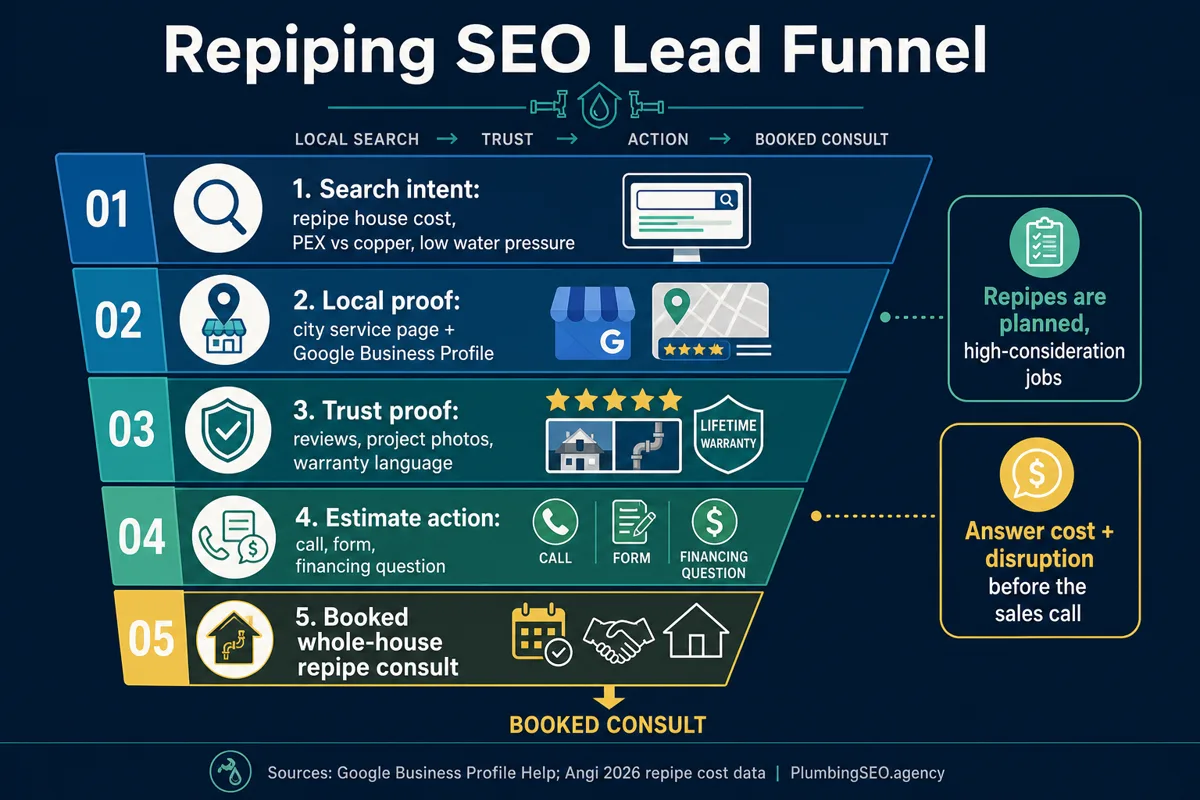
What repiping SEO means
Repiping SEO means building search visibility around whole-house repipe intent, not just broad plumbing intent. It covers service pages, local pages, Google Business Profile signals, reviews, internal links, structured data, and content that answers the questions a homeowner asks before approving a high-ticket job.
For a plumbing owner, the goal is simple: rank where the best repipe customers are looking and make the next step obvious. That might be a call, an estimate request, or a form that asks the right qualifying questions.
Here is the problem most agencies miss. They optimize for "plumber near me" and call it done. That may keep dispatch busy, but whole-house repipe work needs a different lane. It needs service-depth, proof, and enough local trust for a homeowner to let your crew into every wall, bathroom, and mechanical room in the house.
Why repipe leads are different from normal plumbing leads
A repipe lead is usually research-heavy. The homeowner may already know this is not a small fix. They may be comparing PEX and copper, asking whether pipe lining is enough, or trying to understand why one quote is thousands of dollars apart from another.
That research behavior shows up in the content that ranks. Cost guides, material explainers, FAQ pages, and local service pages all matter because they catch the homeowner at different points in the decision. A public repiping case study from Forthea noted that FAQ pages became the primary organic traffic driver for The Repipe Company after the content matched common homeowner questions. The lesson is not "copy their site." The lesson is that serious repipe buyers need serious answers.
If your website only says "we offer repiping," you are asking Google and the customer to fill in too many blanks. In the real world, blanks cost calls.
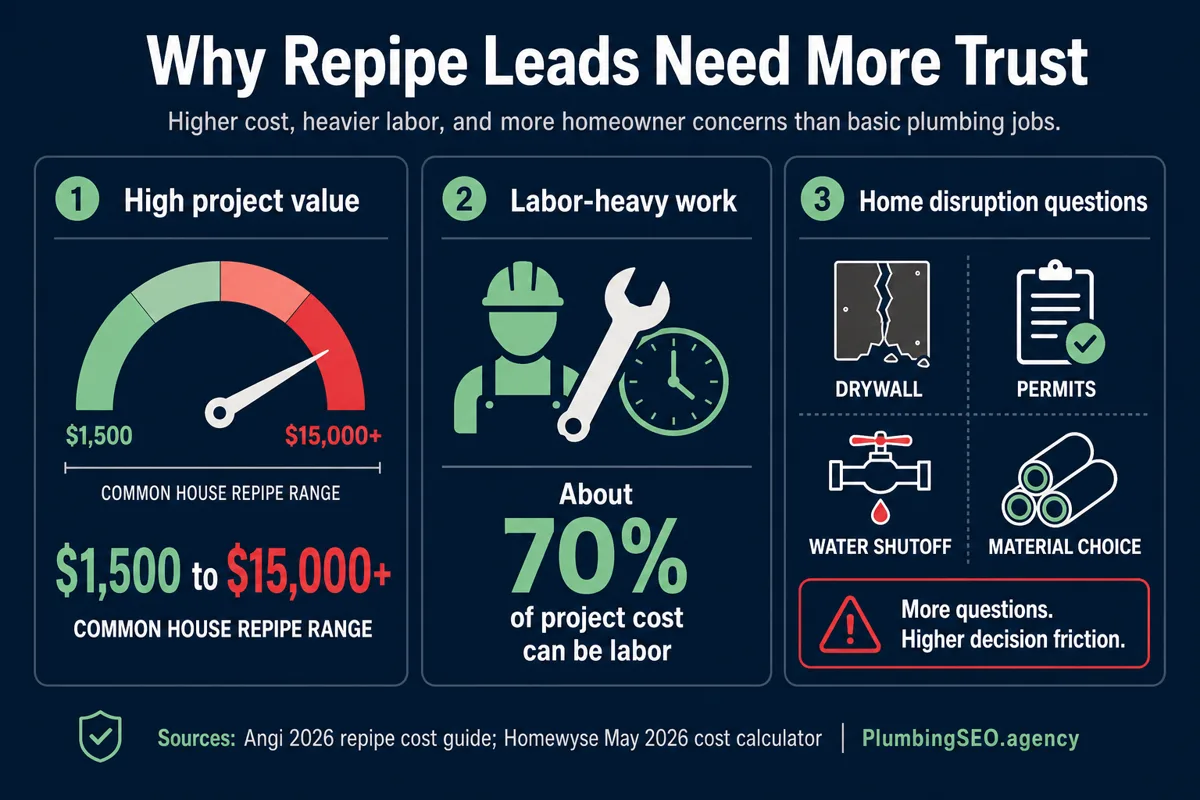
Those numbers are why the page has to do more than chase a keyword. It has to make the value of the job clear, qualify the caller, and reduce doubt before the office ever picks up the phone.
The repiping SEO page architecture that usually wins
A strong repipe page is built like a good job walk. It does not jump straight to "call us." It checks the problem, explains the options, proves experience, and then asks for the estimate.
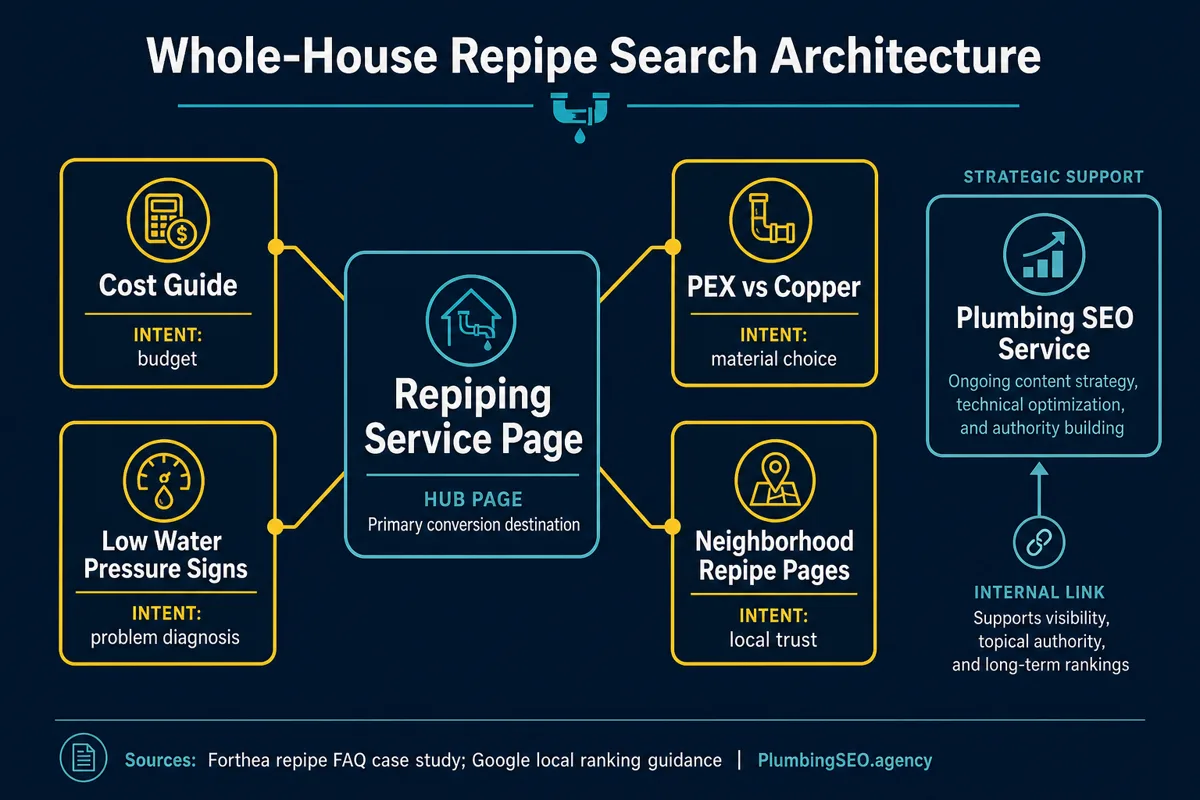
Start with the local service page
The page should make the service and location clear in the title, H1, opening copy, and calls to action. A page for "whole-house repiping in Dallas" should not read like a generic national article. It should speak to local homes, pipe materials, common neighborhoods, permits, and the type of crew that handles the work.
This is where a plumbing-only plumbing SEO service has to be practical. The page is not there to win a trophy for clever wording. It is there to help a qualified homeowner choose your company and help Google understand the job you are good at.
Add cost and material sections without playing games
Repipe buyers want to know what kind of check they may be writing. You do not have to promise a fixed price without seeing the house, but you should explain what changes the price: square footage, number of fixtures, PEX or copper, access, drywall, permits, slab conditions, and whether old pipe removal is involved.
Angi's 2026 repipe cost guide puts common whole-house repipe projects around $1,500 to $15,000, with many homeowners paying around $7,500, and notes that labor can make up about 70% of the bill. Your market may differ, but publishing a realistic range with clear disclaimers earns more trust than hiding price completely.
| Page element | What the homeowner needs | SEO job it performs |
|---|---|---|
| Cost section | Realistic ranges and what changes the estimate | Matches cost and comparison searches |
| PEX vs copper section | Plain explanation of tradeoffs, lifespan, and budget | Captures material-decision intent |
| Project photos | Proof that your crew has handled full-system work | Improves trust and page engagement |
| FAQ accordion | Answers about timing, permits, drywall, and staying home | Supports long-tail searches and FAQ schema |
Show real proof before asking for the call
For repiping, proof is not optional. Use photos of clean pipe runs, labeled manifolds, before-and-after access points, crew protection, drywall coordination, and finished spaces. Add review snippets by theme, not fake-perfect testimonials. Homeowners care about timeliness, cleanup, communication, warranty, and whether the crew respected the house.
Bad SEO is like a slow drain. You can ignore it for a while, but eventually it backs up somewhere ugly. With repiping pages, the backup usually shows up as low-quality form fills, price shoppers, or calls from people who only needed a small repair.
How Google understands a repiping service page
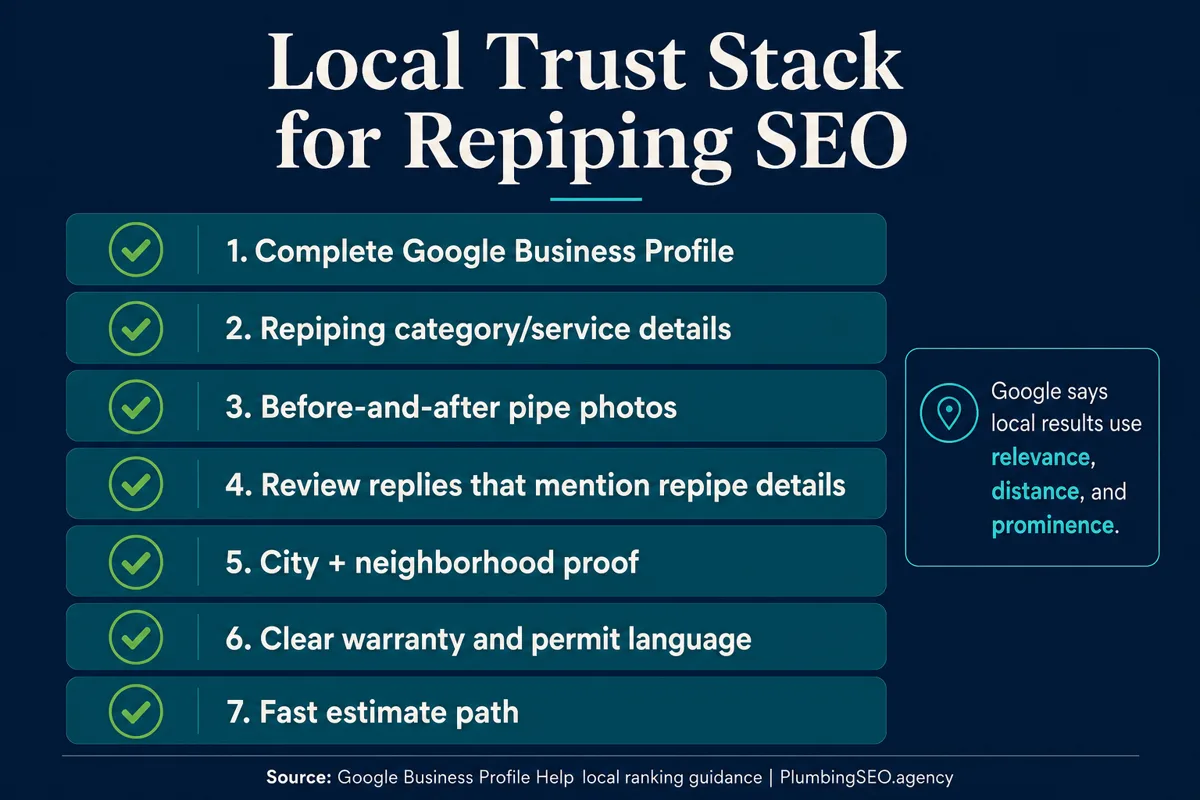
Google says local ranking is mainly based on relevance, distance, and prominence. For a repiping page, relevance comes from clear service content. Distance comes from the local area you actually serve. Prominence comes from the trust around your business: reviews, links, citations, and known reputation.
Your website and your Google Business Profile should back each other up. If your page says whole-house repiping, your profile services, photos, review requests, and posts should not only talk about water heater repair. Keep the signals lined up.
Use structured data, but do not expect schema to carry a weak page
Use LocalBusiness structured data, breadcrumbs, Article or Service markup where appropriate, and FAQPage schema for real questions answered on the page. Google Search Central also reminds site owners that crawling and indexing take time after publishing or updating content, so schema is part of the job, not the whole job.
In my opinion, schema is the label on the parts bin. It helps, but it will not fix a messy truck. The page still has to be useful, local, and convincing.
Internal links that help repiping pages rank
Internal links should come from pages where the topic naturally fits. Water heater replacement, slab leak repair, pipe repair, leak detection, galvanized pipe replacement, sewer line pages, and home plumbing maintenance articles can all point toward the repipe page when the paragraph calls for it.
Do not stuff a sitewide footer with "repipe SEO" and call it strategy. A better approach is to build a clear topical path. If a leak repair article says repeated leaks may mean the system is failing, link to the repiping page. If a local SEO article talks about service pages, point readers to your plumbing SEO services guide for the bigger framework.
The support page matters too. This article links back to the main plumbing SEO service because repiping is one proof point inside a larger search strategy. If you want help finding those service-line gaps across your site, start with a free plumbing SEO audit and check which high-ticket services are missing dedicated pages.
A practical repiping SEO checklist
Fix first
- Create or improve the dedicated repiping page.
- Add local title, H1, service area, and estimate CTA.
- Explain PEX, copper, cost drivers, permits, timing, and drywall.
- Add project photos with descriptive alt text.
Build next
- Add FAQ schema for questions customers really ask.
- Request reviews from completed repipe customers.
- Link from related service pages and education posts.
- Track calls, forms, booked estimates, and closed jobs.
Measure the right thing. Rankings matter, but booked repipe estimates matter more. If a page brings traffic but the office says every caller is outside the service area, confused about price, or looking for tiny repair work, the page needs adjustment.
Bottom line
Repiping SEO works when the page respects the size of the job. Talk like a plumber who has walked the house, found the leaks, explained the mess, protected the customer, and finished clean. Then make the search signals match that reality.
If your repipe page answers the real questions, shows real proof, links into the rest of the site, and gives the homeowner a simple way to book an estimate, you have a page that can help keep better jobs on the board.
Frequently Asked Questions
Repiping SEO is search optimization for whole-house repipe services. It includes dedicated repiping pages, local service signals, Google Business Profile support, reviews, internal links, structured data, and content that answers cost, material, timing, permit, and warranty questions.
Usually yes, if repiping is a service the company wants more of. Whole-house repipe buyers search differently than emergency repair customers. A dedicated page can answer deeper questions and qualify higher-value leads before they call.
A strong repiping page should include local service copy, symptoms, PEX vs copper guidance, cost ranges or cost drivers, project photos, reviews, warranty details, permit notes, FAQs, clear estimate calls to action, and internal links from related plumbing pages.
Reviews help in two ways. They support local trust signals and they help homeowners decide whether to call. Repipe reviews are especially useful when they mention cleanup, communication, timeliness, permits, warranty, and the size of the project.
Timing depends on market competition, site authority, page quality, reviews, and indexing speed. A plumbing company should watch ranking movement, impressions, calls, estimate forms, and booked repipe jobs over several months instead of judging the page after only a few days.
Want to know if your site can rank for high-ticket plumbing work?
Run a free plumbing SEO audit. We will look for service-line gaps, weak internal links, missing proof, and the places where better repipe leads may be leaking away.
Run My Free SEO Leak Check