
- Optimized plumber PPC is not “more clicks.” It is a campaign system that protects emergency-call volume while cutting the searches, hours, devices, and locations that do not turn into booked jobs.
- Current search results show the strongest plumbing PPC pages cover cost per lead, keyword intent, emergency searches, landing pages, tracking, and waste control—not generic “run Google Ads” advice.
- The weekly optimization habit is simple: review search terms, calls, forms, booked jobs, location performance, schedule performance, and landing-page leaks before raising budget.
PPC optimization for plumbers is the difference between buying traffic and buying a controlled path to booked service calls. A plumbing company can have a healthy monthly Google Ads budget and still lose money if the account mixes emergency drain searches with low-intent research clicks, sends every ad to the homepage, or measures only form fills while the dispatcher is missing calls.
The job is not to make every metric look pretty. The job is to protect the calls that actually matter: emergency repairs, high-value replacements, commercial inquiries, and repeatable service-area demand. That means optimizing campaign structure, search terms, landing pages, bidding, schedule, geography, and call tracking around how a plumbing customer behaves when they need help now.
For this article, I reviewed the active brief, the competitor source article, current search results for “PPC optimization for plumbers,” “plumber PPC campaign optimization,” and “Google Ads for plumbers cost per lead,” plus Google’s own documentation on negative keywords and audience segments. The gap is clear: many pages explain that PPC can work for plumbers, but fewer show a practical weekly operating system a plumber-owner or marketing manager can use to lower cost per booked job without starving urgent-call volume.
What “Optimized PPC” Means for a Plumbing Company
An optimized plumbing PPC account is built around intent. Someone searching “emergency plumber near me” at 9:40 p.m. is not the same as someone searching “how to unclog a sink naturally.” Both may contain plumbing language, but only one is likely to need a paid ad, a fast call path, and a dispatcher ready to answer.
For plumbers, optimization usually means four things:
- More of the right calls: emergency, service-area, and high-value service searches that can become booked jobs.
- Less waste: fewer DIY, career, wholesale, school, free-advice, and out-of-area clicks.
- Better conversion paths: ads that land on service-specific pages with phone-first mobile UX and trust proof.
- Cleaner revenue measurement: tracking calls, forms, booked jobs, and job value instead of stopping at cost per click.
That last point matters. A campaign can lower cost per lead while quietly lowering lead quality. If your cheaper leads are mostly price shoppers, spam, out-of-area calls, or unbooked form submissions, the account did not improve. It just made the wrong number smaller.
Start With Campaign Structure by Service and Urgency
One of the fastest ways plumbing PPC budgets leak is by putting too many intents in the same campaign. Drain cleaning, sewer repair, emergency plumbing, water heater replacement, leak detection, and commercial plumbing do not all deserve the same ads, keywords, budgets, landing pages, and hours.
A practical structure is to separate campaigns or tightly controlled ad groups by the services that behave differently:
- Emergency plumbing: call-forward, mobile-heavy, high urgency, after-hours rules, fast-response messaging.
- Drain and sewer: high intent but different job values; watch for DIY and “machine rental” terms.
- Water heaters: split repair, replacement, tankless, installation, and emergency no-hot-water language where volume allows.
- Leak detection and slab leaks: higher value and proof-heavy; ads should mention diagnostic capability and service area.
- Commercial plumbing: separate from residential if sales process, hours, and landing-page proof are different.
This structure helps with budget control. If emergency plumbing is profitable but generic “plumber” is noisy, you can fund emergency calls without letting broad generic traffic swallow the day. It also improves message match: the water heater ad can send people to a water heater page, not a generic homepage.
Build Keyword Groups Around Buyer Intent, Not Plumbing Vocabulary
A plumber’s keyword list should not be a giant dictionary of everything related to pipes. It should be a map of commercial intent. The strongest paid keywords usually combine a service, urgency, local modifier, or action word: “emergency plumber,” “water heater repair near me,” “sewer line repair,” “drain cleaning company,” “plumber open now,” and city/service combinations.
Use match types carefully. Exact and phrase match can protect budget in smaller service areas. Broad match may be useful only when conversion tracking is strong, negative keywords are mature, and the account has enough data to learn from. If the account is new or tracking is weak, broad match can spend quickly on searches that sound related but are not worth paying for.
Do not ignore brand and competitor decisions either. A branded campaign can protect your own name when competitors bid on it, but it should not be mixed with non-brand acquisition results. Competitor bidding may create calls in some markets, but it often has lower conversion rates and higher dispute risk. Track it separately or leave it out until the core service campaigns are profitable.
Negative Keywords Are the Budget Guardrail
Google Ads Help describes negative keywords as a way to exclude search terms and focus only on the keywords that matter to your customers. For plumbing PPC, that is not a small housekeeping task. It is a high-ROI optimization habits in the account.
Start with obvious waste categories:
- DIY and advice: how to, tutorial, YouTube, Reddit, diagram, instructions, home remedy.
- Jobs and training: careers, apprenticeship, salary, license, school, course, exam.
- Materials and parts: wholesale, parts, fittings, pipe supplier, Home Depot, Lowe’s, rental.
- Free or cheap-only intent: free, cheapest, coupon-only, pro bono.
- Wrong geography: cities, counties, and states outside the real service area.
- Wrong services: HVAC, electrical, pool, septic, or restoration terms if the company does not sell them.
Then build the real list from search-term reports. A weekly search-term review should ask: Would we pay for this exact search again? Did it produce a call? Was the call qualified? Did the team book it? If the answer is no, add the term as a negative, isolate it, or tighten the match type.
Geo, Schedule, and Device Settings Can Make or Break Plumbing PPC
Plumbing is local. That means a “good” keyword can still be a bad click if it comes from the wrong place, at the wrong time, or on a device your team cannot serve well.
Start with location targeting. Use presence-based targeting where possible so ads show to people in or regularly in your service area, not simply people interested in it. Exclude locations that create unprofitable drive time. If one city creates high call volume but low booked-job rates, do not assume the keyword is the problem; the geography may be.
Schedule is just as important. If calls are not answered after 6 p.m., after-hours ads may create expensive missed calls. If the company has true emergency dispatch, after-hours ads may be the best margin in the account. The optimization is not “always run” or “never run.” It is to match ad schedule with real answer rate, dispatch ability, and job value.
Device data deserves a separate review. Many urgent plumbing calls happen on mobile, but mobile clicks are only valuable if the landing page loads fast, the phone number is obvious, and click-to-call works. Desktop traffic may be stronger for commercial or planned replacement searches. Segment the data before making bid decisions.
Landing Pages Should Match the Ad Promise
Sending every plumbing PPC click to the homepage is convenient, but it is rarely optimized. A homeowner who searched “water heater replacement near me” should land on a page that confirms water heater replacement, service area, proof, financing or warranty signals, and a direct call path. A generic homepage forces that visitor to hunt.
A high-converting plumber PPC landing page usually includes:
- A service-specific headline that matches the ad and search intent.
- A visible phone number and tap-to-call button near the top on mobile.
- Service-area confidence: cities served, local proof, or “serving [market]” language.
- Trust proof near the CTA: reviews, licensing, insurance, years in business, guarantees, financing, or real photos.
- A short explanation of what happens after the call: dispatch, diagnosis, estimate, repair, cleanup.
- FAQ content that answers pricing, timing, emergency availability, and service-specific concerns.
- Tracking on calls, forms, and booked-job handoff.
The landing page does not need to be fancy. It needs to be fast, clear, and believable. If you are paying $25, $50, or more for a click, the page should not hide the phone number under a slider, bury proof below the fold, or make the visitor fill out a long generic contact form.
Call Tracking Has to Measure Booked Jobs, Not Just Calls
Call tracking is where many plumbing PPC accounts get honest. A campaign may report conversions, but the office knows some of those “conversions” were spam, wrong-number calls, price shoppers, vendors, or unbooked after-hours calls. If the account cannot tell the difference, bidding decisions get distorted.
At minimum, track:
- Calls from ads and calls from landing pages separately.
- Call duration and whether the call was answered.
- Qualified lead status from the dispatcher or CRM.
- Booked job status and estimated job value where possible.
- Service type, city, and source campaign.
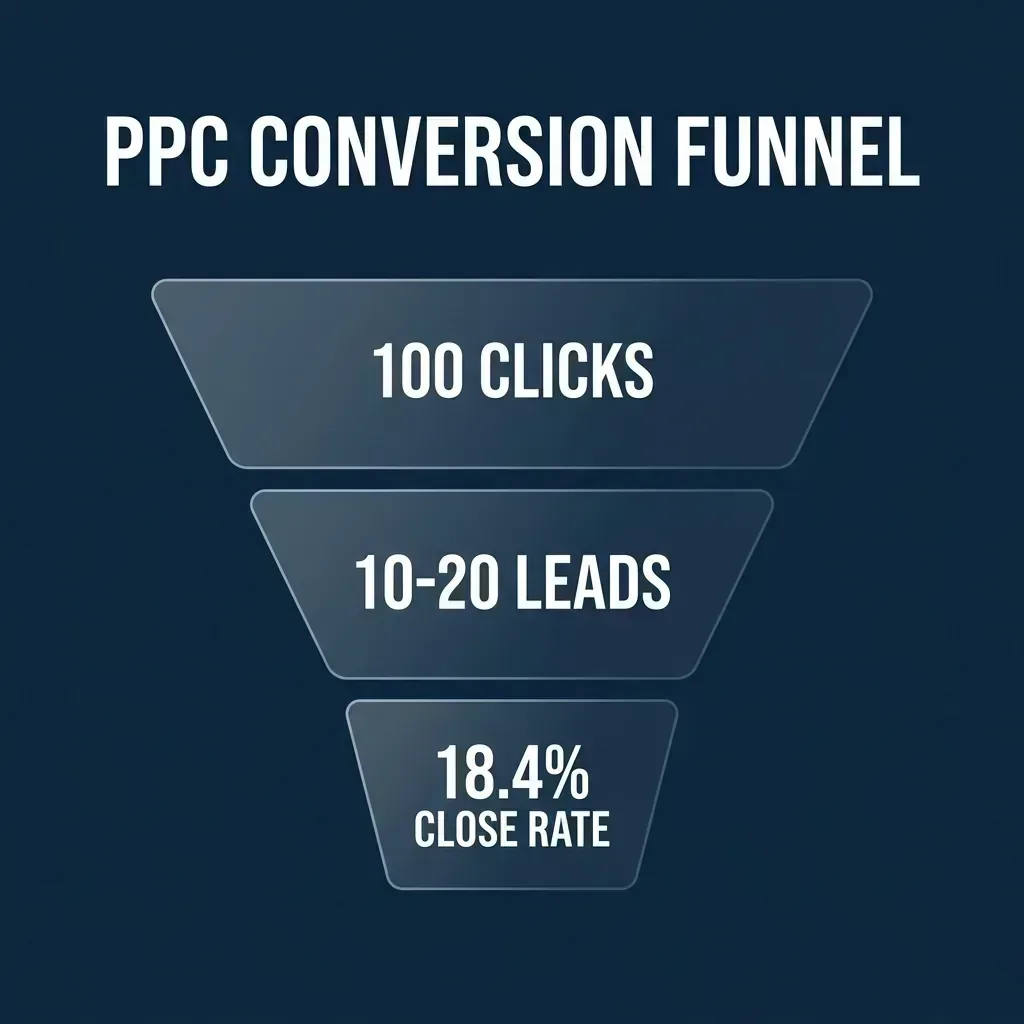
This is why our lead tracking for plumbers guide focuses on closed-loop measurement. Cost per lead is useful, but cost per booked job is better. Cost per sold job or return on ad spend is better still.
If you cannot push booked-job data back into Google Ads yet, build a simple weekly report. Export calls, tag them manually, and compare campaign spend to qualified calls and booked jobs. Even a small amount of real feedback is better than optimizing blindly from click metrics.
Budget Optimization: Do Not Cut the Winners to Feed the Noise
When CPL rises, the instinct is often to lower bids or budgets across the account. That can accidentally cut profitable emergency and high-value services while leaving structural waste untouched. Better PPC optimization starts by separating winners from noise.
Review spend by campaign, search term, location, hour, device, and landing page. Ask three questions:
- Where are booked jobs coming from? Protect those campaigns before making broad cuts.
- Where are clicks converting to leads but not booked jobs? Check call quality, dispatch scripts, and landing-page promise.
- Where is spend creating no meaningful calls? Add negatives, tighten match types, reduce geography, or pause.
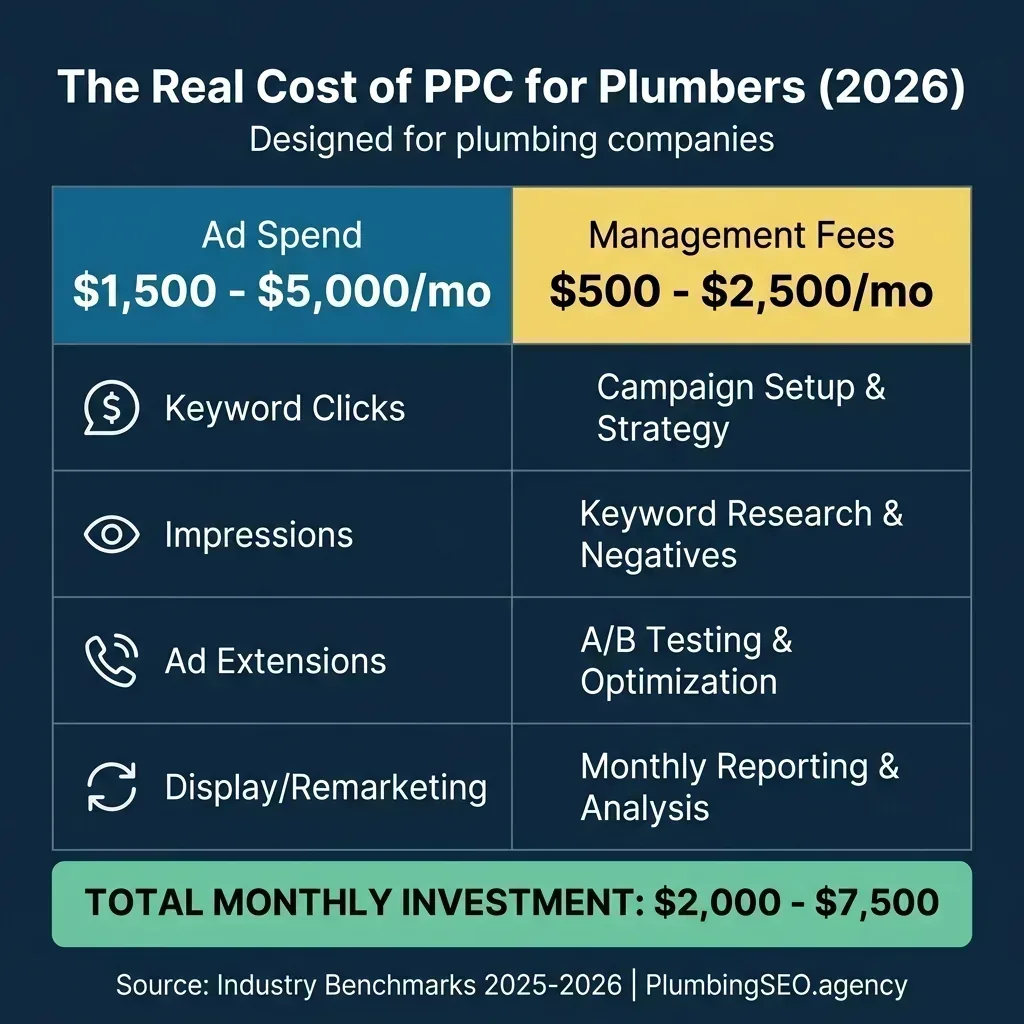
For budget context, pair this article with our guide on how much PPC costs for plumbers. Optimization does not make competitive markets cheap, but it should make spend more accountable.
Ad Copy Should Filter as Much as It Persuades
Good ad copy earns clicks from the right customers and discourages the wrong ones. Plumbing ads should be specific enough to match the service and market: “Emergency Drain Cleaning in [City],” “Water Heater Repair & Replacement,” “Licensed Local Plumbers,” “Same-Day Service When Available,” or “Upfront Options Before Work Begins.”
Avoid vague claims that every competitor can say: “best plumber,” “quality service,” or “affordable prices.” Use proof and expectations instead. If the company has 24/7 dispatch, say it. If it does not, do not imply it. If financing matters for water heaters, mention it on those ads and pages. If the company specializes in slab leak detection, use that specificity.
Ad assets should support the same goal: call assets, location assets, sitelinks to key services, structured snippets for services, and callouts for proof. The account should make it easy for high-intent searchers to choose the right next step.
The Weekly PPC Optimization Checklist for Plumbers
The best plumbing PPC accounts are not optimized once. They are operated. Use this weekly checklist to keep budget pointed at qualified calls:
- Search terms: add negatives, isolate winners, and watch for DIY/job/out-of-area waste.
- Call quality: review recordings or call summaries for spam, missed calls, wrong services, and booked jobs.
- Landing pages: check mobile load speed, phone visibility, service match, and form function.
- Locations: compare spend, calls, booked jobs, and drive-time reality by city or zone.
- Schedule: compare answer rate and booked-job rate by hour and day.
- Devices: review mobile and desktop separately before changing bids.
- Budget pacing: protect profitable service campaigns before increasing broad campaigns.
- Ad tests: test proof, urgency, service specificity, and CTA language one variable at a time.
Monthly, zoom out and compare PPC against SEO, Local Services Ads, referrals, and repeat customers. PPC is powerful because it can turn demand on quickly, but it should not be managed in a silo. A plumbing company’s strongest marketing system usually combines paid search for immediate high-intent demand with plumbing SEO and local visibility that lower dependency on paid clicks over time.
Common PPC Optimization Mistakes Plumbing Companies Make
The same mistakes show up again and again in plumbing accounts:
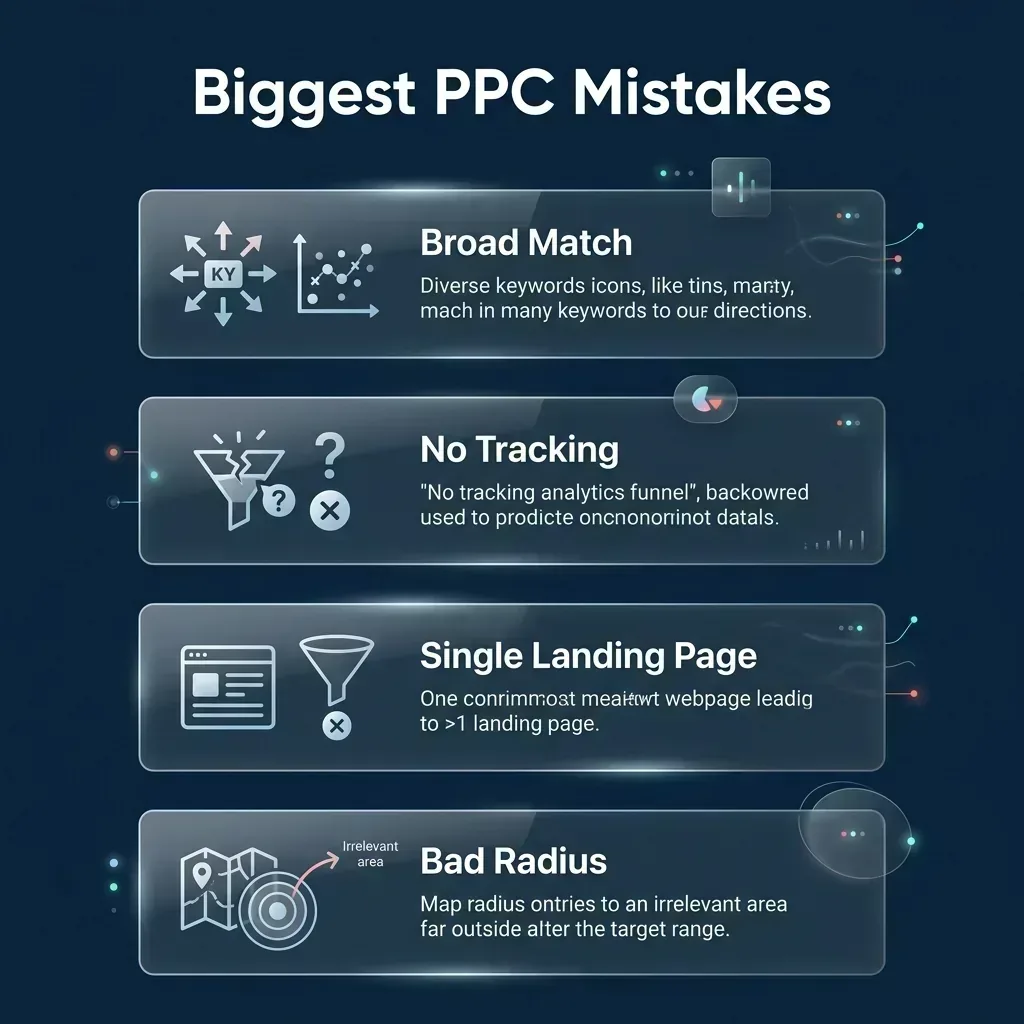
- Using one campaign for every service and every city.
- Letting broad match run before tracking and negatives are mature.
- Judging performance by form leads while most real jobs come from phone calls.
- Running after-hours ads when nobody answers, or turning off after-hours ads when emergency dispatch is actually profitable.
- Sending paid traffic to a slow homepage instead of service-specific landing pages.
- Optimizing for the lowest CPL instead of the lowest cost per booked job.
- Ignoring search terms because the dashboard already shows “conversions.”
How to Know Your PPC Is Actually Improving
Do not declare victory because cost per click went down. A plumbing PPC account is improving when the numbers that connect to revenue improve together. Watch these signals:
- Cost per qualified call trends down or stays stable while volume holds.
- Booked-job rate improves by campaign or landing page.
- Missed-call percentage drops during paid-ad hours.
- Search-term waste shrinks over time.
- High-value service campaigns receive more of the budget.
- Landing-page conversion improves without lowering lead quality.
- Revenue or estimated job value becomes visible in reporting.
That is the standard. PPC optimization for plumbers is not a one-time setup checklist. It is a revenue discipline: buy the right intent, route it to the right page, answer it quickly, track whether it booked, and use that feedback to make the next week better.
If you want a second set of eyes on your plumbing PPC and SEO funnel, start with a free audit. We will look for wasted search terms, weak landing-page paths, missing tracking, and places where organic visibility could reduce paid dependency over time.
FAQs About PPC Optimization for Plumbers
A good cost per lead depends on the market, service type, competition, and whether the lead becomes a booked job. Emergency plumbing and sewer work can support a higher CPL than low-value repair calls if the booking rate and average ticket justify it. Track cost per qualified call and cost per booked job, not only raw CPL.
Call-focused ads can work well for urgent plumbing searches if the company answers quickly and can dispatch. They are risky if calls go unanswered, after-hours coverage is weak, or tracking cannot separate qualified calls from spam and wrong-number calls.
Review search terms weekly, add negative keywords, separate campaigns by service and urgency, tighten locations, align schedule with answer coverage, send clicks to service-specific landing pages, and use call tracking to identify which leads become booked jobs.
Most active plumbing campaigns should be reviewed weekly for search terms, calls, locations, schedule, and landing-page issues. Larger changes such as budget reallocations, landing-page rebuilds, and service-level strategy should be reviewed monthly with booked-job and revenue data.
Want a Cleaner PPC and SEO Lead Funnel?
We will review your Google Ads path, landing pages, local SEO structure, call tracking, and booked-job visibility so you can see where plumbing leads are leaking.
Run My Free PPC/SEO Leak Check