
- Local SEO pricing for plumbers usually makes sense in bands: light cleanup, competitive city growth, and multi-location work. The price should match the labor.
- Good Maps SEO pays for Google Business Profile work, reviews, citations, service-area proof, tracking, and monthly fixes. A mystery retainer is a leak.
- Judge the price by booked jobs and gross profit, not by a ranking report that never tells you whether the phone rang.
If your phones are quiet in the neighborhoods you actually want, local SEO pricing gets real fast. A $600 plan can sound too small. A $3,500 plan can sound like somebody backed a dump truck up to your wallet. The useful question is not, "What does SEO cost?" The useful question is, "What work is needed to get this plumbing company found in Maps and turn that visibility into booked jobs?"
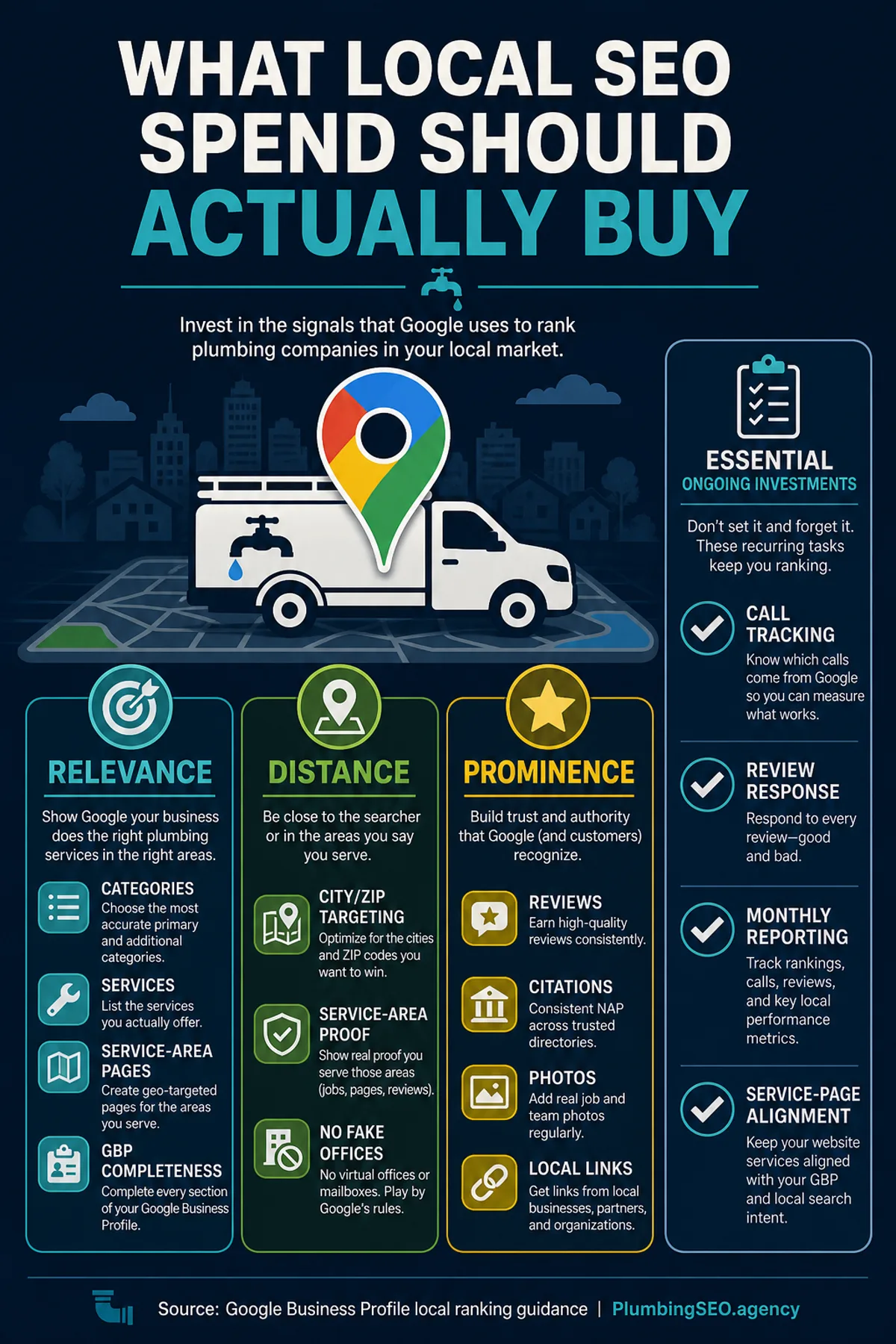
For plumbers, local SEO is not just a blog package. It is the work that makes your Google Business Profile, service pages, reviews, citations, photos, and tracking line up so customers in your service area can find you before they call the other shop. Google says local rankings are mainly based on relevance, distance, and prominence. That means your budget has to buy work in those areas, not vague activity.
Here is my practical take. Most plumbing companies should not buy the cheapest local SEO they can find. They also should not pay major-metro money if they only need a clean single-location foundation. Match the price to the market, then make the provider show the labor.
What local SEO for plumbers should cost in 2026
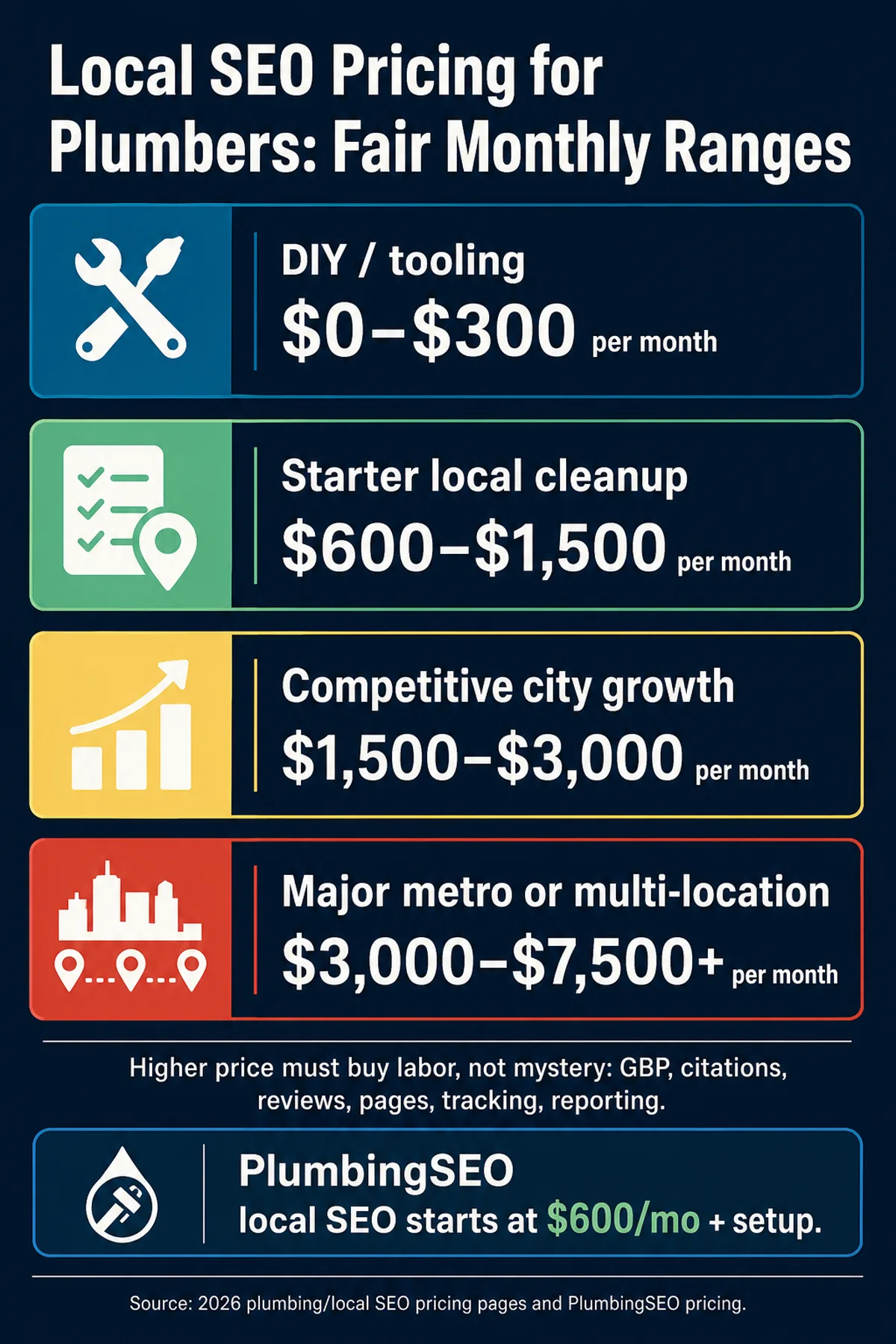
A fair local SEO budget for a plumbing company usually falls into one of these ranges:
| Market situation | Reasonable monthly range | What should be included | Who it fits |
|---|---|---|---|
| DIY with tools | $0 to $300 | Owner-managed GBP updates, review requests, basic listings, simple page edits | New shops with time, low competition, and no urgent growth target |
| Starter local cleanup | $600 to $1,500 | GBP cleanup, citations, review system, tracking, basic on-page repair | Single-location plumbers in smaller or moderate markets |
| Competitive city growth | $1,500 to $3,000 | Local pages, service-page updates, content, links, reviews, monthly reporting | Suburban companies fighting active competitors in Maps and organic results |
| Major metro or multi-location | $3,000 to $7,500+ | City and service expansion, stronger authority work, deeper tracking, competitive monitoring | Big service areas, multiple branches, or crowded city markets |
PlumbingSEO keeps a clearer public starting point on the plumbing SEO pricing page: setup plus monthly local SEO and growth options. That does not mean every plumber needs the same package. It means you should know what the starting line looks like before a sales call starts.
The price should change with the leak you are fixing
A plumbing owner in a town of 18,000 people does not need the same local SEO scope as a company trying to rank across Dallas, Chicago, or Phoenix. The first shop may need clean categories, accurate services, a review rhythm, and a few strong local pages. The second may need city intent work, service-area proof, link earning, call tracking, and a serious plan for competitors who are not sitting still.
That is why I do not like one-size-fits-all local SEO packages. Plumbing is too local for that. Two plumbers can sell the same water heater install and still need completely different SEO work because one is fighting three sleepy competitors and the other is fighting franchises with review machines.
What should be included in local SEO pricing
If an agency cannot explain what happens each month, do not sign. A clean local SEO plan for plumbers should include the following pieces.
Google Business Profile cleanup
Your GBP is often the front door before your website gets a chance. The work should cover categories, services, service areas, hours, photos, products if relevant, appointment links, tracking, and review response. Google also recommends keeping business information complete and accurate, adding photos, and responding to reviews. That is not busywork. That is how you stop leaking Maps trust.
Review system and response process
Reviews should not be a hope-and-pray operation. A plumber needs a repeatable request process after completed jobs, a response habit for good and bad reviews, and a way to keep office staff and techs aligned. Google’s own review guidance says replies are public and should be positive, relevant, conversational, and timely. In plain English, customers are watching how you talk when nobody is forcing you to be nice.
Citation and NAP cleanup
Name, address, and phone consistency sounds boring until a wrong number, old address, or duplicate listing sends a homeowner somewhere else. This matters even more for service-area businesses because a fake office, virtual address, or sloppy listing can create trust and compliance problems.
Service-page and city intent alignment
Local SEO should connect the GBP to real website pages that explain what you do and where you do it. For plumbing companies, that usually means service pages, city proof, photos from real jobs, FAQs, and internal links that point the right intent to the right page. If Maps terms are important for your company, the local SEO for plumbers service explains the deeper cleanup path.
Call tracking and booked-job reporting
A ranking report is not enough. You need to know which calls came from Google, which calls booked, and which jobs produced revenue. Otherwise you may celebrate traffic while dispatch is still empty. That is like fixing the faucet and never checking under the sink.
How to choose the right budget by market
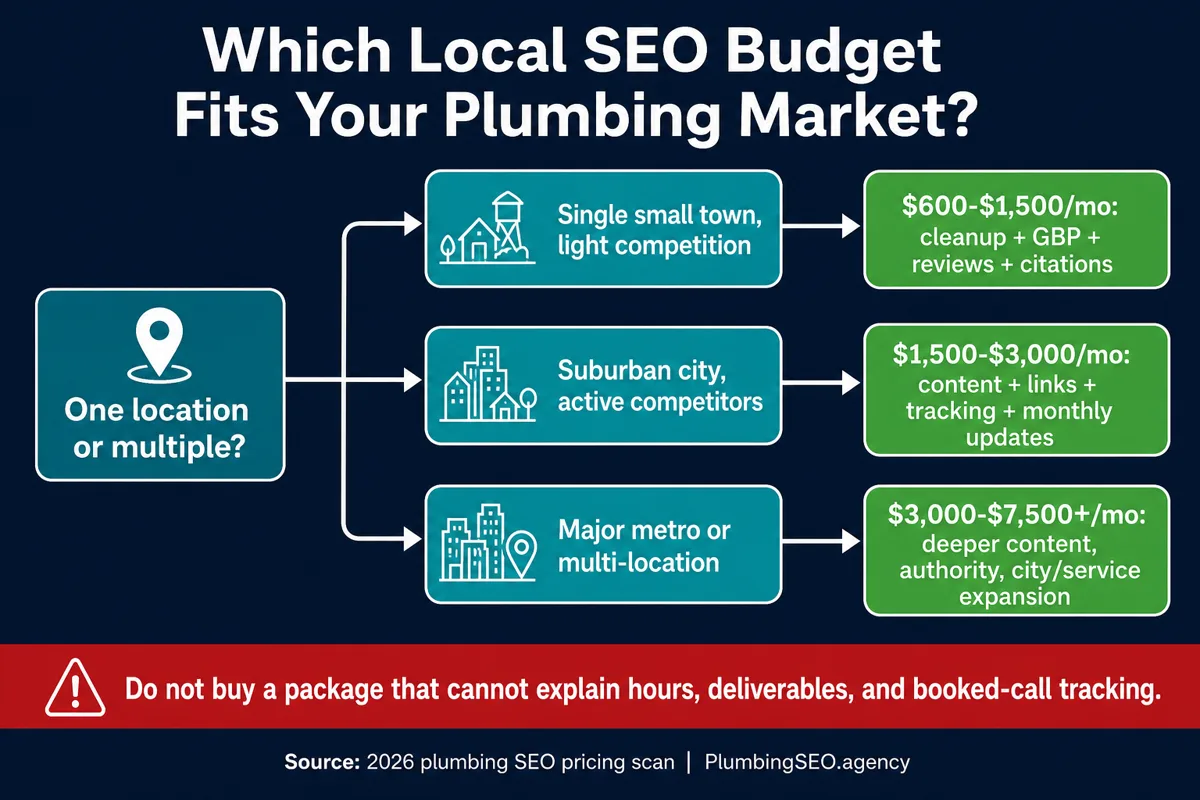
Use the market, not the agency’s favorite package, to set the budget. The more cities, services, reviews, and competitors involved, the more labor is needed.
Cheap local SEO red flags
Cheap SEO is not always bad. Small scopes can be priced fairly. The red flag is when a cheap package claims it will do everything.
- Guaranteed rankings. Nobody can buy or promise a better local ranking on Google.
- No call tracking. If they only report rankings, you will not know whether the investment moved jobs onto the board.
- No GBP work. Local SEO without GBP work is like showing up to a slab leak without a meter key.
- No review process. Reviews drive trust, local prominence, and close rate. They cannot be an afterthought.
- Secret methods. You do not need every technical detail, but you deserve plain-English deliverables.
- Same plan for every city. A rural shop and a metro shop should not get the same strategy.
When to use local SEO, SEO pricing, and ads together
Local SEO is not the only lever. If you need calls this week, Google Ads or Local Services Ads may still belong in the budget. If you need calls next quarter and next year, local SEO should build the owned foundation so you are not renting every lead forever.
The cleanest plan often looks like this: use paid channels for immediate demand, use local SEO to build Maps and organic visibility, and use tracking to compare cost per booked job. If you want the broader budget math, read the plumber SEO pricing models guide and the plumbing SEO ROI calculator.
Use this break-even calculator before you sign
The easiest way to judge a local SEO price is to ask how many extra booked jobs it needs to produce. Use gross profit, not top-line revenue, because payroll, parts, gas, warranty work, and callbacks are real.
What I would fix before raising the budget
Before a plumbing company jumps from a starter plan to a bigger retainer, I would check the basics:
- Is the Google Business Profile complete? Categories, services, hours, photos, service areas, and tracking should be clean.
- Are reviews current? Old reviews still matter, but recent review activity helps customers feel safe calling.
- Do important services have real pages? Drain cleaning, water heaters, sewer, emergency plumbing, repiping, and commercial work should not all hide on one thin page.
- Can the office answer pricing questions? You do not need a full flat-rate book online, but a starting point or range builds trust.
- Are calls being tracked to booked jobs? More leads are not useful if nobody knows which ones turn into work.
If those basics are broken, a bigger budget can make the mess louder. Fix the leaks first, then push harder.
The practical answer
For a single-location plumbing company in a moderate market, a fair local SEO plan often starts around $600 to $1,500 per month. For a competitive city, $1,500 to $3,000 per month is more realistic. For major metros or multi-location companies, expect $3,000 and up when the work includes content, authority, city expansion, review operations, and deeper reporting.
The way I see it, the right local SEO price is the one that buys visible work and can be judged by the phone. If the plan explains what gets fixed, which pages get stronger, how reviews improve, how Maps visibility is tracked, and how booked jobs are measured, you have something worth considering. If it only sells mystery, keep your checkbook in your pocket.
Local SEO Pricing Questions Plumbers Ask
Many single-location plumbers can start with $600 to $1,500 per month if the market is not too competitive. Busy suburban and city markets often need $1,500 to $3,000 per month. Major metro or multi-location campaigns can run $3,000 to $7,500 or more because the labor is heavier.
It may be enough for tools, coaching, or a very small cleanup scope. It is usually not enough for done-for-you GBP work, citations, content, tracking, review operations, and competitive service-area growth.
At minimum, pricing should explain GBP cleanup, service and category alignment, citation cleanup, review process, website-to-GBP alignment, call tracking, reporting, and the monthly work plan. If those deliverables are missing, the price is hard to judge.
No. Google Ads and Local Services Ads can help capture calls now. Local SEO builds the Maps and organic foundation that can reduce dependence on rented traffic over time. Many plumbers need both while SEO is gaining traction.
Simple GBP and citation fixes can show movement sooner, but meaningful Maps and organic gains usually need several months. Competitive markets take longer because reviews, prominence, service-area proof, and authority compound over time.
The biggest red flag is a package that promises rankings without showing deliverables or booked-call tracking. A plumber should know what is being fixed, how progress is measured, and how the work connects to calls.
Want the price tied to actual plumbing calls?
Start with a free leak check. We will look at the GBP, local pages, reviews, tracking, and pricing fit before recommending more spend.
Run My Free SEO Leak Check