
- Leak detection SEO works best when hidden leak, slab leak, and water leak intent each has a clear place to land.
- The page has to prove diagnosis, equipment, service area, reviews, and repair options before a homeowner trusts the call.
- Support blogs should link up to the main plumbing SEO service page, then call tracking should show which leak searches turned into booked work.
If you run a plumbing company, leak detection is one of those services where timing matters. A homeowner hears water running behind a wall, sees the meter spinning, or gets told there may be a slab leak. They are not casually browsing. They want a company that looks like it can find the problem without tearing the house apart.
That is why leak detection SEO needs more than a generic plumbing page with the phrase "leak repair" sprinkled around. Hidden leak, water leak detection, slab leak detection, and slab leak repair searches carry different levels of urgency. The owner who ranks for the right one can turn a nervous search into a diagnostic call, then into a real repair job.
The practical move is simple: build the content around how customers actually describe the problem, then connect that content to proof. Show symptoms. Show tools. Show repair paths. Show the cities you serve. Then make the next step easy enough that the customer does not go back to Google and call the next company.
What leak detection SEO is really trying to win
Leak detection SEO is the work of helping a plumbing company show up for searches where the customer suspects a leak but may not know the exact repair yet. That includes terms like "hidden leak plumber," "water leak detection near me," "slab leak detection," "slab leak repair," and city-based versions of each.
In my opinion, the biggest mistake is treating every leak keyword like the same job. A toilet supply line leak, a mystery water bill, and a slab leak under a finished floor do not create the same customer questions. A good page respects that difference.
For broader plumbing visibility, this article supports our plumbing SEO services page. The service page explains the full system. This post narrows in on one service line where search intent can leak away fast if the content is too thin.
The searches usually fall into three buckets
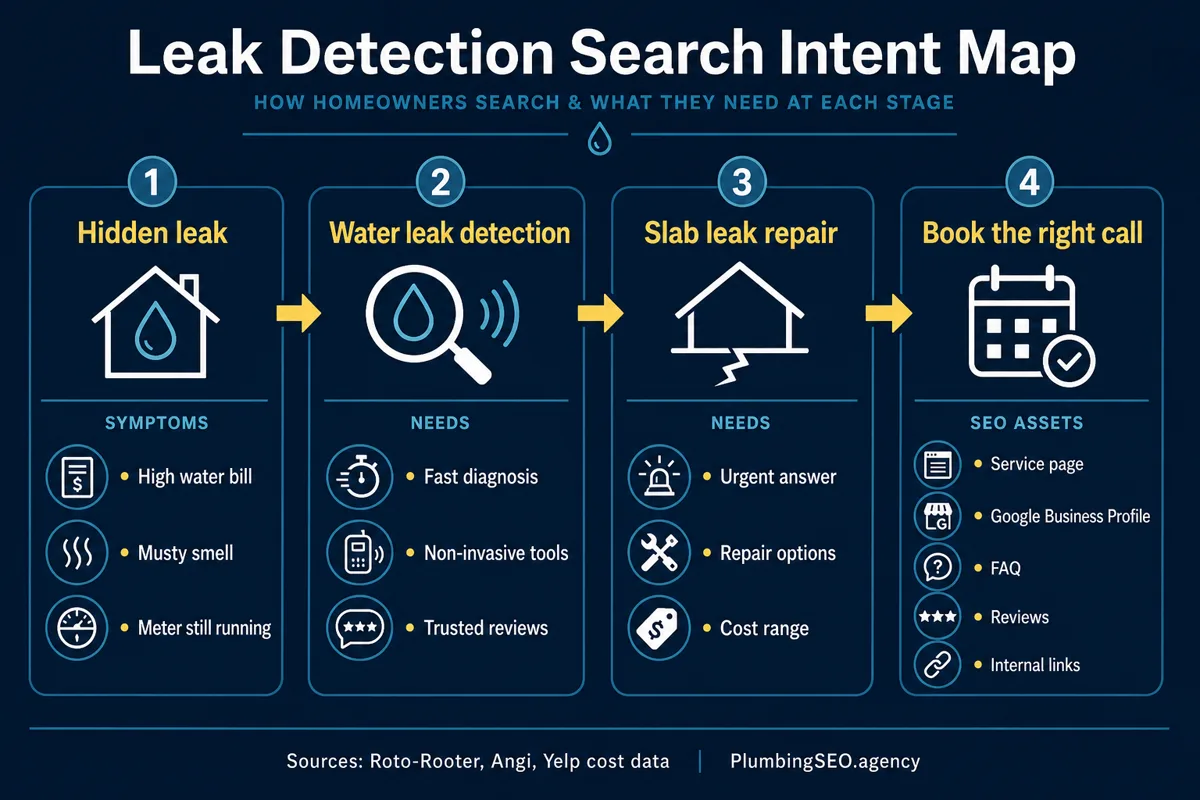
Most leak-related SEO work should be mapped into three buckets. The first is symptom searches, where the customer knows something is wrong but not what. The second is diagnostic searches, where they are looking for leak detection help. The third is repair searches, where the problem already sounds expensive and the customer wants options.
| Search bucket | Example keywords | What the page must answer |
|---|---|---|
| Hidden leak symptoms | hidden leak plumber, water bill leak, leak behind wall | What signs matter, when to shut off water, and when to call. |
| Water leak detection | water leak detection near me, plumbing leak detection | How diagnosis works, whether it is invasive, and what equipment is used. |
| Slab leak repair | slab leak detection, slab leak repair cost, under slab leak | Repair paths, urgency, cost variables, and next steps. |
Why these keywords are worth building around
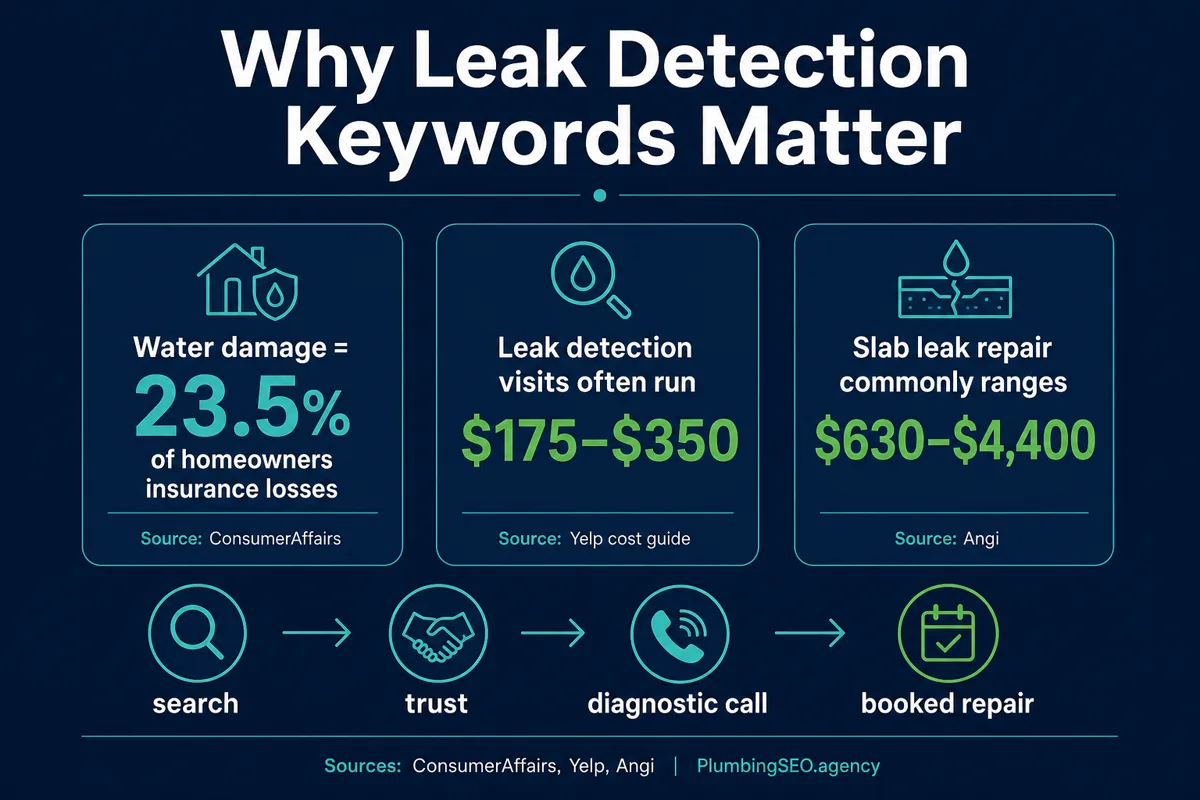
Leak detection searches are valuable because the customer has a problem that can get worse by the day. Public cost guides show why homeowners are motivated to act. Yelp's leak detection cost guide commonly places leak detection visits around $175 to $350, while Angi's slab leak repair guide puts many slab leak repairs in the $630 to $4,400 range. ConsumerAffairs reports water damage accounts for almost a quarter of homeowner insurance claims in its claims analysis.
For a plumbing owner, that means the searcher has both urgency and fear. They may be comparing local plumbers, leak detection specialists, insurance language, and cost ranges all at once. Your content has to calm the customer down and make the next step obvious.
Build one strong service page before chasing every city page
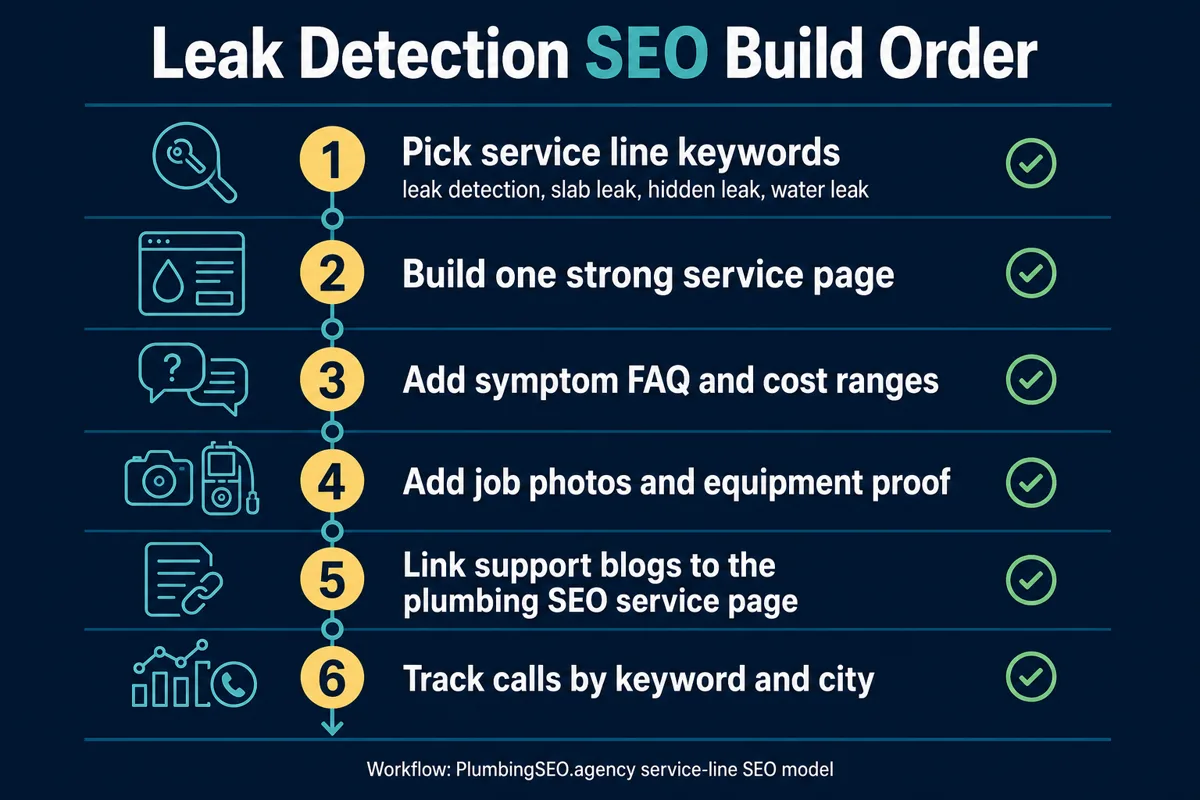
Here is what most agencies miss. If the main leak detection page is weak, spinning up ten city pages just spreads the weakness around. Start with one strong service page that explains the work clearly. Then build support content and city relevance after the base page can stand on its own.
A strong leak detection page should cover:
- Common symptoms, including high water bills, warm floor spots, musty odors, low pressure, and meter movement.
- Diagnostic methods, such as acoustic listening, thermal imaging when appropriate, pressure testing, and visual inspection.
- Slab leak options, including direct access, rerouting, repiping, and when each option may make sense.
- Service area proof, including neighborhoods, nearby cities, and real local job examples where possible.
- Reviews that mention leak detection, slab leaks, fast diagnosis, clean work, or clear communication.
- A clear call path for emergency and non-emergency leak concerns.
If you already have a solid local SEO base, connect this page to your broader Maps work. Our guide to emergency plumber SEO covers the urgent-call side of the same problem. Leak detection is usually a little more diagnostic, but the trust problem is similar.
Use FAQs to catch the long-tail searches
Leak detection creates a lot of question searches. That is good news if your page answers them plainly. Do not stuff the page with random FAQ questions just because a tool spit them out. Pick questions a real homeowner asks before they call.
Useful FAQ angles include whether leak detection is destructive, how long it takes, whether a plumber can find a slab leak, whether insurance covers water damage, and what signs mean the customer should turn off the water now.
Add proof that the company can actually diagnose the leak
Plumbing SEO for leak detection should show capability, not just claim it. If the company owns leak detection equipment, show it. If the crew has before-and-after photos from leak location jobs, use them. If reviews mention finding a hidden leak after another plumber could not, feature that story carefully and honestly.
This is not about bragging. It is about reducing the homeowner's risk. Someone with a possible slab leak is already picturing broken floors, insurance calls, and a repair bill they did not plan for. The page needs to say, in plain language, "We know how to find this before we start opening things up."
Internal links should guide Google and the customer
Once the main page is strong, support it with a few smart internal links. A blog about slab leaks can link to the leak detection service page. A Google Business Profile article can link to the page when talking about service categories and reviews. A drain or water heater article can link when leak symptoms overlap.
Keep the links natural. One relevant link in the right paragraph is better than a footer stuffed with every service you offer. If you are building a complete service-line cluster, our topical authority guide for plumbers explains how to connect related pages without making the site feel like a keyword warehouse.
Track calls by keyword, page, and city
The report may look good, but the phone tells the truth. For leak detection SEO, ranking improvements only matter if the right calls come in. Track which page generated the call, which city the caller came from, and whether the call turned into a diagnostic visit or repair estimate.
That does not mean every call needs a spreadsheet big enough to scare the office manager. Start simple. Label leak detection calls. Note whether they came from Maps, organic search, paid ads, or referral. Review the pattern monthly. If hidden leak searches bring tire-kickers but slab leak searches book higher-value jobs, adjust the content and internal links around what keeps the trucks moving.
The practical next step
If leak detection is a service you want more of, do not start by writing twenty thin city pages. Start by checking the page that should already win trust. Does it explain symptoms? Does it show diagnostic proof? Does it answer cost and repair questions honestly? Does it link back into your wider plumbing SEO structure?
Fix that first. Then build supporting content around hidden leaks, slab leaks, and water leak diagnosis. Bad SEO is like a slow leak. You can ignore it for a while, but eventually it shows up somewhere expensive.
Leak Detection SEO FAQs
Leak detection SEO helps a plumbing company rank for searches like hidden leak plumber, water leak detection, slab leak detection, and slab leak repair. The goal is to turn urgent diagnostic searches into qualified phone calls.
Yes, if leak detection is a real service the company wants more calls for. A dedicated page can answer symptom, diagnosis, equipment, cost, and repair-option questions better than a generic plumbing services page.
Build a strong leak or slab leak page, include repair options, show local service-area proof, add reviews and job photos, answer cost questions carefully, and link related blog posts back to the service page.
Use natural language around leak detection, hidden leak, water leak detection, slab leak detection, under slab leak, leak repair, service areas, and the common symptoms homeowners search before calling.
Track rankings, organic visits, Google Business Profile actions, calls by page, calls by city, booked diagnostic visits, and repair revenue. Rankings are useful, but booked jobs are the real scorecard.
Want leak detection calls from the right searches?
We can review your service pages, internal links, Google Business Profile signals, and call tracking so hidden leak and slab leak searches have a clean path to your phone.
Run My Free SEO Leak Check