
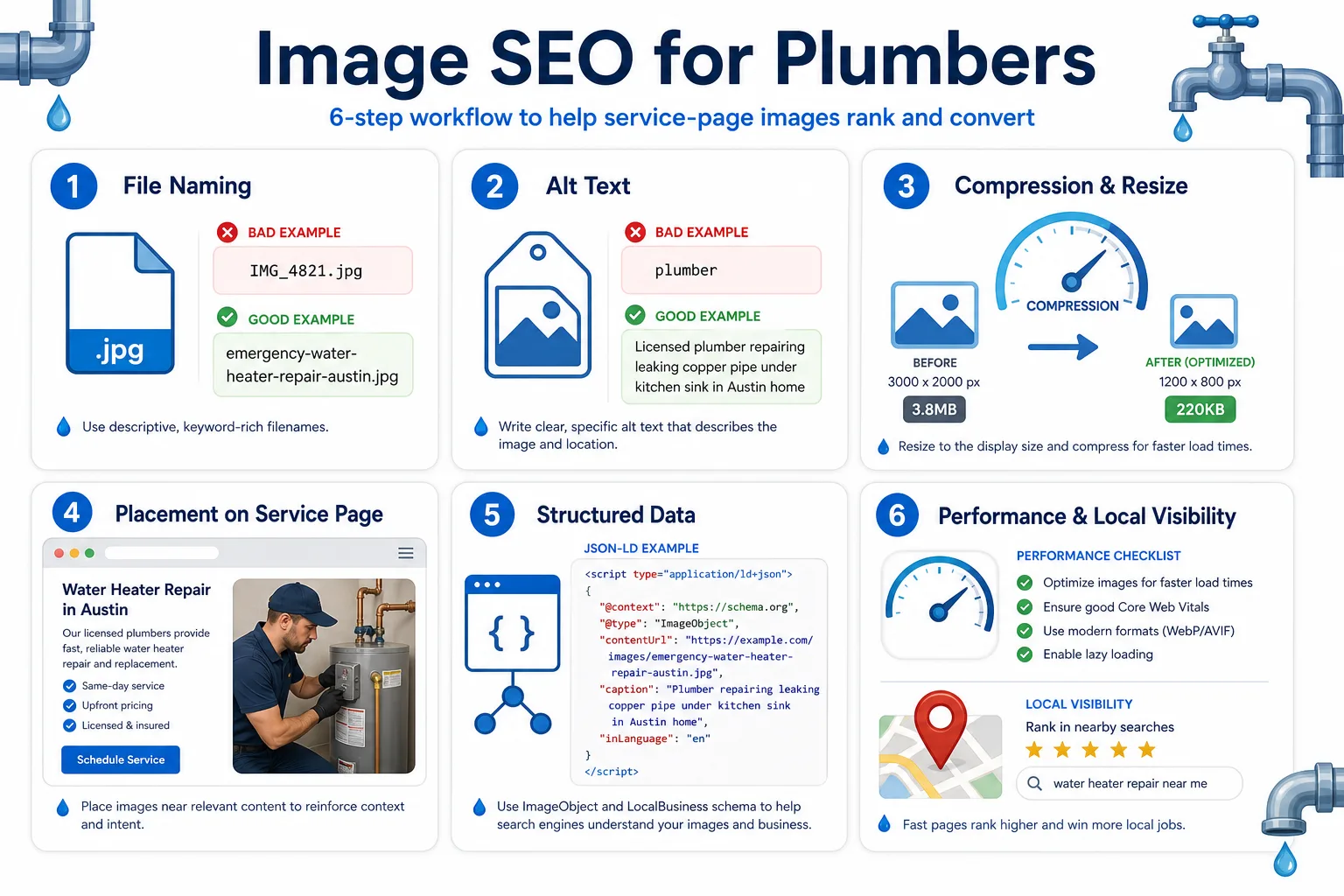
- Image SEO is a practical pipeline: name files clearly, write useful alt text, and host fast images so Google and customers can understand your work quickly.
- For plumbers, every good service photo is also sales proof; use real job images and relevant local context to improve local visibility and trust.
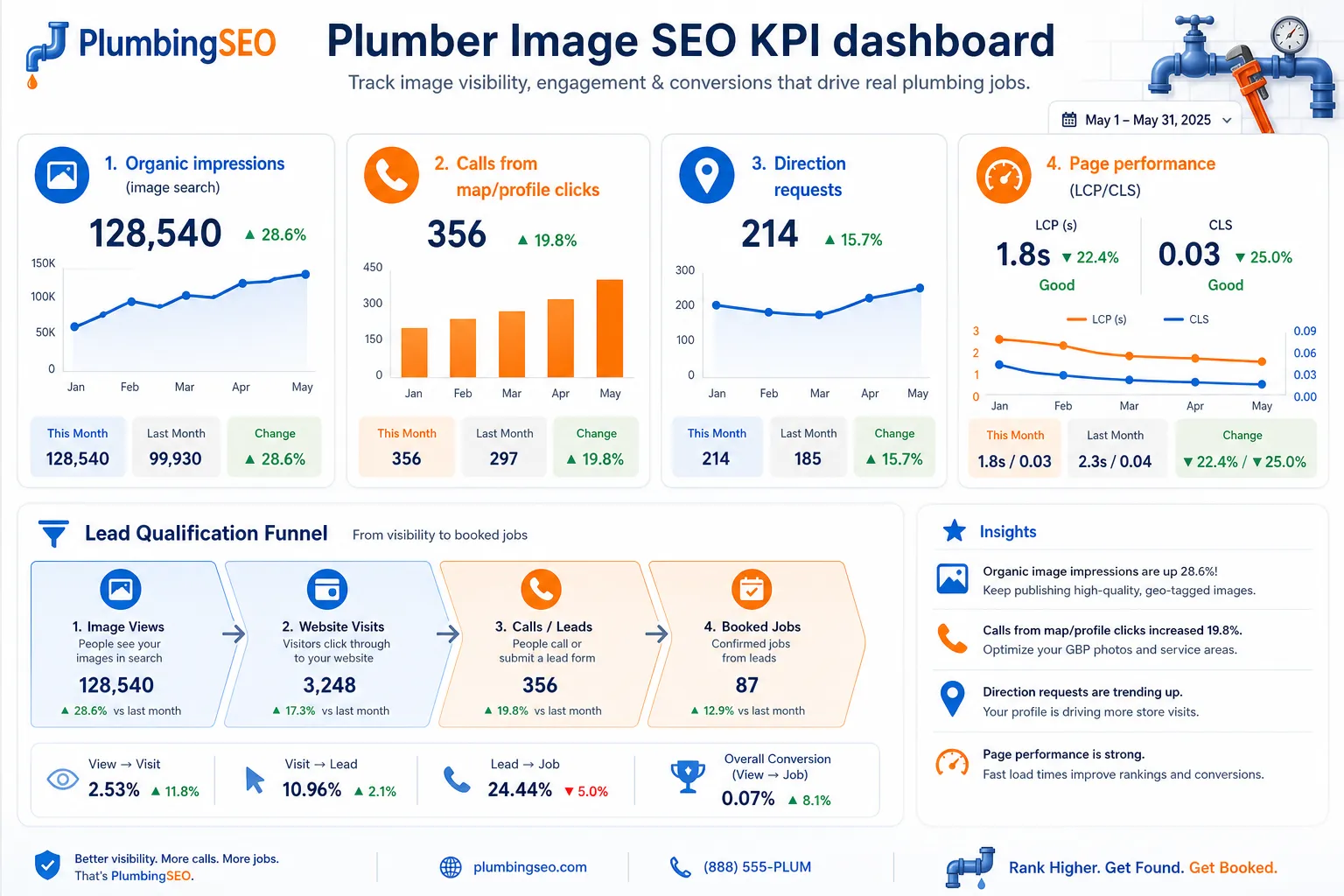
- Measure image changes with Core Web Vitals, ranking movement, and call volume instead of only traffic counts.
Image SEO: Why it finally matters to plumbing owners
For many plumbing websites, images are the highest-intent proof of work, yet they are often the least-indexed assets. Service photos, team photos, before-and-after photos, and equipment shots can attract local customers who are comparing quality and trust before picking up the phone.
Google can only use what it can find and understand. If your file names are random, alt text is missing, and your pages load slowly, those photos become dead assets. A plumber-focused image SEO system solves this with three goals:
- Relevance: tell Google exactly what each image is for and which service or service area it supports.
- Performance: keep media light enough that your page remains fast on mobile, which matters for emergency traffic.
- Trust: show credible, local proof tied to your actual plumbing services.
Why many generic image SEO guides miss plumbers
A lot of content says “use good filenames and alt text.” That is true, but it does not explain how plumbers get action from those assets. Plumbing demand is local, urgent, and visual. Your work quality appears in photos; your business reputation is visible in review-linked images and call-to-service moments.
Generic guides often skip that your most valuable image opportunities are:
- Emergency-specific images with a city or service qualifier in context.
- Before-and-after photos tied to specific plumbing problems like leaks, pipe replacements, and water heater work.
- Google Business Profile photos, which influence how nearby users evaluate legitimacy.
- Image-backed service pages that clarify expertise for each vertical job type.
Plumber-first image SEO workflow
If this feels like a lot, use this sequence. It gives teams and owners a clear order and avoids random image cleanup that never impacts rankings:
| Step | What to do | Expected outcome |
|---|---|---|
| 1) Audit | List top service pages, strip placeholder filenames, and identify unoptimized assets. | Clear baseline for what can be improved in one sprint. |
| 2) Name + describe | Rename to descriptive, keyword-aware names and add context-rich alt text in one pass. | Improved image discoverability and better relevance for local search terms. |
| 3) Compress + resize | Use the right dimensions for each placement and compress files before upload. | Faster rendering and better mobile conversion conditions. |
| 4) Place + contextualize | Put images next to explanatory text on specific service pages, not on random sections. | Higher page-level topical clarity and stronger user trust. |
| 5) Validate + monitor | Run JSON-LD validation and check image visibility through search/insights reports. | Faster diagnosis of indexing and ranking issues. |
For plumbers, this should be done on service pages first, not randomly across the whole media folder.
What Google expects from plumber images
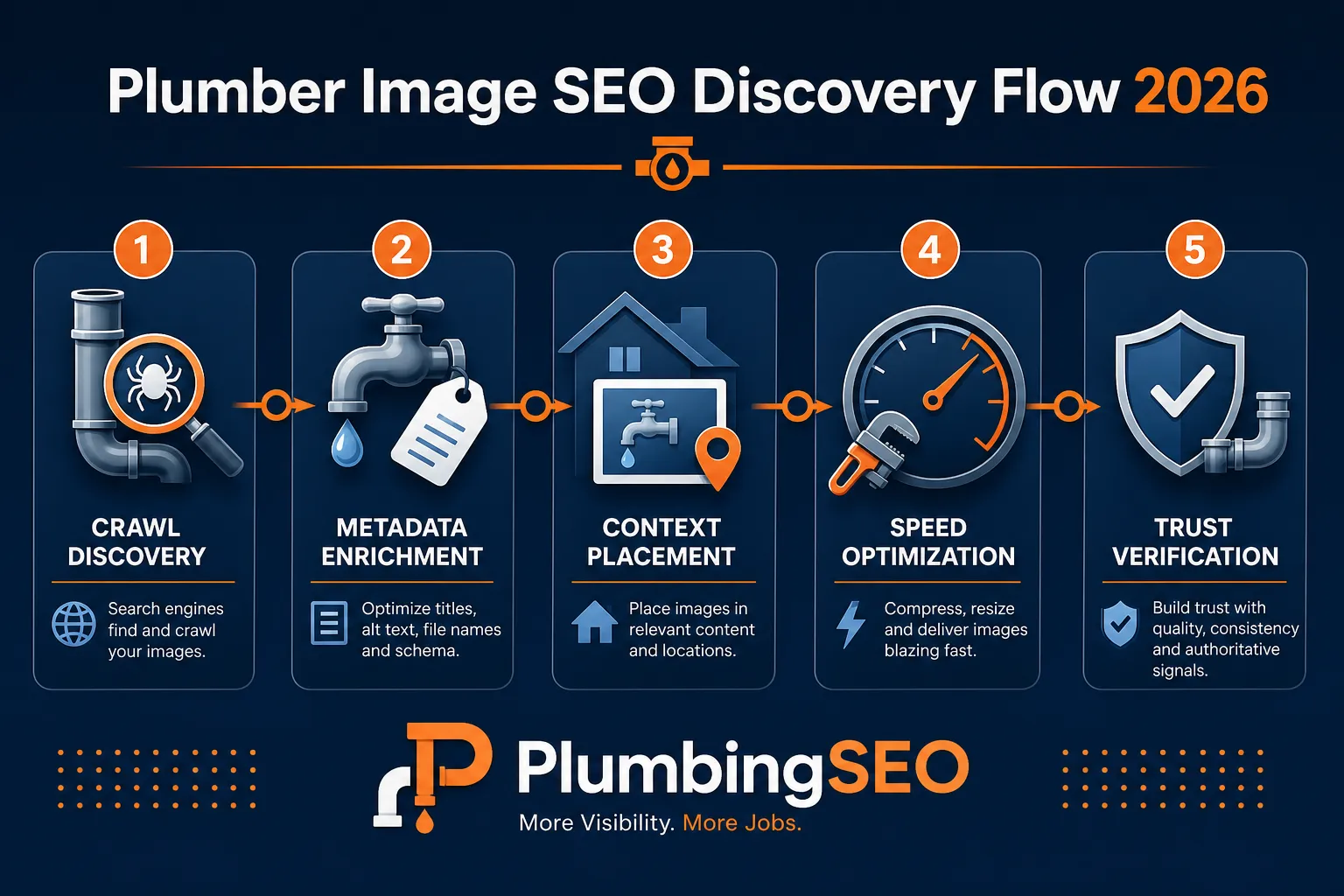
Google’s image guidance is practical: crawlers read image files from standard <img> elements, and you should help them with explicit context and metadata. That means using crawlable image markup, descriptive filenames, useful alt text, and clear landing-page context for each visual.
- Use crawlable image tags with meaningful
alttext, not decorative background-only images for service proof. - Use an image sitemap when needed so Google can discover every important asset, including CDN-hosted files.
- Match each image to the service intent on the page (emergency leak repair, heater replacement, city-level page, etc.).
Common mistakes that suppress image visibility
Most plumbers are not failing because they lack effort. They fail because small recurring errors multiply across dozens of posts and service pages.
- Uploading camera defaults instead of service-specific file names.
- Overusing one generic hero image across all articles and city pages.
- Embedding large files that slow the page where emergency intent is strongest.
- Missing context around images by separating visuals from service explanations.
- Ignoring local intent by omitting city and service cues in captions and alt text.
Also remember that internal quality controls matter. If your SEO workflow improves content but your local page structure and reviews are weak, photos alone will not sustain momentum.
Make your photos score for local relevance, not just looks
For plumbers, local search visibility is tied to relevance, distance, and prominence. Google Business Profile guidance emphasizes profile completeness, reviews, and local accuracy, and your website media can support those trust signals when it is consistent and local-aware.
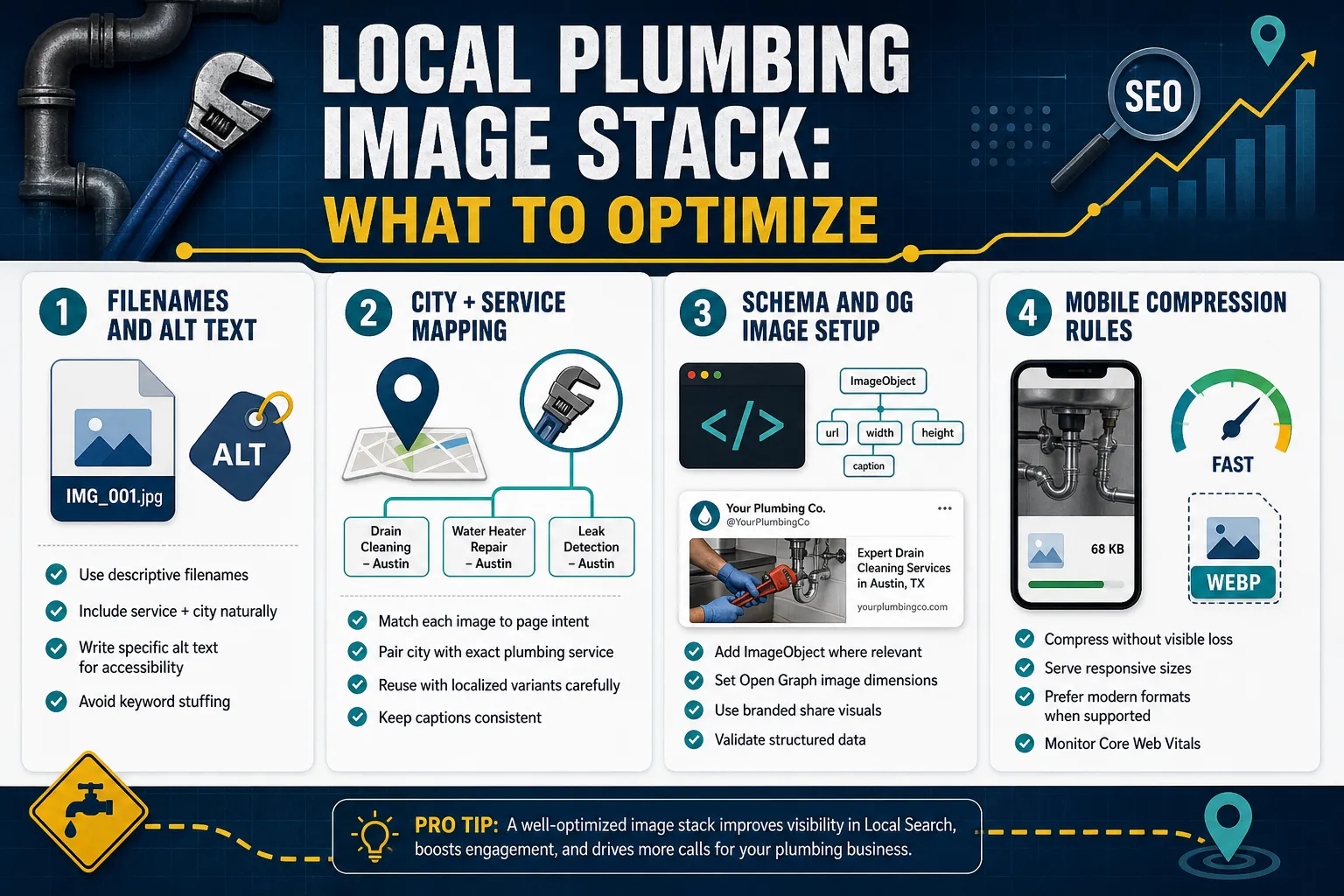
- Relevance: pair each image with the exact service the user is searching for.
- Distance/area context: include city and neighborhood context where it helps users make faster decisions.
- Prominence: maintain consistent branding and service accuracy between site images and profile photos.
How image SEO supports local conversions
Think of image SEO as pre-call persuasion. A cleaner photo and schema setup does two things:
- It improves exposure in image and mixed search surfaces.
- It improves confidence when users see real local proof before they call.
Pair this with your advanced local SEO work and your Google Maps strategy can become more consistent. Plumbing users want reliable signals before reaching out: what you did, how recently, and whether the company is nearby and active.
Research-backed settings I used while expanding this article
To avoid guessing, this update referenced official guidance and technical references:
- Google Image sitemap best practices for crawl discovery.
- Google Core Web Vitals guidance for page-experience context.
- web.dev threshold definitions for LCP / INP / CLS.
- Google Business Profile guidance on complete and accurate local data.
Quick implementation blueprint for your next 10 images
Start with 10 images from your highest-traffic pages. Rename, rewrite alt text, compress, and publish. Then add one practical caption that explains the service and location context.
For larger teams, include this in your weekly SEO routine and keep a changelog. Repeated, small updates beat one-off cleanups.
Connect image optimization to Core Web Vitals and user experience
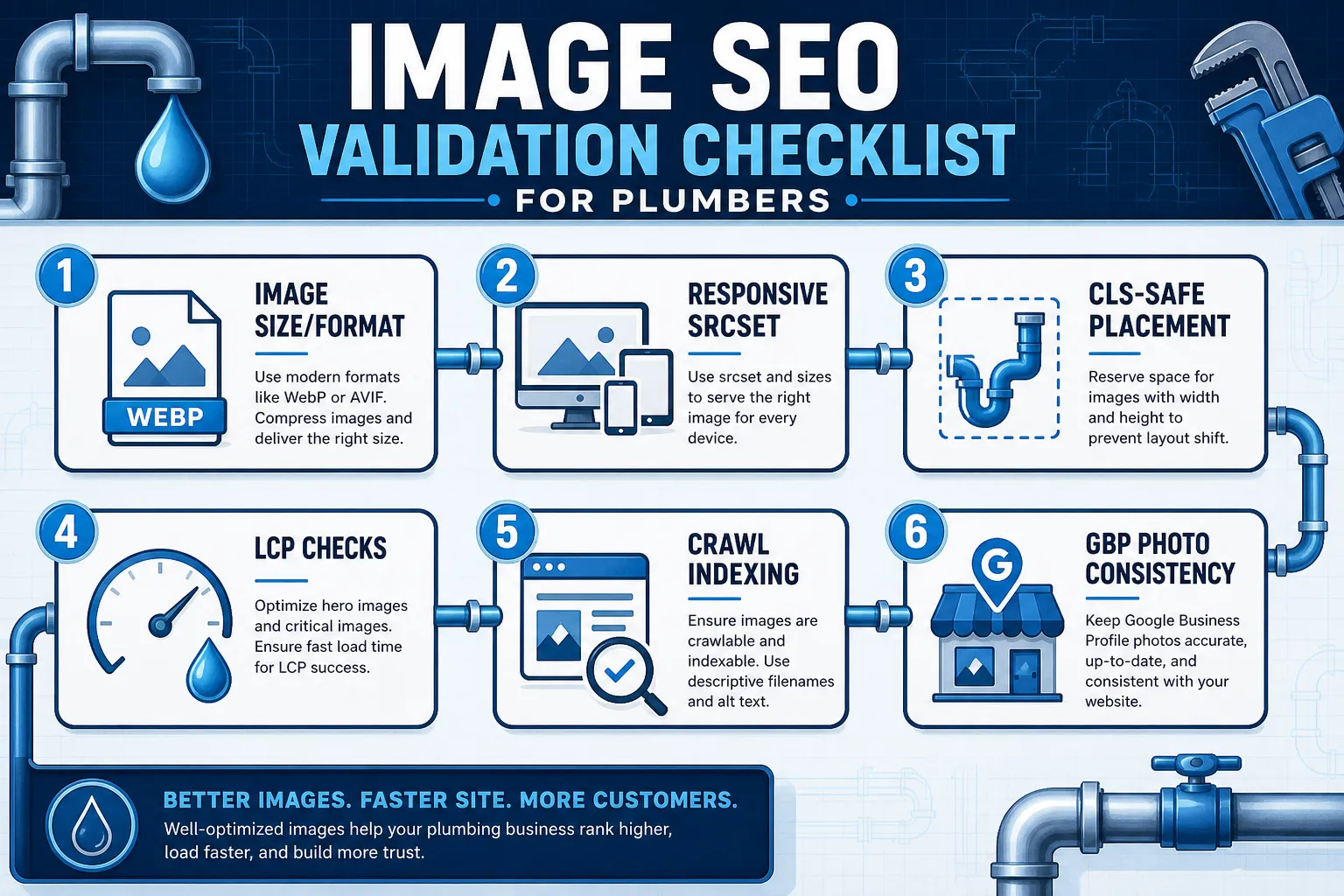
Search quality uses page experience, and images are often the heaviest component. Use this practical baseline for each page type:
| Signal | Target | Image-focused action |
|---|---|---|
| LCP | 2.5 seconds or better | Keep hero images compressed, prioritized, and properly sized for mobile-first loading. |
| INP | 200 ms or better | Use lightweight UI patterns around gallery sections and avoid layout-blocking scripts around media blocks. |
| CLS | 0.1 or lower | Reserve fixed dimensions for images so banners do not shift as the page loads. |
30-day deep rollout plan: from file cleanup to measurable growth
Use this sequence to turn isolated optimizations into a repeatable process:
- Days 1–7: Audit top 3 pages, clean 10–15 high-value assets, rename + alt text update.
- Days 8–14: Apply compression and responsive delivery, then recheck service-page LCP and CLS.
- Days 15–21: Align local signals (service + city context), update GBP-linked visuals, and keep schemas in sync.
- Days 22–30: Track image search impressions, map clicks, direction requests, and call volume; then repeat with next pages.
When measured monthly, this routine usually outperforms one-off edits because it steadily improves both discovery and confidence.
FAQs on Image SEO for Plumbers
Image SEO gives Google clearer clues about your service pages and builds trust signals from real project photos. Better filenames, alt text, captions, and placement can increase image search exposure while helping local users quickly evaluate whether you are the right plumber.
You can do the first phase yourself if you have one or two dedicated pages. For deeper impact, many teams need structured workflow support: image audits, page-level strategy, and technical validation with schema and crawl checks.
Quick wins in page speed and image metadata are visible in crawl reports first. For ranking movement, owners usually see mixed signals in 30–60 days, and stronger local impact after 60–120 days if GBP and service page quality are also improving.
Real service photos should be your base layer. Stock images may help with layout, but local plumbing leads come from trust. Real before-and-after visuals and team photos usually outperform generic visuals in both engagement and conversion.
Not directly. But local content quality matters across channels. If your local GBP and service pages have consistent image standards, social and citations become stronger support signals for search and lead behavior.
Want faster local visibility from your existing photos?
Start with one service page and one location. We help plumbers fix image naming, captions, loading speed, and schema alignment so visuals become a lead source instead of dead bandwidth.
Run My Free SEO Audit