
- Hydro jetting SEO should not be buried inside a generic drain cleaning page. Build a clear hydro jetting section or page for recurring clogs, sewer backups, grease, roots, and commercial maintenance intent.
- The best leads usually need proof before they call: camera inspection language, before-and-after photos, reviews that mention jetting, pricing ranges, cleanout access, and a fast phone path.
- Use supporting content and internal links to move buyers from symptom searches to your main plumbing SEO service page, then track which keywords turn into booked jetting jobs.
If you own a plumbing company with a jetter sitting in the shop, you already know the math. Hydro jetting is not the same as a quick bathroom sink clog. It is often tied to recurring main-line problems, grease, sludge, restaurant drains, camera inspections, and customers who have already tried the cheap fix.
That is why hydro jetting SEO deserves its own plan. A homeowner or facility manager searching for hydro jetting is usually deeper in the problem than someone searching "clogged drain." They may be comparing snaking, jetting, sewer repair, and whether the line is safe enough to clean. If your website treats all of those searches the same, Google gets a muddy signal and the customer gets a muddy answer. Nobody wants mud in a drain article. Or a drain.
The practical goal is simple: rank where high-ticket drain cleaning buyers are searching, prove you can handle the job safely, and make the next step obvious. For many shops, that means a dedicated hydro jetting service page, strong Google Business Profile proof, city-level relevance, and supporting blog content that explains when jetting makes sense.
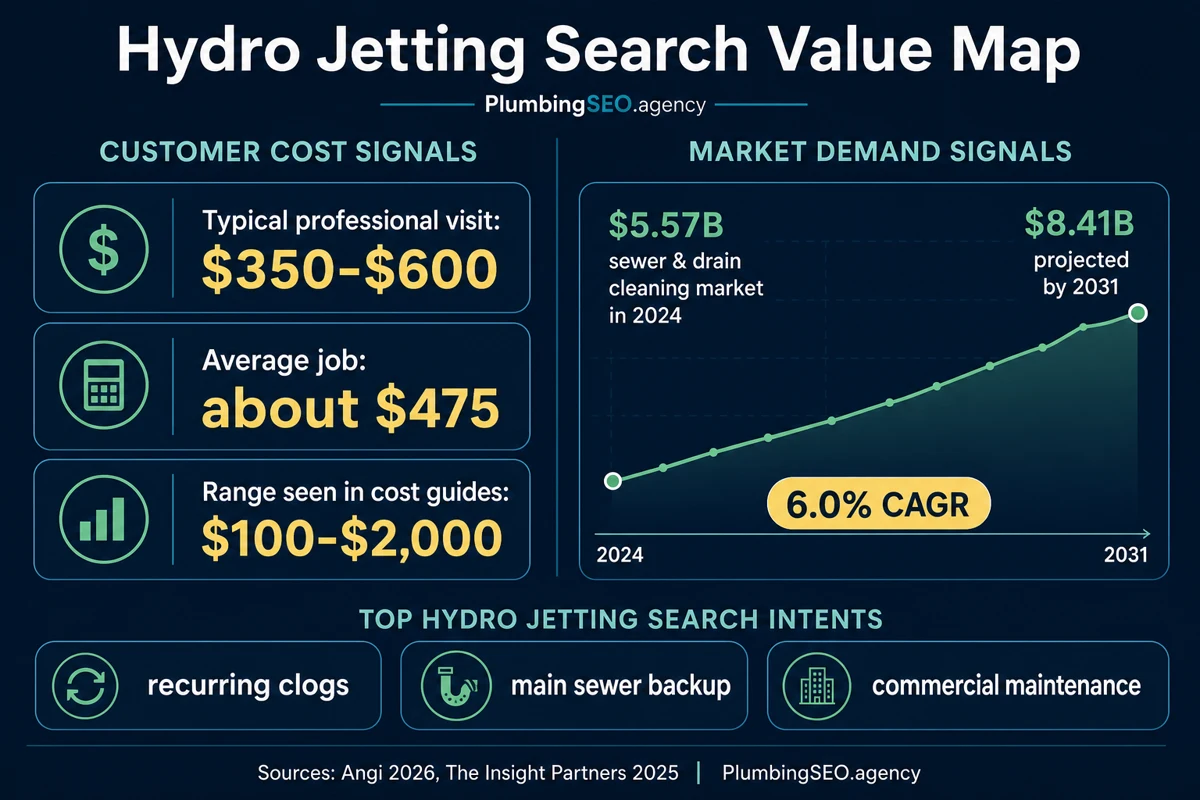
Cost guides show why this service deserves attention. Angi lists typical hydro jetting visits around $350 to $600, with an average around $475 and a wider range from $100 to $2,000 depending on access, severity, inspection needs, and related cleanup. Market coverage also points to demand: The Insight Partners projected the sewer and drain cleaning services market at $8.41 billion by 2031.
For a plumbing owner, the lesson is not "write a page and wait." The lesson is that hydro jetting is a real service-line opportunity. If the page is thin, the photos are missing, the reviews never mention jetting, and the call button is buried, the phone may ring for somebody else.
Hydro Jetting SEO Starts With Search Intent
Hydro jetting keywords sit between emergency drain cleaning and bigger sewer work. Some searchers want a price. Some want to know if jetting is better than snaking. Some are property managers looking for commercial maintenance. Some are homeowners with a main sewer line that keeps backing up every few months.
That mix matters. If one generic page tries to rank for clogged drain, sewer cleaning, hydro jetting, grease trap issues, root removal, camera inspection, and commercial maintenance, the page often gets too broad. Google may not see it as the best answer for any one search. The customer may not either.
| Searcher wording | Likely concern | Page section that should answer it |
|---|---|---|
| hydro jetting near me | Can you come out and do this locally? | Service area, availability, phone CTA, reviews |
| hydro jetting cost | Is this going to be a big bill? | Cost drivers, inspection, access, after-hours factors |
| hydro jetting vs snaking | Which fix actually solves the problem? | Comparison, when each method fits, safety notes |
| commercial hydro jetting | Can you handle recurring grease or facility drains? | Commercial proof, maintenance plans, case examples |
Build the Page Stack Before You Chase Rankings
Here is the owner-side truth. Hydro jetting SEO usually fails because the website asks one page to do too many jobs. The better setup is a small stack where each page has a job, each proof point supports the next one, and internal links guide the visitor toward a call.
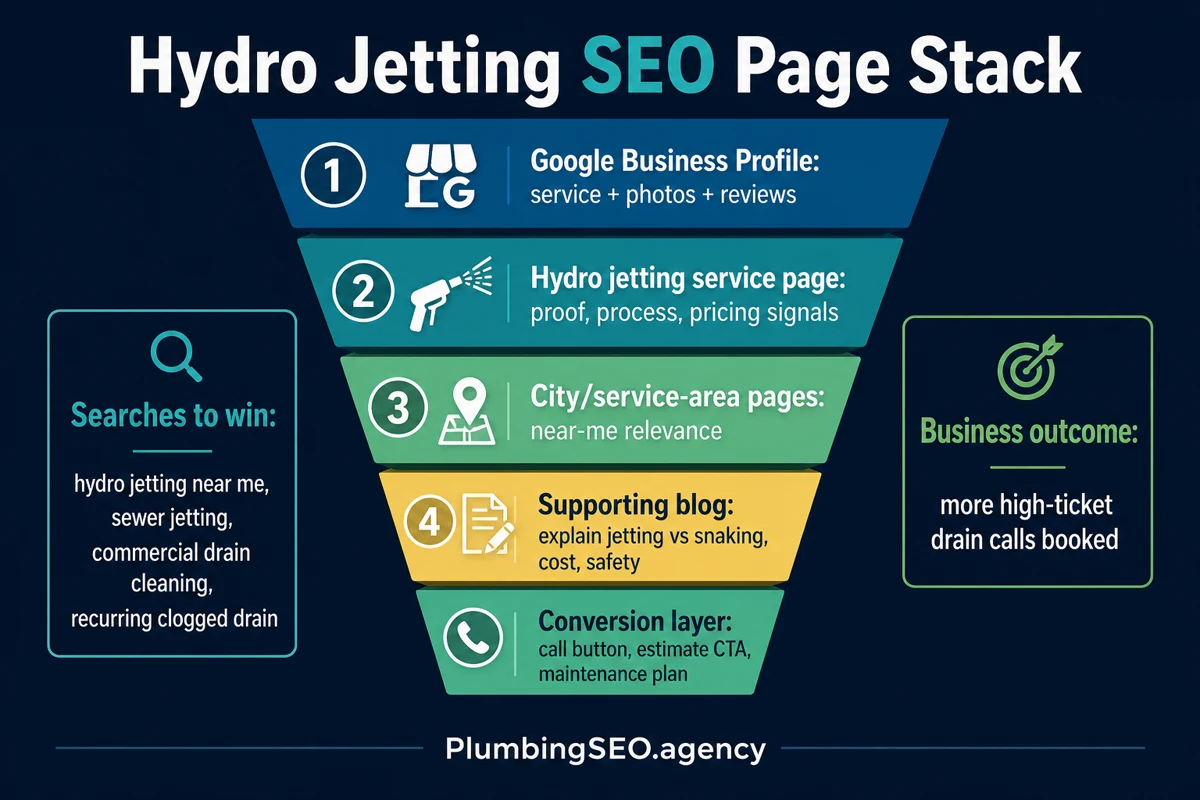
Start with the page that should book the job. A hydro jetting service page needs plain proof: what you clean, when jetting is appropriate, whether camera inspection is recommended, which pipe conditions may need caution, and how a customer can get scheduled. If you already have a broader plumbing SEO service strategy, the hydro jetting page becomes one of the service-line assets feeding that bigger system.
Then tighten the local signals. Your Google Business Profile should mention drain cleaning, sewer cleaning, hydro jetting if it is a real service, and the areas you serve. Photos matter. A clean jetter setup, equipment, branded truck, camera inspection screen, and crew photo can help the searcher believe you do this work, not just talk about it.
Next comes internal support. A general drain cleaning SEO guide can cover broad clogged-drain demand. A sewer repair guide can explain when cleaning turns into repair. A hydro jetting article like this one helps Google and readers understand the higher-value middle: recurring clogs that may not need excavation but do need more than a hand snake.
What the Hydro Jetting Page Must Prove
A customer with a backed-up line is not sitting there admiring your headline. They are asking quiet questions:
- Do they actually offer hydro jetting, or is this just a generic drain page?
- Will they inspect the line before blasting water through old pipe?
- Can they handle grease, sludge, roots, scale, or commercial drains?
- Do they serve my area?
- Can I call now without filling out a five-field form while water is coming up in the shower?
Your page should answer those questions before the customer has to hunt. That means clear service language, real photos, a simple process, realistic cost factors, and calls to action near the top and bottom of the page. If your page only says "we use high-pressure water to clear drains," it is doing the minimum. The minimum rarely keeps the trucks moving.
The pricing numbers are not there so you can promise a cheap job. They are there because cost-intent visitors want a real answer. Explain what changes the price: clog severity, pipe length, cleanout access, inspection, emergency timing, and whether cleanup or repair is needed. That builds trust faster than pretending every job fits one flat number.
Separate Snaking Searches From Jetting Searches
Snaking and hydro jetting are different jobs in the customer’s mind. Snaking can fit a simple blockage. Jetting is usually considered when the line has buildup, grease, sludge, recurring backups, or a commercial use case. Yelp’s hydro jetting guide describes jetting as more expensive than snaking but more effective for severe clogs, and comparison pages commonly make the same split.
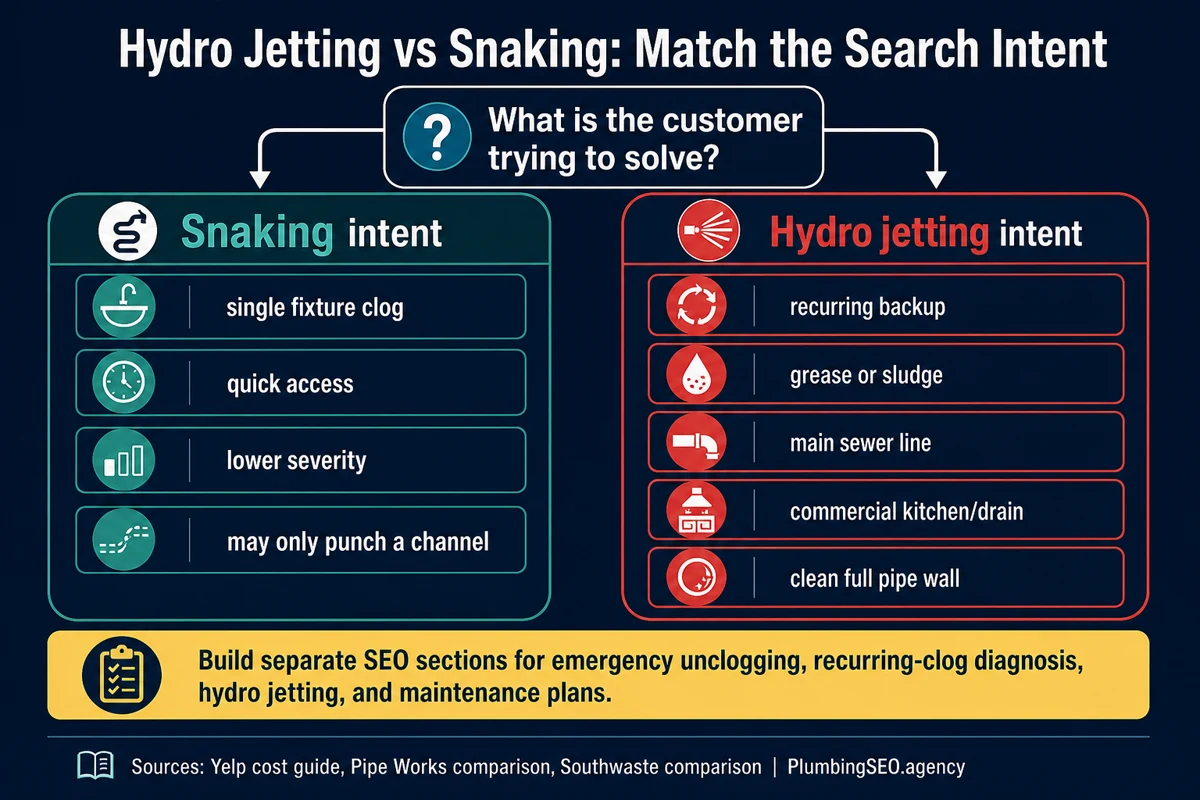
For SEO, that means you should not stuff every drain keyword into one paragraph. Build sections that mirror how the customer thinks. Emergency unclogging gets one message. Recurring main-line backups get another. Hydro jetting gets proof, safety, and process. Commercial maintenance gets scheduling, invoices, kitchens, floor drains, and prevention.
Reviews, Photos, and Calls Are Ranking Assets
Hydro jetting SEO is not only page copy. The page can say all the right words and still lose if the business has no proof. Reviews should mention the kind of jobs you want more of: sewer line cleaning, hydro jetting, recurring clog solved, restaurant drain, camera inspection, cleanout, same-day service. Do not fake it. Ask happy customers to describe the work in their own words.
Photos should also do work. A branded truck next to a jetter, a cleanout access photo, a before-and-after drain camera image, and a technician explaining the process can all support trust. Keep them real, local, and safe. If the photo looks like it came from a stock folder named "happy plumber number seven," customers can smell it from the crawlspace.
Internal Links Should Push Authority Toward the Money Page
This article supports the main service strategy, so the links should not be random. A natural internal link to the main plumbing SEO services for plumbers page tells both readers and search engines where the commercial path lives. A link to the plumbing SEO process can explain how the work gets done. A link to a free plumbing SEO audit gives the owner a practical next step if they want to find service-line leaks on their own site.
For sibling content, link only where it helps. Drain cleaning, sewer repair, trenchless sewer, sump pump, and water heater SEO are all service-line plays, but each one needs a clear reason to exist. That keeps the site useful instead of turning it into a pile of doorway pages.
Track the Work Like a Plumbing Owner, Not a Spreadsheet Fan
Rankings matter, but the phone tells the truth. Track the hydro jetting page separately from the general drain cleaning page. Watch calls, form fills, service-area performance, and which jobs actually book. If a keyword gets traffic but sends bargain hunters who never schedule, do not call that a win. That is noise with a nice chart.
I would measure this in a simple loop: which hydro jetting searches are growing, which pages received the visit, which calls came from those pages, which calls turned into jobs, and which jobs were worth repeating. Then improve the page, reviews, photos, links, and local proof based on that loop.
The Practical Takeaway
Hydro jetting SEO works best when it treats jetting like the high-value service it is. Build a real service page. Explain when jetting fits. Show proof. Link it into the rest of your plumbing SEO system. Make calling easy. Then track whether the work puts more serious drain jobs on the board.
If your company offers hydro jetting but your website barely mentions it, that is a leak. Not the kind that floods a basement, but the kind that sends profitable calls to the next plumber in town.
Hydro Jetting SEO FAQs
Hydro jetting SEO is the work of helping a plumbing company rank for searches related to hydro jetting, sewer jetting, recurring clogs, grease buildup, and high-pressure drain cleaning. It usually includes service-page content, Google Business Profile optimization, photos, reviews, internal links, and call tracking.
Yes, if it is a real service you want more calls for. A dedicated page can answer cost, safety, process, equipment, service-area, and comparison questions better than a short paragraph on a generic drain cleaning page.
Start with local intent keywords such as hydro jetting near me, sewer jetting, hydro jet drain cleaning, hydro jetting cost, commercial hydro jetting, and hydro jetting versus snaking. Then adjust based on your city, service area, and real call data.
Use real job photos, equipment photos, camera-inspection explanations, reviews that mention jetting or recurring clogs, clear safety notes, and a step-by-step process. The page should make it obvious that the company performs the work, not just writes about it.
It creates a service-line content asset that can link to the main plumbing SEO service page, support broader drain cleaning content, and help Google understand the company’s topical depth around high-value plumbing services.
Track rankings, clicks, calls, form fills, booked jobs, service areas, and job value. The important question is not only whether the page gets traffic. It is whether it brings serious drain cleaning calls that turn into profitable work.
Want more calls from high-ticket drain searches?
Run a free plumbing SEO audit and find the service-line leaks that keep hydro jetting, sewer, and drain cleaning calls from reaching your company.
Run My Free SEO Leak Check