
- This page is the budget-planning guide, not the package page. Use it to decide what a reasonable SEO spend looks like for your company size, then compare exact packages on our canonical plumbing SEO pricing page.
- Small local shops usually do not need a bloated $3,500/month retainer first. Many need tracking, GBP cleanup, basic technical fixes, citations, and a clean plan before committing to monthly SEO.
- Budget by constraint, not by agency pitch. A one-truck shop, a five-truck service-area company, and a multi-location plumbing brand should not buy the same SEO package.
The Real Cost of Plumbing SEO
If you search for "plumbing SEO cost" or "plumbing SEO pricing," most agency websites quote a wide range: $1,000 to $7,500+ per month. That range is not automatically wrong, but it is incomplete. The useful question is not "what does SEO cost?" The useful question is: what constraint are you paying to fix?
A plumbing company with no call tracking, messy Google Business Profile categories, duplicate listings, thin service pages, and no analytics does not need the same first step as a 25-truck regional brand trying to defend rankings across multiple cities. The first company needs a foundation. The second company may need ongoing local content, authority building, review systems, and market-by-market reporting.
That is why this article intentionally routes package decisions to the PlumbingSEO.agency pricing and packages page. This support guide helps you decide the budget range; the pricing page shows the exact plan, deliverables, and next step.
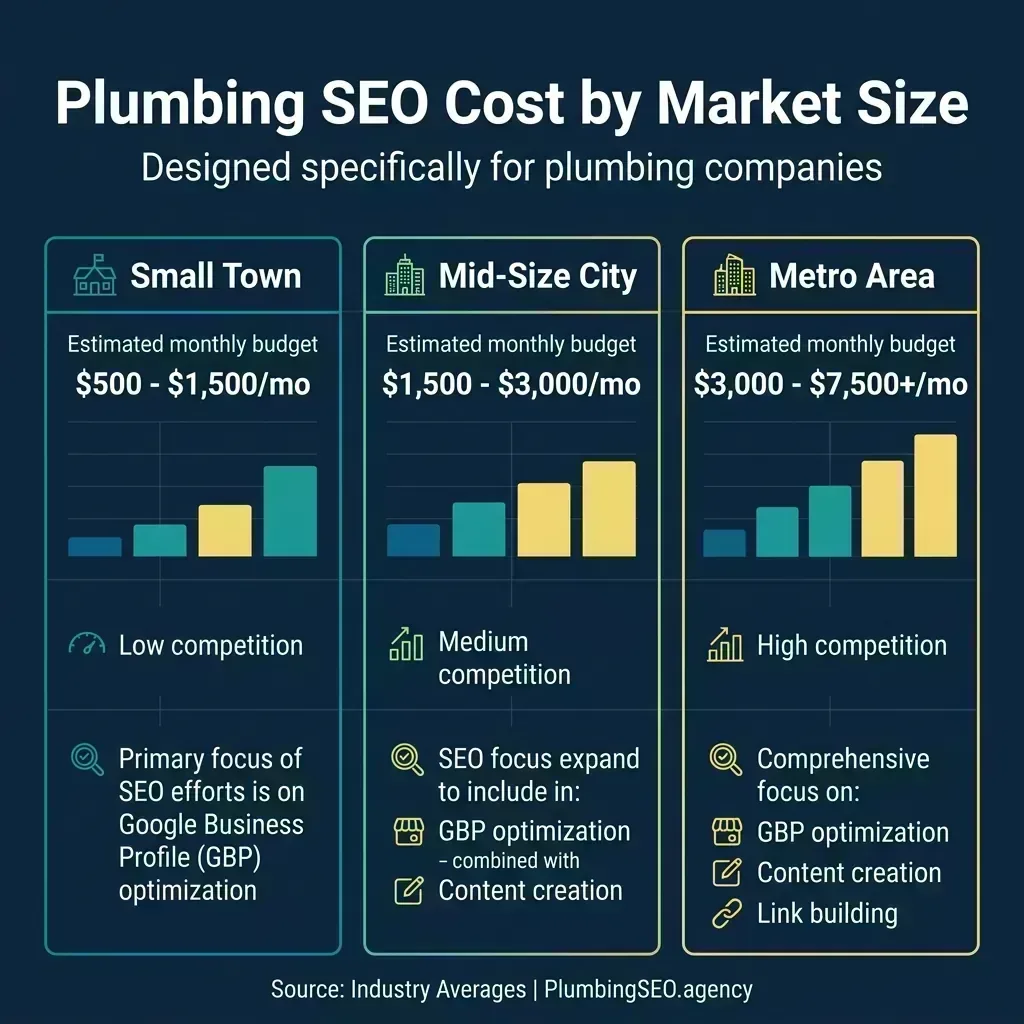
Start With Company Stage, Not an Agency Retainer
The fastest way to overspend is to ask, "what package does the agency sell?" before asking, "what stage is my plumbing company in?" Use this quick stage map before comparing retainers:
- Solo or 1-truck shop: prioritize GBP accuracy, reviews, service-area clarity, tracking, and basic website trust. A one-time setup plus light maintenance is often enough to start.
- 2-to-5 truck local company: add service-page improvements, local internal links, citations, monthly reporting, and content that supports the highest-margin jobs.
- 5-to-15 truck growth shop: budget for ongoing content, GBP posts/photos, review systems, service-area expansion, conversion improvements, and competitor monitoring.
- Multi-location or aggressive metro brand: expect a higher monthly scope because each market needs its own GBP, landing-page support, internal links, ranking checks, and reporting.
This framing keeps the pricing conversation honest. A cheap plan that ignores your real constraint is expensive. A higher plan with clear deliverables can be profitable. The difference is whether the work is tied to calls, booked jobs, and owned assets.
The $3,500/Month Quote: Is It Highway Robbery?
A $3,500/month quote can be reasonable for a competitive metro or multi-location plumbing company. It can also be wildly excessive for a small shop that mainly needs local-pack basics. The number alone does not answer the question. The scope does.
Budget test: if the proposal cannot explain what happens in the first 30 days, what happens every month after, who owns the assets, and how calls are tracked, pause before signing.
For a 1-to-3 truck operation in a mid-sized market, paying $3,500/month for vague "on-page optimization" and generic "link building" is usually a poor capital decision. Your primary battleground is Google Maps visibility, review quality, proximity, clear service pages, and conversion tracking. Ranking nationally for broad SEO phrases will not matter if local homeowners cannot find or trust you.
For a larger company, the same quote may be fair if it includes clear deliverables: new service pages, city-specific content, internal links, GBP work, citation cleanup, review support, call tracking, technical fixes, competitor monitoring, and reporting that ties visibility to leads.
The $700 Foundation Sprint: When One-Time Setup Beats a Retainer
Before signing a long contract, inspect what the first month actually delivers. In many plumbing SEO campaigns, month one is not advanced strategy. It is foundation work: claiming or cleaning up Google Business Profile access, setting up analytics, checking indexation, fixing metadata, tightening service-area language, adding call tracking, and making sure the website can convert visitors.
That is why a $700 one-time foundation sprint can be the smarter first move for a small company. It fixes the basics without draining the budget you may still need for Google Local Services Ads, emergency PPC, truck wraps, or referral campaigns.
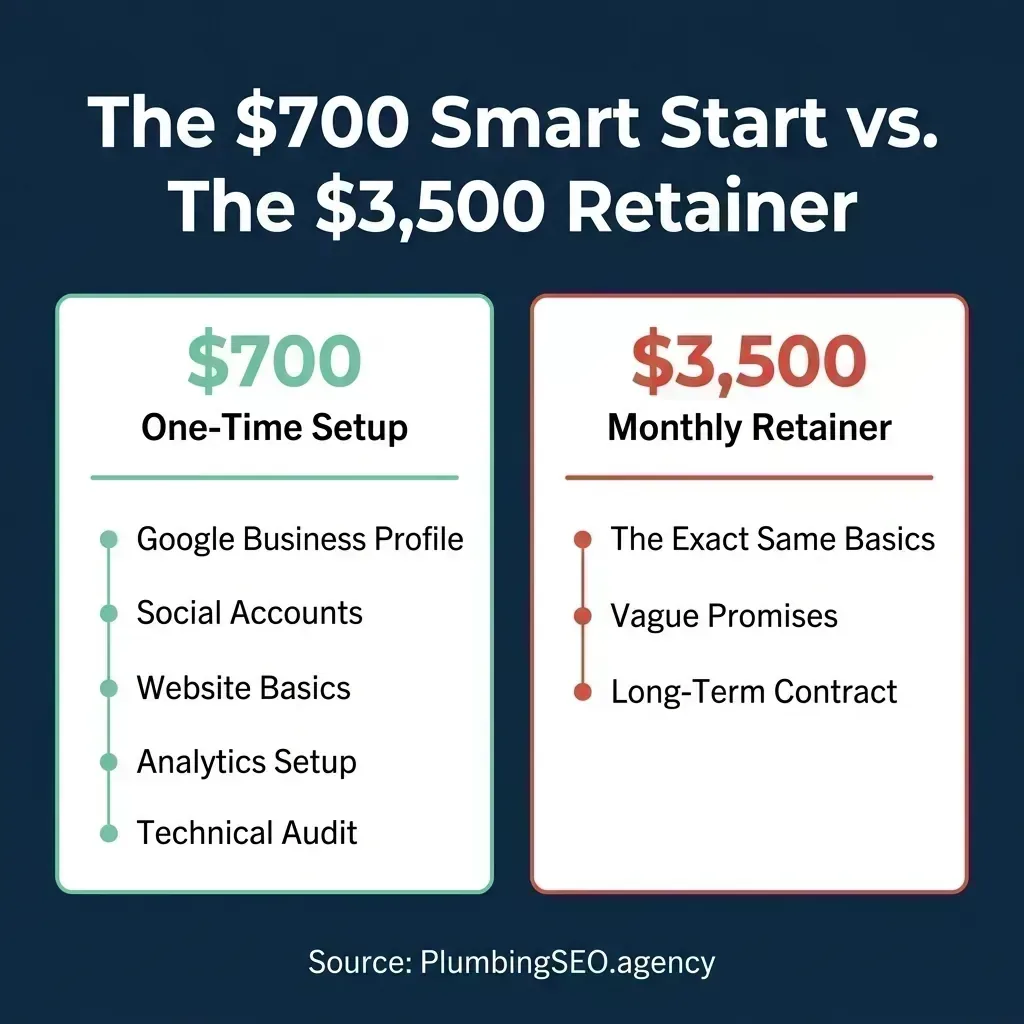
Once the foundation is complete, monthly SEO becomes a cleaner decision. If calls are already improving and the market is not highly competitive, you may only need light upkeep. If your competitors are publishing city pages, earning links, building reviews, and improving service-page depth every month, then a monthly plan becomes easier to justify.
When Monthly Plumbing SEO Is Worth Paying For
Monthly SEO is worth it when the work compounds. It is not worth it when the invoice repeats but the deliverables do not. A good monthly plumbing SEO plan should show a cadence like this:
- Google Business Profile work: categories, services, photos, posts, Q&A, reviews, and service-area accuracy.
- Website improvements: service-page depth, internal links, title/meta improvements, schema, speed, crawl/indexation checks, and conversion copy.
- Content support: practical blog posts and local pages that support money pages instead of competing with them.
- Authority and trust: citations, local mentions, partner links, testimonials, case studies, and proof that the company is real.
- Reporting: calls, forms, rankings, GBP actions, organic traffic, and what changed since the previous month.
If the agency cannot show the monthly work loop, you are not buying SEO. You are buying hope.
The 80/20 Rule: What Actually Moves Plumbing Calls?
When a homeowner has a burst pipe, they do not read ten educational articles before calling. They search "plumber near me," scan the map pack, compare reviews, and choose a company that looks available and trustworthy. That reality defines the 80/20 rule of plumbing SEO.
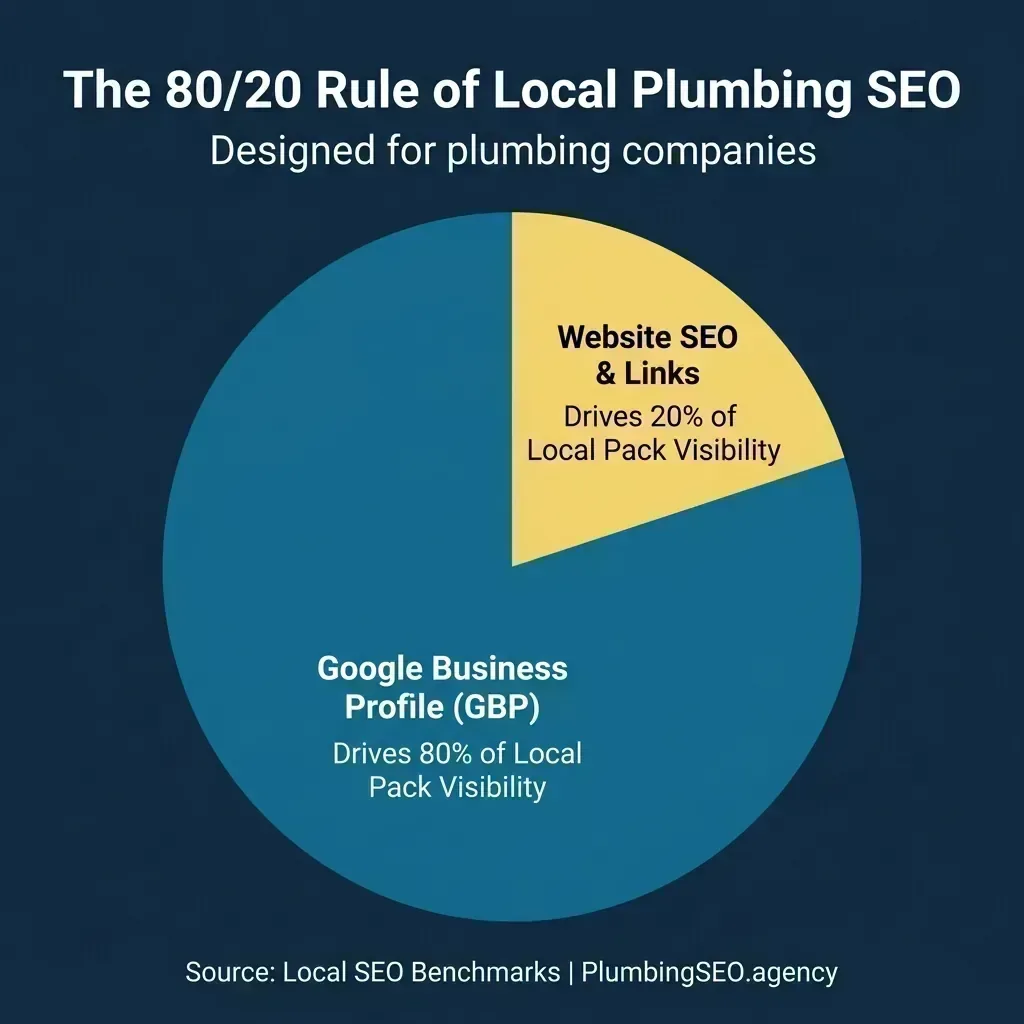
That does not mean blog content is useless. It means blog content should support the correct destination. Pricing and budget articles should help buyers understand the decision, then send package-ready visitors to the canonical plumbing SEO cost and package page. Service pages should win the commercial intent; blogs should educate, qualify, and internally link.
If your budget is tight, focus first on GBP, reviews, tracking, and service-page clarity. Add content once the basics can convert the traffic you earn.
Set the Budget Formula Before You Compare Packages
A healthy plumbing company often allocates roughly 5% to 8% of gross revenue to total marketing. Aggressive growth can push that higher, but SEO should not consume every dollar. You still may need Local Services Ads, Google Ads, fleet branding, referral programs, direct mail, and seasonal campaigns.
For example, if your shop does $500,000 in annual revenue, a 5% to 8% marketing budget equals $25,000 to $40,000 per year, or about $2,083 to $3,333 per month. If you spend all of that on SEO, you have nothing left for immediate lead flow while organic visibility ramps up.
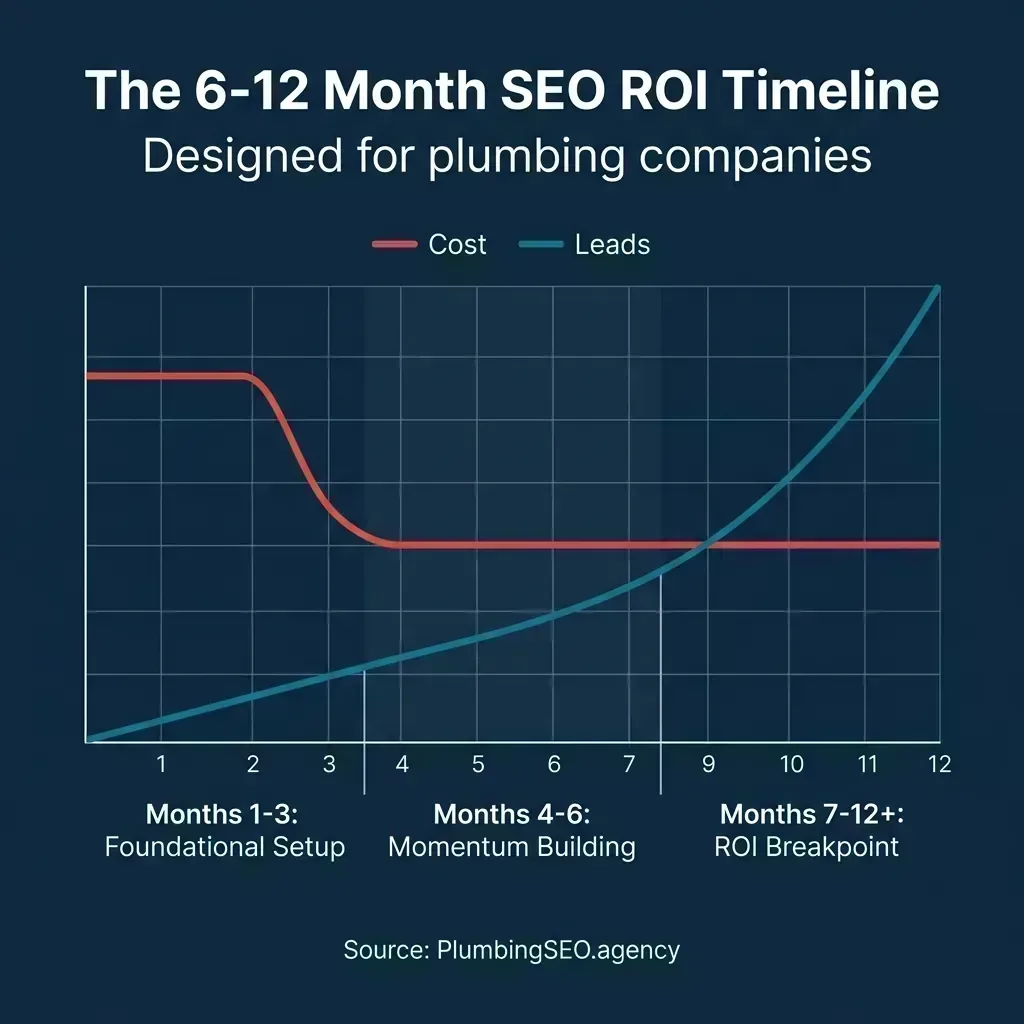
Use this simple formula: keep enough budget for immediate demand capture, fund the SEO foundation, then add monthly SEO only when the expected compounding upside is worth the cash flow. If you are weighing paid ads during the ramp-up period, compare against our PPC cost guide for plumbers.
Use the Pricing Page When You Are Package-Ready
This article is meant to answer, "how much should we spend?" The pricing page answers, "which package should we pick?" Keep those jobs separate. If a reader is still learning what a fair budget looks like, this guide is the right page. If a reader wants exact setup fees, monthly retainers, website add-ons, PPC management, and plan-fit guidance, they should use the pricing page.
That routing also protects the site architecture. The service pricing page remains the canonical destination for cost, pricing, packages, and buying intent. This support blog explains the decision and passes qualified visitors there instead of trying to become a duplicate package page.
Ready to compare exact packages?
Review setup fees, monthly SEO plans, PPC add-ons, website options, and package-fit guidance on the canonical pricing page.
Compare Plumbing SEO PricingSample Budget Paths by Plumbing Company Size
Use these examples as planning ranges, not as rigid rules. The right budget depends on market competition, current website quality, GBP health, review velocity, and whether you already own your tracking stack.
- New or small shop: start with a one-time foundation project, then spend lightly on review generation, GBP updates, and tracking cleanup. Do not buy a large content retainer until the service pages and map listing can convert.
- Stable local shop: use a modest monthly SEO plan to keep GBP active, build citations, improve priority service pages, publish supporting content, and monitor calls. This is where the lower monthly package on the pricing page usually fits best.
- Growth-focused company: budget for stronger monthly content, service-area expansion, conversion testing, internal linking, competitor checks, and call tracking. Higher spend is justified only when it produces more qualified calls or protects valuable rankings.
- Multi-location brand: plan around location-level GBP work, unique local landing pages, market-specific reporting, review operations, and stronger authority building. A cheap one-size-fits-all package usually underfunds the work.
The practical takeaway is simple: choose the smallest plan that fixes the current bottleneck, then upgrade only when the next bottleneck is clear. If the bottleneck is tracking, buy setup. If it is competitive content and links, buy ongoing SEO. If it is immediate lead volume, compare PPC or Local Services Ads while SEO compounds.
Also separate one-time costs from recurring costs before you judge the proposal. Setup work should leave you with owned accounts, cleaned-up tracking, corrected listings, stronger metadata, and a prioritized roadmap. Recurring work should create new improvements every month. When those two buckets are blended together, it becomes hard to tell whether the agency is charging monthly for work that was already completed. Ask for the setup deliverables and the monthly deliverables in separate lists before you compare prices. That keeps the conversation anchored in accountable work instead of a bundled retainer label and protects your cash flow.
Red Flags to Watch Out For Before Hiring an Agency
Before you hand over your credit card, watch for these common traps. We also have a deeper guide to questions you should ask before hiring a plumbing SEO agency.
- Guaranteed #1 rankings: No agency controls Google's algorithm, proximity, reviews, or competitor movement.
- No asset ownership: You should own the domain, website, Google Business Profile, analytics, call tracking, content, and reports.
- Vanity metrics only: Impressions and rankings matter, but calls, forms, booked jobs, and conversion quality matter more.
- Vague monthly work: If the quote does not name deliverables, cadence, and ownership, do not compare it only by price.
- Blog content that competes with service pages: Support articles should internally link to the commercial page instead of creating duplicate ranking targets.
Frequently Asked Questions
How much should a plumbing contractor expect to pay for SEO services?
Most plumbing companies see useful SEO plans between $600 and $2,000 per month after the foundation is fixed. One-time setup can be enough for a small shop with basic gaps. Use the canonical pricing page when you are ready to compare exact packages and deliverables.
Should I start with a one-time setup or monthly plumbing SEO?
Start with a one-time setup when tracking, Google Business Profile, citations, metadata, and technical basics are missing. Move to monthly SEO when you need ongoing local content, GBP work, reviews, internal links, authority building, and reporting tied to calls.
Is $3,500 a month too much for local plumbing SEO?
It can be too much for a one-location shop in a moderate market if the scope is vague. It can be reasonable for a multi-location or high-competition company only when the quote includes named deliverables, content cadence, GBP work, tracking, ownership, and reporting tied to booked calls.
How long does it take to see leads from plumbing SEO?
Foundation fixes can improve tracking and conversion quickly, but organic visibility usually compounds over 3 to 6 months and becomes more predictable over 6 to 12 months. If you need immediate calls, pair the SEO budget with a focused Google Ads plan for plumbers.
What percentage of revenue should a plumber spend on SEO?
A common marketing budget is 5% to 8% of gross revenue, with SEO taking only the portion that can be sustained while LSA, PPC, truck wraps, referrals, and offline campaigns are funded. The right SEO budget depends on market pressure and growth goals.
Where should I compare PlumbingSEO.agency packages?
Use the canonical plumbing SEO pricing page at /services/pricing for exact setup fees, monthly packages, deliverables, PPC add-ons, website add-ons, and plan-fit guidance. This budget article is supporting education, not the package page.
Stop Guessing What Plumbing SEO Should Cost
Use the canonical pricing page to compare exact setup, monthly SEO, PPC, and website package options. If you are not sure which fit is right, start with the free audit.
Compare Pricing Packages Get Free SEO Audit