
- A financing page should help high-ticket customers understand payment options before price shock sends them back to Google.
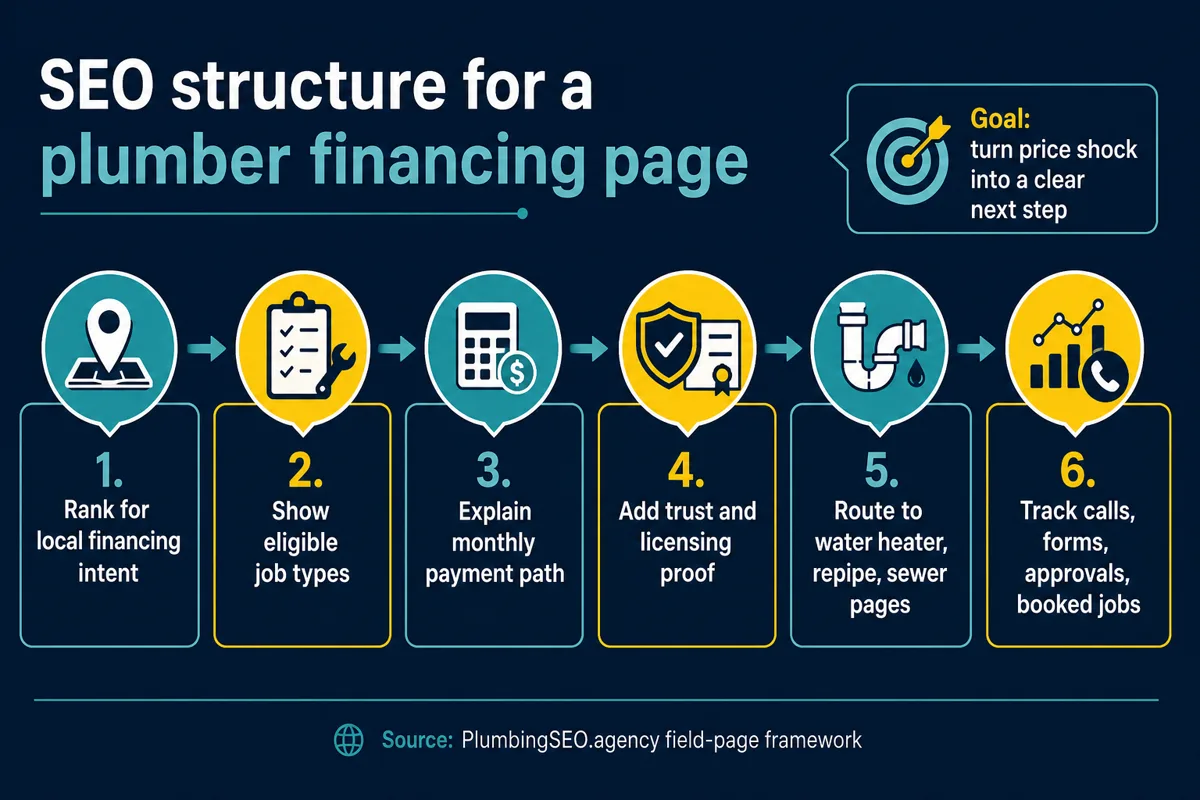
- The page should rank for local financing intent, then send visitors to water heater, repipe, sewer, and web form or call paths.
- Treat financing as part of the plumbing website conversion system, not a lonely link in the footer.
If your phones are already busy with $175 service calls, a financing page may feel like a nice extra. It is not. It is one of the pages that helps a homeowner say yes when the job is too big for the cash sitting in the checking account.
Think water heater replacement, sewer line repair, tankless upgrades, repipes, slab leaks, and emergency work that turns into a bigger fix. Those customers are not just searching for a plumber. They are trying to figure out, quietly and quickly, whether they can afford the right repair without eating ramen until Labor Day.
That is why plumbing financing page SEO matters. The page has to do two jobs at once. It needs to show up for customers searching payment-related plumbing terms, and it needs to make the next step feel clear enough that they call, apply, or ask for an estimate.
The way I see it, a financing page is not a finance page first. It is a trust page. It tells the homeowner, "We understand this may be a big ticket. Here is how to move forward without guessing."
What a plumbing financing page should rank for
The main keyword is not usually flashy. It is practical. People search terms like plumber financing, plumbing financing options, water heater financing, sewer repair financing, emergency plumbing financing, and monthly payments for plumbing repairs. Those searches carry a different kind of intent than a normal service page.
A customer searching "water heater financing near me" is usually past the browsing stage. They know something is broken, they know it may cost real money, and they are trying to avoid a bad financial surprise. If your page only says "financing available" and links to a third-party portal, you are making them do too much thinking.
Build the page around the jobs that most often create price shock:
| Job type | Customer worry | Page angle |
|---|---|---|
| Water heater replacement | "Can I get hot water back without paying all at once?" | Monthly payment example, fast scheduling, replacement options |
| Whole-home repipe | "Is this going to wreck my monthly budget?" | Project scope, payment path, warranty, staged expectations |
| Sewer line repair | "Do I have any choice if this is urgent?" | Emergency clarity, financing options, proof, phone-first CTA |
| Tankless upgrade | "Is the better option worth it?" | Compare upfront cost with monthly payment and long-term fit |
Good SEO here means the financing page should not compete with your main service pages. It should support them. The water heater page sells the service. The financing page answers the affordability question. Then both pages should link to each other in a way that makes sense for the customer.
If your current site buries financing in the footer, this is one of those quiet leaks a plumbing website design review should catch. The page may exist, but it is not doing enough work.
The conversion job: turn price shock into a next step
Most financing pages fail because they read like legal wallpaper. They list a lender, maybe show a logo, and then ask the homeowner to click away. That may technically offer financing, but it does not help the customer make a decision.
A stronger page answers the questions the homeowner is already thinking:
- What types of plumbing jobs may qualify?
- Can I apply before the technician arrives?
- Will this delay the repair?
- Will I see monthly payment options?
- Who handles approval and payments?
- Can I still call and talk to someone first?
That last question matters. Plumbing is not a spreadsheet purchase. If there is water in the hallway, the customer may not want to study lender language. They want a clear call button, a short explanation, and a human path forward.
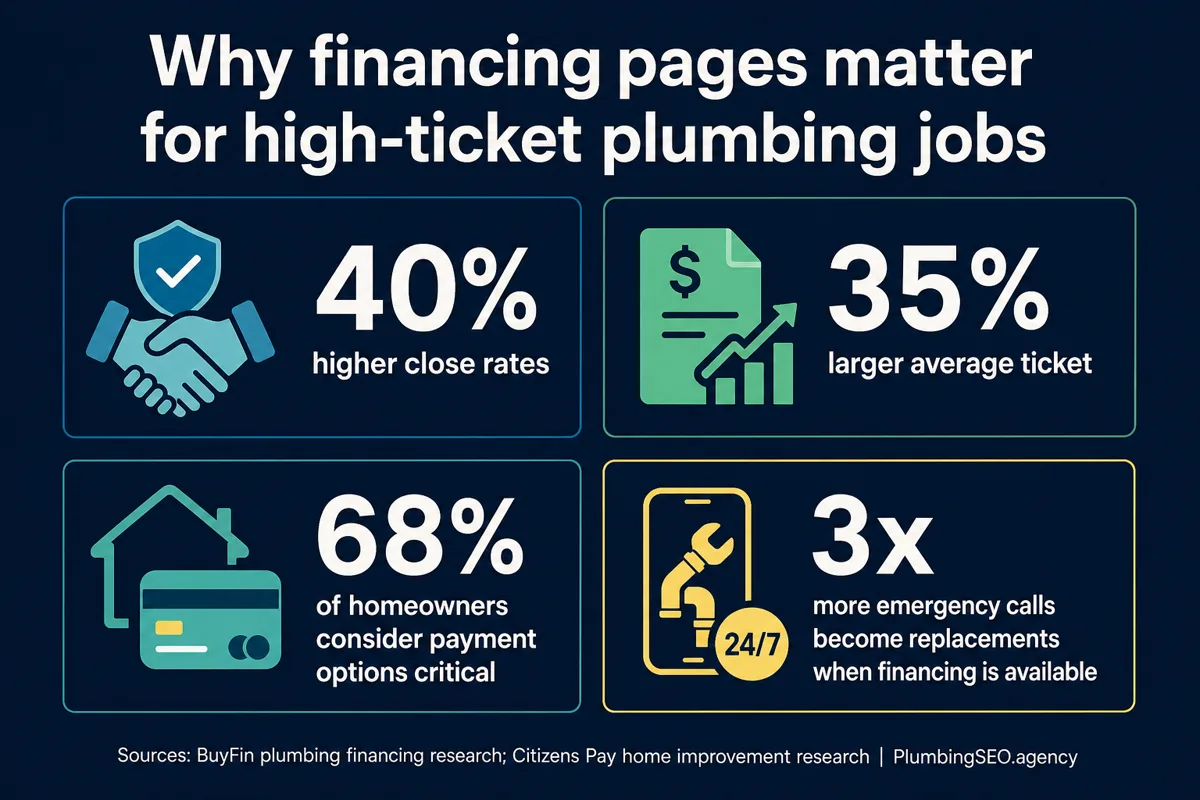
Several financing providers and contractor resources frame the same pattern. BuyFin reports that plumbing contractors offering financing see higher close rates and larger ticket sizes, while Citizens Pay cites homeowner research showing that financing considerations affect project spending decisions. Use those claims carefully. Do not promise your exact outcome. Use them to explain why payment clarity belongs on the page.
What to put above the fold
The top of the page has one job. It should make the customer feel like they are in the right place and give them a safe next step.
Strong above-the-fold copy
- "Financing options for water heaters, repipes, sewer repairs, and urgent plumbing work."
- Call button and short form visible on mobile.
- Plain note that approvals and terms are handled by the financing provider.
- Link to major job pages so customers can keep moving.
Weak above-the-fold copy
- Only a lender logo.
- Vague "easy financing available" claim.
- No job examples.
- No call tracking path, no form context, no trust proof.
Do not hide the service context. If a customer came in for a tankless water heater, say that. If sewer line financing is available, say that. The clearer the job match, the less the page feels like a generic bank handoff.
Use monthly payment examples carefully
Monthly payment examples can help, but they can also get messy fast. If you use them, keep the language plain and avoid pretending every customer gets the same terms. A simple range is safer than a fake promise.
For example, you can say, "Some customers use financing to spread eligible plumbing projects into monthly payments. Approval, rates, terms, and payments depend on the financing provider and the customer's application." That is not sexy copy, but neither is explaining hidden terms to an angry customer at 7 p.m.
For general consumer context, U.S. Bank explains that home improvement loans often use fixed monthly installments, and SoFi outlines common plumbing financing paths such as personal loans, direct financing, and home equity options. Your page should not become a lender comparison guide, but it should make the idea understandable.
Quick gut-check: how many extra booked jobs would matter?
This is not a lending calculator. It is a simple business-impact sketch for the owner deciding whether the page deserves attention.
Where financing copy belongs across the site
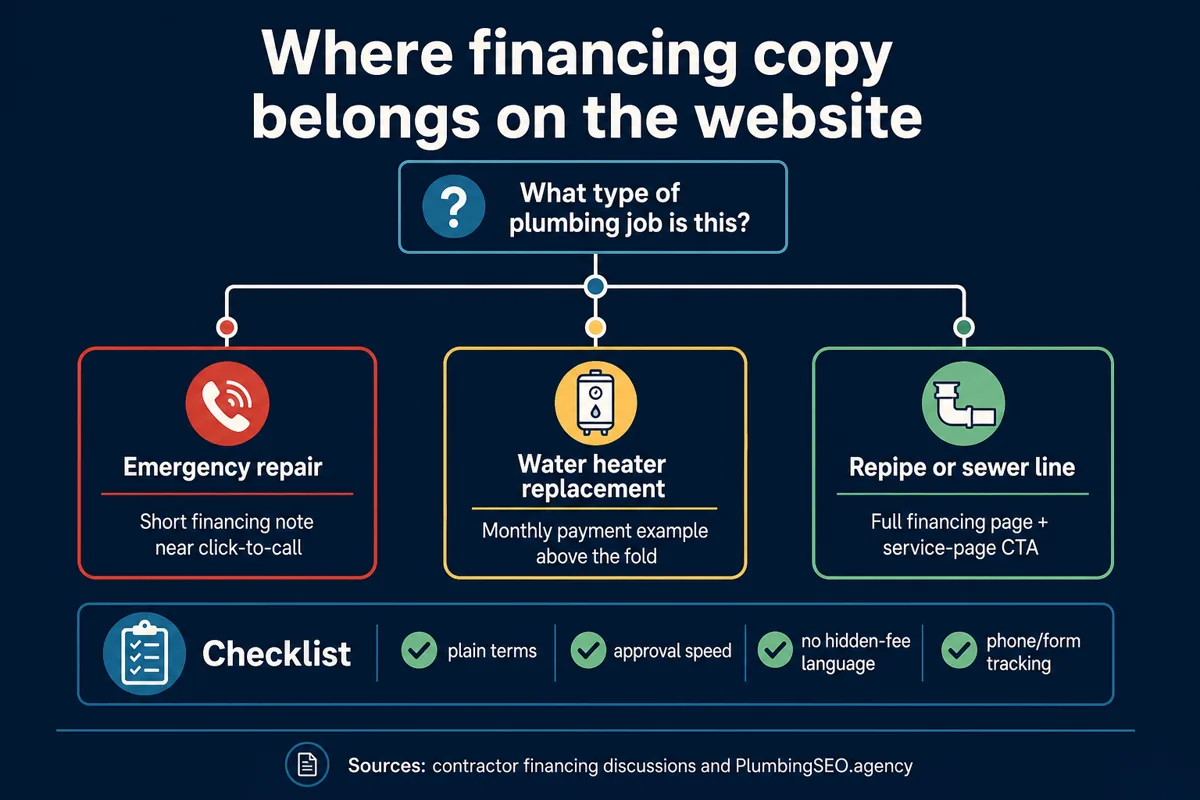
The dedicated financing page is the hub, but it should not be the only place financing appears. The customer should see the option at the point where it helps the decision.
Internal links that help the customer and Google
A financing page should sit in the middle of your website, not off to the side like a forgotten warranty form. Link to it from high-ticket service pages, and link from it back to those same services.
Start with these placements:
- Water heater pages: add a short section about eligible payment options near pricing, replacement options, or the booking CTA.
- Sewer and repipe pages: add a stronger CTA because those jobs carry bigger price anxiety.
- Homepage: mention financing only if it is a real sales advantage, not as filler.
- Blog posts: link naturally when discussing big-ticket jobs, website conversions, trust, or quote follow-up.
- Contact page: let the office team answer financing questions without sending people hunting.
This also supports SEO. Google can see that the financing page is connected to real service topics. Customers can see that financing is part of the job journey. That beats one orphan page with one lonely button.
If your forms and calls are not easy to use on mobile, fix that before obsessing over more traffic. Our guide to forms versus click-to-call for plumbing websites explains why the contact path matters. For trust proof, pair the financing page with the basics from plumbing website trust signals. Nobody wants to finance a job with a company they do not trust.
Schema, tracking, and compliance basics
Keep the SEO setup simple and clean. The page should have a clear title tag, meta description, H1, canonical URL, FAQ schema if you include FAQs, and links to the right service pages. Do not stuff it with every financing keyword you can think of. That reads weird, and weird does not book work.
Track the business result, not just pageviews. At minimum, measure:
- Calls from the financing page.
- Form submissions from the financing page.
- Clicks to any financing application or prequalification tool.
- Service-page visits after the financing page.
- Booked jobs where financing was part of the conversation.
Also be careful with claims. If a lender handles approvals, say so. If terms depend on credit approval, say so. If certain offers change, do not hard-code promises your office team cannot back up. Clear language protects the customer and saves your dispatcher from awkward calls.
My recommended page outline
If I were building this for a plumbing company, I would use this structure:
- Hero: financing options for eligible plumbing repairs and replacements, with call and form CTAs.
- Job types: water heaters, sewer lines, repipes, tankless installs, emergency repairs.
- How it works: request estimate, review options, apply or ask questions, schedule work.
- Trust proof: licenses, reviews, warranties, service area, real team details.
- Payment clarity: monthly payment language, terms caveat, lender handled approvals.
- Service links: send customers to the specific job page they need.
- FAQ: answer the questions that block calls.
That outline is simple on purpose. A plumbing financing page should not feel like a financial product brochure. It should feel like a helpful counter guy saying, "Here are your options. Here is what happens next. Let us get the water back on."
If your current website is missing this page, or if it exists but does not connect to the jobs that actually pay the bills, start with a free plumbing SEO audit. We will look at the page, the service links, the call path, and whether your website is helping or hurting bigger jobs.
Financing Page SEO FAQs
Yes, if financing is actually offered and customers ask about payment options for larger jobs. A dedicated page gives Google and customers one clear place for plumbing financing information, then it can link to water heater, sewer, repipe, and other high-ticket service pages.
Start with practical terms such as plumber financing, plumbing financing options, water heater financing, sewer repair financing, emergency plumbing financing, and monthly payments for plumbing repairs. Use local modifiers naturally if the company serves a defined area.
Place financing links on high-ticket service pages, the contact page, relevant blog posts, and the main navigation or footer if financing is a real sales tool. The strongest placements are near pricing, estimate, and booking sections where price anxiety shows up.
It can help when the copy is clear, honest, and close to the call or form path. Financing copy reduces the customer's fear of a large upfront bill, especially for water heaters, repipes, sewer work, and emergency repairs. It still needs trust proof, fast contact options, and accurate terms.
Avoid guaranteed approval, fixed payment promises, hidden-fee language, or outdated promotional terms unless the lender and legal review support the claim. Use plain disclaimers that approvals, rates, terms, and payments depend on the financing provider and the customer's application.
Want to know if your site is losing high-ticket jobs?
We will review your plumbing website, financing page path, service-page links, call buttons, and conversion leaks. You get plain recommendations, not a mystery report.
Get a Free Plumbing SEO Audit