
- Follow up on unsold estimates while the job is still warm. A simple 7-day mix of short texts and emails beats one long email that nobody reads.
- Use SMS carefully. Get consent, honor opt-outs, keep records, and separate appointment notices from promotional offers.
- Maintenance plan reminders should start early. Use email for context, SMS for quick action, and track booked jobs instead of just opens and clicks.
If you give a homeowner an estimate and never follow up, you are letting that job leak out of the truck before the parts are even ordered. Most plumbing owners know this. The hard part is getting the follow-up done when dispatch is busy, the phones are ringing, and somebody needs to find the shutoff valve right now.
That is where email and SMS follow-up helps. Not fancy automation for the sake of looking modern. Just practical reminders that bring an unsold estimate, a maintenance plan renewal, or an overdue service visit back to the customer's attention while they can still say yes.
In my opinion, plumbers should treat follow-up like a service route. It needs timing, records, and a clear next stop. If it is left to memory, it will fail on the first busy Monday.
What follow-up should actually win back
For a plumbing company, email and SMS follow-up should not be a random newsletter blast. It should protect the work you already earned a chance to quote. Start with these three buckets:
| Follow-up bucket | Best channel mix | Owner-side goal |
|---|---|---|
| Unsold estimates | Short SMS first, then email recap, then one last text | Book the repair, replacement, or second visit before the customer forgets why it mattered. |
| Maintenance plans | Email for details, SMS for booking and appointment reminders | Keep renewals and seasonal checks on the board before slow weeks show up. |
| Missed calls and form leads | Instant text-back plus quick email if a form was submitted | Reach the customer before they call the next plumbing company in the map results. |
That last line matters. Follow-up is not separate from plumbing SEO. Search gets the customer to raise their hand. Follow-up keeps that hand from dropping while your office is dealing with another job.
The 7-day unsold estimate sequence I would start with
Do not start with a 14-step campaign that nobody on the team understands. Start with a week. Keep it short. Make every message easy to answer. A home service follow-up study from Hatch reported that its commonly effective HVAC estimate campaign used 5 texts and 2 emails over 7 days, with an average campaign response rate of 60% across analyzed campaigns. That is HVAC data, not plumbing data, but the owner lesson carries over well because both trades deal with quotes, homes, scheduling, and busy customers.
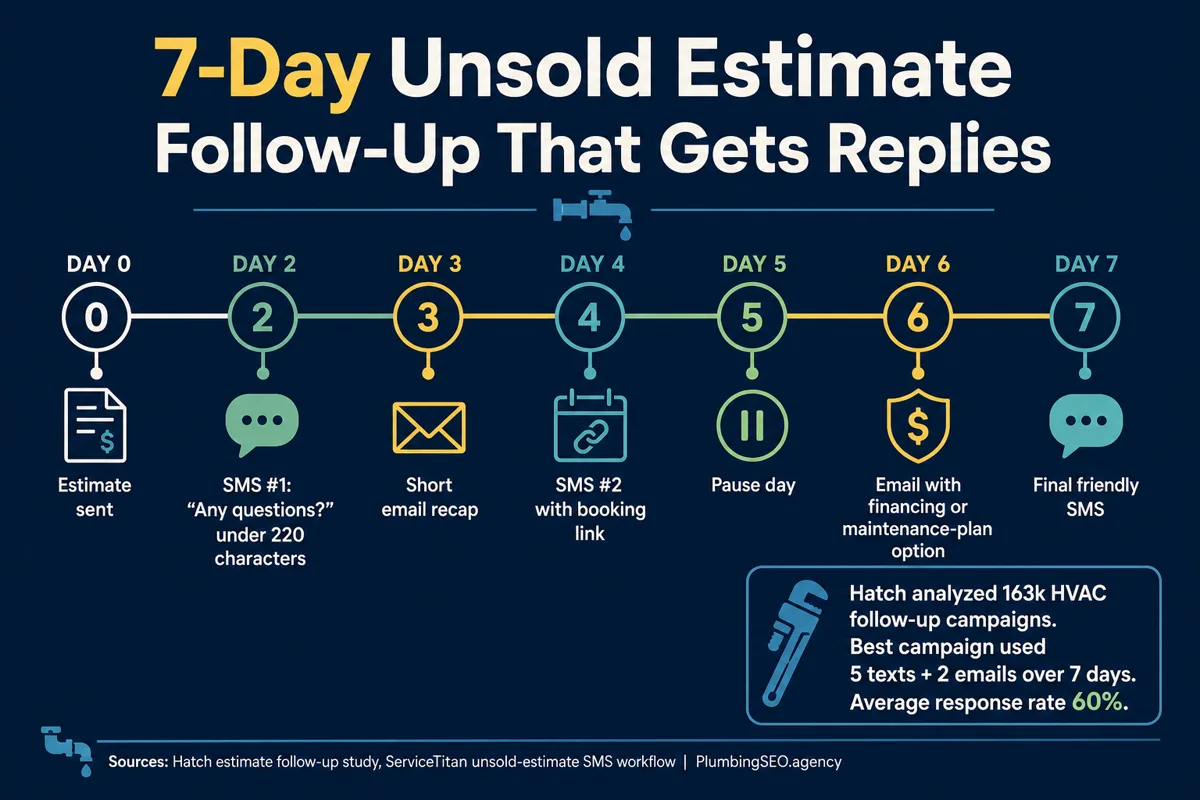
ServiceTitan's documentation also shows how home service platforms now build specific SMS campaigns around unsold estimates, including campaign goals, customer eligibility, tracking numbers, and revenue attribution. That tells you something important. This is no longer just a CSR remembering to call back. It is becoming part of the operating system for service and replacement work.
A practical plumbing version can look like this:
- Day 0: Send the estimate, explain the next step, and ask if text is okay for follow-up.
- Day 2: Text a short question. “Hi [Name], this is [CSR] from [Company]. Any questions about the water heater estimate? Reply STOP to opt out.”
- Day 3: Email a plain recap with scope, financing or phased-work options, and one booking link.
- Day 4: Text one useful nudge. “Want us to hold a spot this week, or should I check back later? Reply STOP to opt out.”
- Day 5: Pause. Nobody likes getting chased like a parts invoice.
- Day 6: Email one helpful option, such as a maintenance plan, warranty note, or priority scheduling window.
- Day 7: Send a final friendly text and give them an easy out.
The wording should feel like your office staff, not a robot in a polo shirt. Short. Direct. Neighborly. The customer should be able to reply “yes,” “no,” “later,” or “call me” without doing homework.
Email versus SMS: use each one for the right job
Email is better when the customer needs context. Scope, warranty notes, financing options, before-and-after photos, permit information, maintenance details, and longer explanations fit better in email.
SMS is better when the customer needs to act. Confirm the appointment. Ask a simple question. Pick a time. Approve the estimate. Let the office know they want a call. Text should not try to carry the whole proposal on its back.
| Situation | Use email for | Use SMS for |
|---|---|---|
| Water heater replacement estimate | Scope, equipment notes, warranty, financing option | “Want us to reserve a slot this week? Reply STOP to opt out.” |
| Sewer camera or repair quote | Findings, photos, next-step options, warning signs | “Do you want a call to walk through the options? Reply STOP to opt out.” |
| Maintenance plan renewal | Benefits, last service date, what is included | “Your annual check is due. Want morning or afternoon? Reply STOP to opt out.” |
| Missed call from Google or website | Only if they submitted a form with email | Immediate text-back so the lead does not go cold |
If you are also working on advanced local SEO for plumbers, this is where your search work connects to revenue. Ranking higher is useful. Ranking higher and then letting hot leads sit unanswered is a waste of good money.
Consent is not optional
Before a plumber starts texting customers, the office needs a clean consent process. Mailchimp's SMS law guide explains that businesses generally need consent to text consumers, must provide opt-out options, and may face TCPA and CAN-SPAM concerns. Google also says claimed and verified Business Profiles can add text or WhatsApp chat options in select regions, which makes it even more important to know who is replying, what number is used, and how opt-outs are handled.
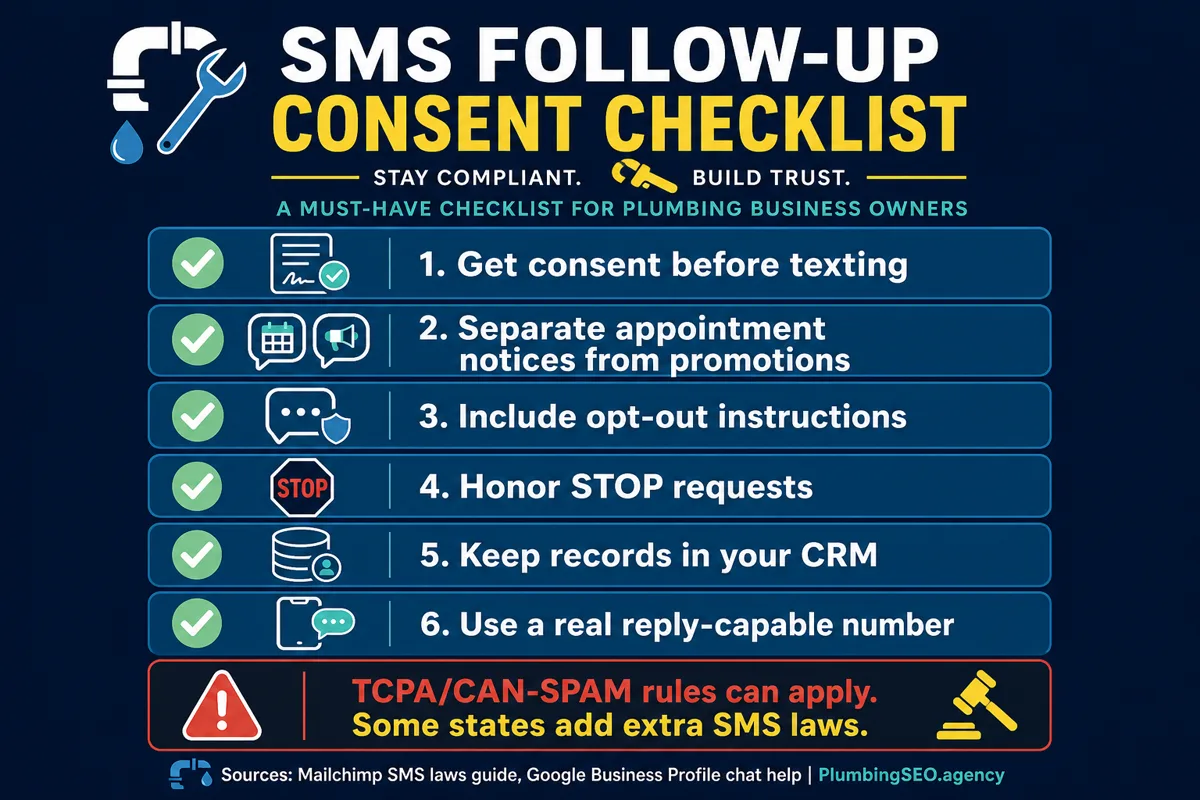
This is not legal advice. It is an owner checklist. Have your attorney or software provider confirm the exact rules for your state and message type. From an operations standpoint, I would not let the team send follow-up texts until these basics are covered:
- The estimate form or intake process records whether SMS follow-up is allowed.
- Appointment notices, job updates, and promotional offers are not treated as the same thing.
- Every system can honor STOP or unsubscribe requests.
- Texts come from a real reply-capable number, not a dead broadcast line.
- The CRM shows who opted in, when they opted in, and what number they approved.
- The office knows when to stop texting and make a normal phone call.
Templates plumbers can actually use
Do not copy these word for word if they do not sound like your company. Use them as a starting point and keep your team's normal tone. For promotional texts, keep the opt-out wording in the actual SMS, not just in your policy notes.
| Use case | SMS template | Email subject |
|---|---|---|
| Unsold estimate, day 2 | Hi [Name], this is [CSR] from [Company]. Any questions about the [service] estimate we sent over? Reply STOP to opt out. | Quick follow-up on your plumbing estimate |
| Estimate option, day 4 | We can hold a spot [day/time] if you want to move ahead. Want me to check the schedule? Reply STOP to opt out. | Two options for your [service] repair |
| Maintenance plan due | Your annual plumbing check is coming due. Want morning or afternoon options for next week? Reply STOP to opt out. | Your maintenance plan visit is coming up |
| Missed call | Sorry we missed you. This is [Company]. Text back what is going on and we will help get you routed. | We missed your call |
The best template is the one your office can send consistently without sounding stiff. If the first sentence feels like it came from a software company, rewrite it.
Maintenance plan reminders need a longer runway
Unsold estimates need a short follow-up window. Maintenance plans need a longer calendar. Simpro's service reminder guide lays out a practical timing pattern for trade businesses, including early email reminders, 48-hour and 24-hour prompts, and day-of reminders once an appointment is booked. For maintenance that is not yet scheduled, it points to a 90, 60, 30, and 7 to 14-day sequence before the due date, followed by overdue re-engagement.
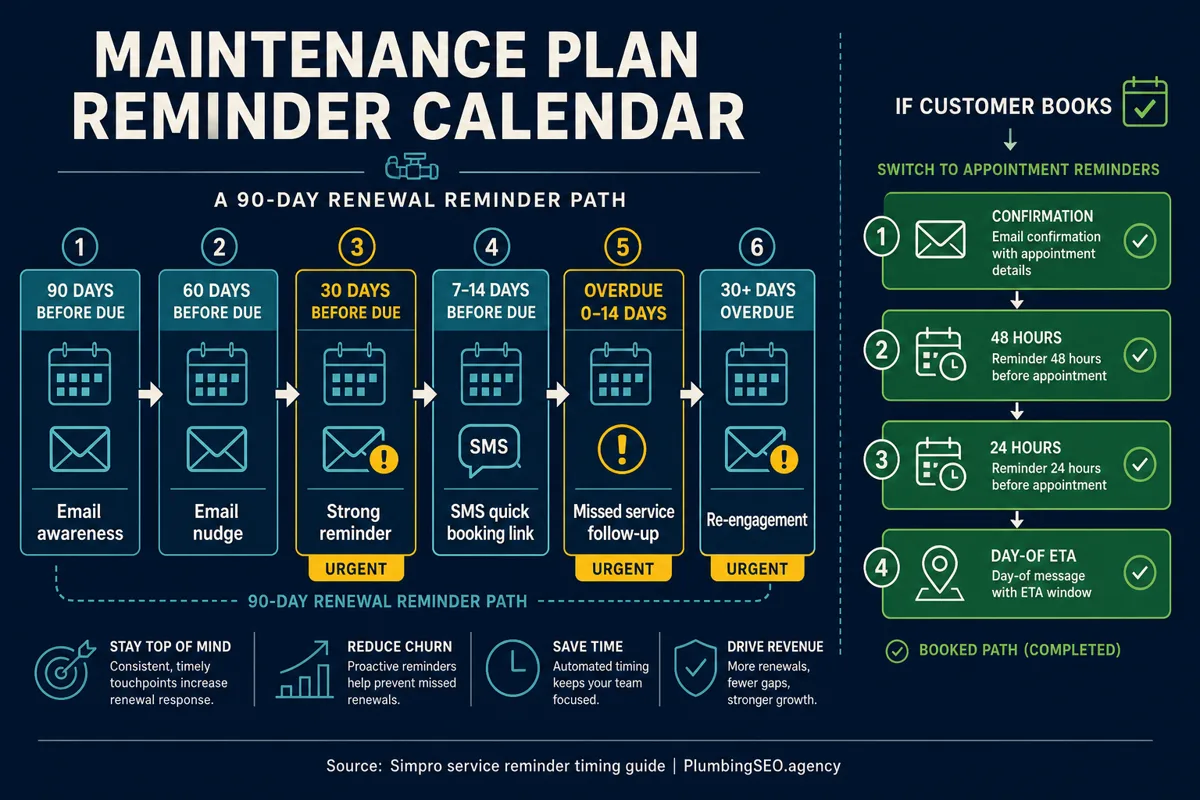
For plumbers, that can mean reminders for water heater checks, whole-home plumbing inspections, sump pump checks, backflow testing, drain maintenance, water treatment service, and membership renewals. The reminder should tell the customer what is due, why it matters, and how to book without making them search through old paperwork.
Measure booked work, not vanity numbers
Email opens are fine. Text replies are better. Booked work is what pays the crew. If you want to know whether follow-up is helping, track these numbers monthly:
| Metric | Why it matters | Where to track it |
|---|---|---|
| Unsold estimate follow-up rate | Shows whether every open quote gets touched. | CRM task list or field-service platform |
| Reply rate by channel | Tells you whether SMS, email, or phone is doing the work. | Inbox, texting platform, CRM |
| Booked jobs from follow-up | Connects office effort to jobs on the board. | Booked estimate source field |
| Maintenance renewal rate | Shows whether recurring customers are staying active. | Membership or service-plan report |
| Opt-out and complaint rate | Warns you when messages are too frequent, too salesy, or poorly timed. | SMS platform and CRM notes |
If you already use call tracking, connect this follow-up work to booked-job reporting. The plumber marketing ROI guide explains how to judge marketing by calls, booking rate, close rate, and revenue instead of surface-level reports.
Where this fits with your website and Google profile
Follow-up cannot rescue a bad customer experience. If your website does not explain services clearly, your Google Business Profile is thin, reviews are weak, and the office misses calls, texts alone will not save the day. They are a wrench, not a miracle.
But when the basics are in place, follow-up helps the plumbing company hold onto the opportunities it already earned. Add text options to intake forms where appropriate. Make estimate pages and emails easy to understand. Keep booking links simple. Train the office to reply fast. Then review the numbers every month.
If you want help finding where calls and estimates are leaking from your website, Google profile, and follow-up flow, contact PlumbingSEO.agency or start with a free SEO leak check. No jargon. Just the parts that help the phone ring and keep the trucks moving.
Sources used for this guide: ServiceTitan unsold-estimate SMS workflow, Hatch estimate follow-up response study, Mailchimp SMS law overview, Google Business Profile chat help, and Simpro service reminder timing guide.
FAQ: Email and SMS Follow-Up for Plumbers
Follow up within 24 to 48 hours after the estimate is delivered. The job is still fresh, the customer remembers the visit, and your office can answer questions before another company gets the work.
SMS is usually better for quick action, such as confirming a time or asking if the customer has questions. Email is better for details, photos, financing notes, warranty information, and longer estimate recaps.
Plumbing companies should get consent before sending SMS follow-up, provide opt-out options, and keep records in the CRM or messaging platform. Texting rules can vary by message type and state, so confirm the details with a qualified legal or compliance advisor.
A good reminder includes the customer name, service due date, service type, last visit or plan detail, available time windows, a direct booking link or phone number, and one clear next step.
Track follow-up completion rate, replies by channel, booked jobs from follow-up, maintenance renewals, close rate, and opt-outs. The most important number is booked work, not email opens alone.
Want to See Where Follow-Up and SEO Are Leaking Calls?
We check your website, Google Business Profile, service pages, call paths, and tracking setup so you can see where good leads stall before they turn into booked jobs.
Run My Free SEO Leak Check