
- Sump pump SEO is not one keyword. Build separate paths for installation, repair, backup, maintenance, and basement flooding intent.
- The best page answers urgency first, then proves the plumber can handle pits, discharge, battery backup, alarms, and finished-basement risk.
- Use this post to support your main plumbing SEO services page while sending homeowners to the right local service page.
If you own a plumbing company in a wet market, sump pump calls do not wait politely in line. A homeowner hears the alarm, sees water near the finished basement, or realizes the pump has been dead since the last storm. Then they search fast.
That is why sump pump SEO has to be built around jobs, not around a single blog post. Installation, repair, backup pumps, maintenance, and basement flooding are all different searches with different levels of panic. If your site treats them all the same, the good calls leak away before your dispatcher ever hears the phone.
The way I see it, a sump pump campaign should do three things. It should help the customer know whether to call now. It should prove you understand the basement problem. And it should give Google clean pages to rank for each service your crew can actually handle.
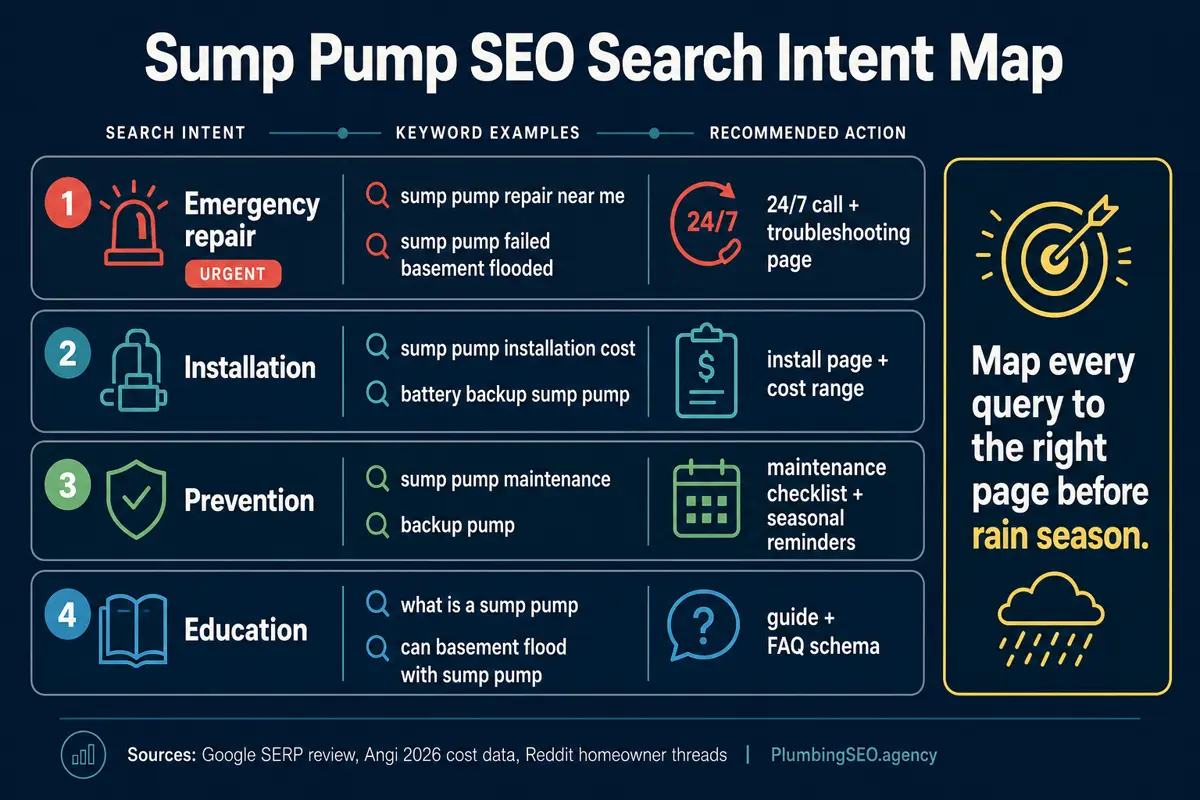
Start by separating flooded-basement panic from planned installation
Someone searching “sump pump failed basement flooded” is not in the same headspace as someone comparing battery backup options. One needs a fast answer, a phone number, and confidence you can show up. The other is still weighing cost, timing, and whether the basement really needs another layer of protection.
Put those people on the same generic page and both can bounce. The emergency customer has to hunt for the call button. The planning customer feels rushed. Neither one gets a page that sounds like it was written by somebody who has actually stood next to a sump pit with water rising.
| Search intent | Example query | Best page angle | Primary conversion |
|---|---|---|---|
| Emergency repair | sump pump repair near me | Fast diagnostics, failed pump, stuck float, storm response | Call now |
| New installation | sump pump installation cost | Pit, pump type, discharge, electrical, backup options | Schedule estimate |
| Backup protection | battery backup sump pump plumber | Power outage protection, second pump, alarms, maintenance | Book inspection |
| Basement flooding | basement flooded sump pump not working | Safety steps, mitigation, when to call plumber versus restoration | Emergency call or triage form |
Build the page around the job value, not just the pump
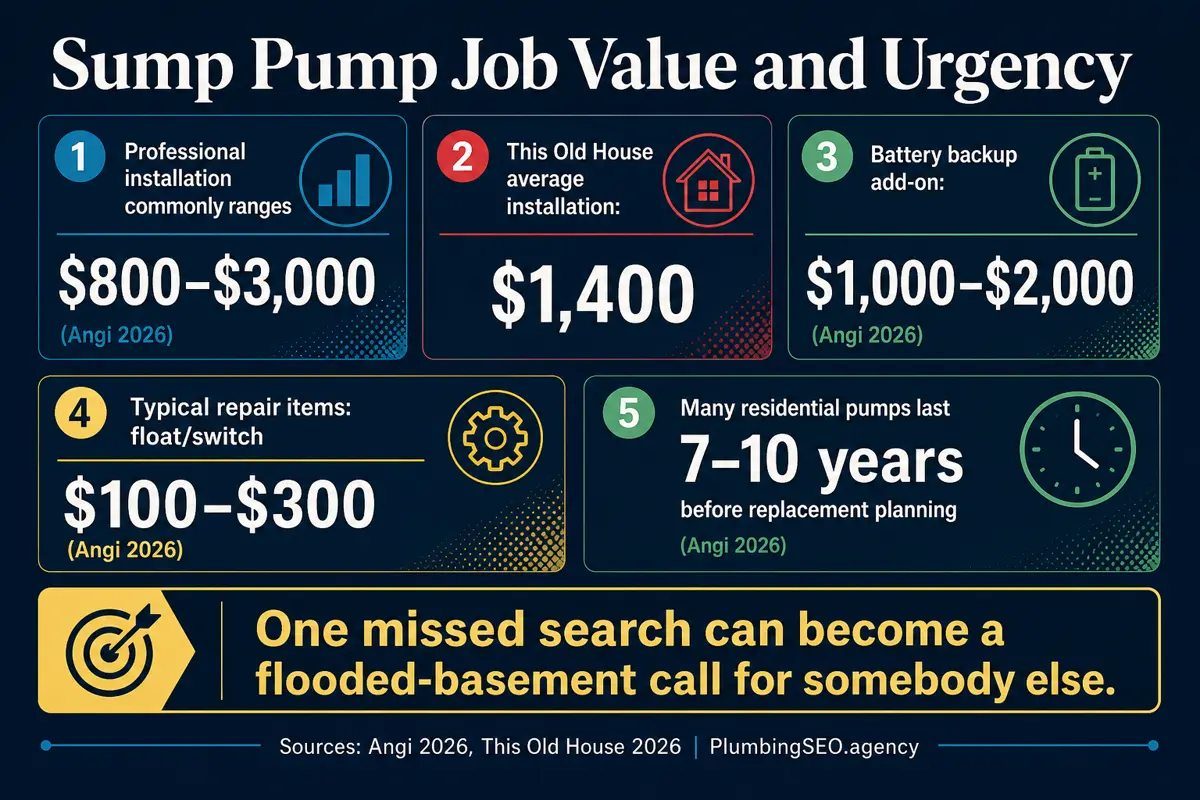
A sump pump is a small piece of equipment compared with the cost of a wet finished basement. That is the commercial angle. The homeowner may start with “how much does a sump pump cost,” but the real fear is ruined flooring, mold, insurance headaches, and another storm before the problem is fixed.
Current cost guides show why these leads matter. Angi’s 2026 sump pump installation data puts professional installation commonly in the $800 to $3,000 range, with backup systems and project complexity changing the final number. This Old House reports a national average around $1,400. Those are not $49 coupon calls. Those are real jobs with real homeowner pressure behind them.
What top sump pump pages usually cover
Strong local plumbing pages tend to cover the same basics. They mention installation, repair, maintenance, replacement, battery backup, and flooding prevention. The better pages go a step farther and explain symptoms. Constant running, no power, clogged discharge, stuck float, weak pump, bad check valve, odd noise, and water in the pit all help the customer identify the problem.
Here is what most pages miss. They do not connect the symptom to the next action. A homeowner does not just need a list of parts. They need to know whether to test the pump, stop using the basement outlet, call a plumber, call restoration, or schedule a replacement before the next rain.
The five pages or sections I would build first
You may not need five brand-new URLs on day one. In smaller markets, one strong sump pump service page with clear sections can work. In larger wet markets, separate pages can win more intent. Use the search volume, competition, and existing site authority to decide.
1. Sump pump repair
Lead with failed pump symptoms, same-day availability, float switch issues, clogs, noise, alarms, and basement water. This page should feel urgent without sounding like a scare tactic.
2. Sump pump installation
Explain pit sizing, pump type, discharge routing, check valves, code considerations, and what changes the price. This supports estimate requests and planned installs.
3. Battery backup sump pumps
Target homeowners worried about power outages. Cover battery backup, water-powered backup, alarms, generators, and annual testing.
4. Basement flooding help
Answer the panic questions. What should they shut off? Who should they call first? When does the plumber handle it and when does restoration take over?
5. Maintenance and replacement
Use spring rain season, old pumps, noisy pumps, and slow cycling as the hook. This is where quieter leads become scheduled work.
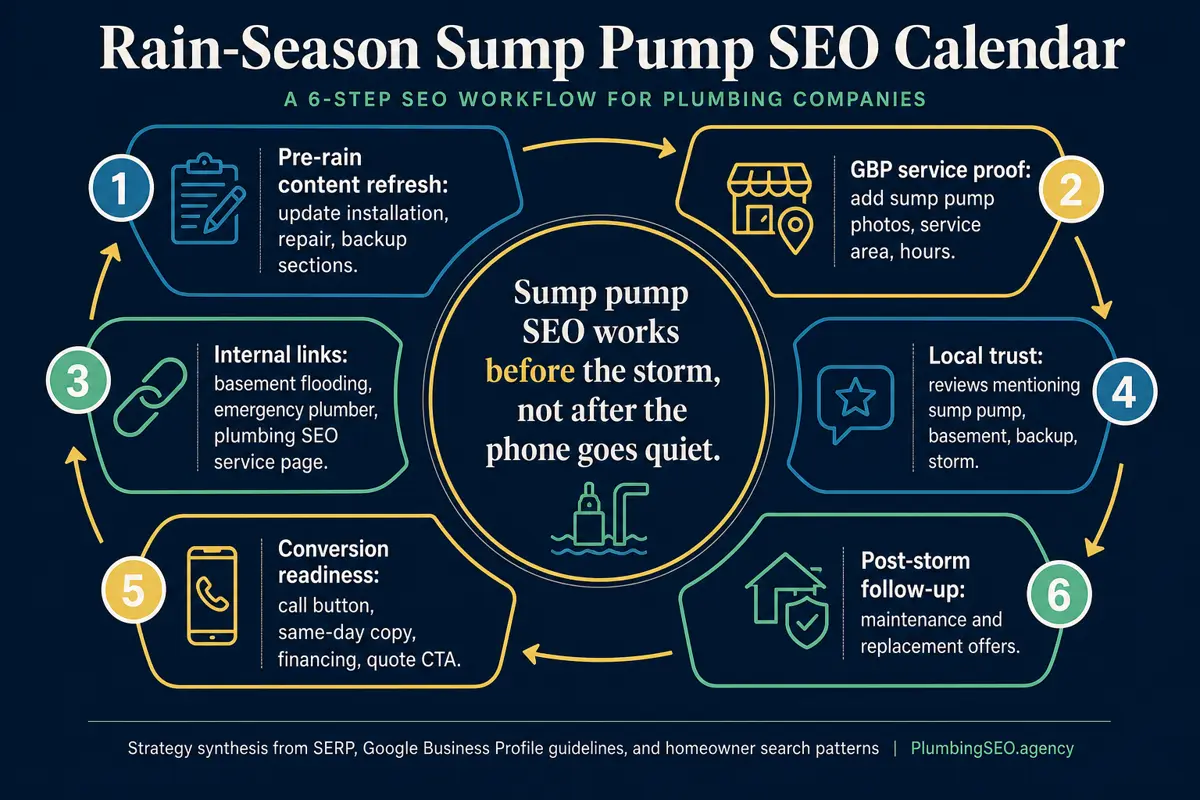
Use Google Business Profile like proof, not decoration
Your website is not the only place this campaign lives. For local calls, your Google Business Profile has to support the same story. Google’s own Business Profile guidelines are clear that service-area businesses should represent real service areas and real business information. Do not stuff “sump pump” into the business name. That is how you invite trouble you did not need.
Instead, add proof that matches the service. Use real job photos, service descriptions, Q&A answers, posts before rain season, and review requests that ask happy customers to describe the work they actually had done. “They installed a battery backup sump pump before the storm” is more useful than another generic “great service” review.
Write for the real questions homeowners ask under pressure
Community discussions around sump pump failure repeat the same practical concerns. Homeowners ask who to call, whether a plumber or waterproofing contractor is right, whether they need a second pump, and what to do once the basement is already wet. Those questions should shape your page.
Do not turn the page into a lecture. Give plain next steps. If water is actively rising, call now. If the pump is old but still working, schedule an inspection. If the basement already flooded, explain the plumber’s role and when restoration or insurance may need to be involved. Clear guidance builds trust before the sales call starts.
Internal links that make the campaign stronger
A sump pump article should not sit alone. It should support your core plumbing SEO services page and connect to related service-line content. If you already have guides on emergency plumber SEO, water heater SEO, or drain cleaning SEO, use them to show how service-line SEO works across real calls, not just broad keywords.
For a plumbing company site, I would also link from seasonal content, emergency plumbing pages, basement waterproofing partner pages if relevant, and any city page where sump pumps are common. Keep the links natural. One good anchor in a useful paragraph beats a footer stuffed with twenty service names.
Conversion details that matter on sump pump pages
Good rankings still waste money if the page does not help a worried homeowner act. Put the phone number near the top. Mention same-day or emergency availability only if the company can actually handle it. Add a short form for non-emergency installs. Show financing if that is available. Add before-and-after job photos when possible.
Also separate “call now” from “schedule estimate.” Those are not the same action. If everything on the page screams emergency, planned installation shoppers may leave. If everything sounds calm and educational, flooded-basement shoppers will call someone else. Service is its own animal, and sump pump service gets grumpy when the weather changes.
How to judge whether sump pump SEO is working
Do not judge this only by rankings. Track calls by page, call source, booked jobs, service type, and season. Watch whether calls are coming from repair, installation, backup, or flooding language. If calls rise but booked jobs do not, the page may be attracting DIY or out-of-service-area visitors. If impressions rise but calls do not, the offer or page experience may be weak.
| Metric | What it tells you | Owner-side action |
|---|---|---|
| Calls from sump pump pages | Whether the page is turning search demand into conversations | Improve above-the-fold phone and emergency copy |
| Booked repair versus install jobs | Whether the campaign is reaching the right intent mix | Split repair and install sections or pages |
| GBP searches mentioning sump pump | Whether Maps visibility supports the website | Add photos, posts, Q&A, and review language |
| Seasonal impression spikes | Whether rain events are surfacing your page | Refresh content before wet months and storms |
My recommended sump pump SEO plan
Start with one strong page if the site is small. Make it the best local answer for sump pump repair, installation, replacement, battery backup, and basement flooding questions. Then split the sections into dedicated pages only when the data shows enough demand or the market is competitive enough to justify it.
Do the boring work well. Clear service page. Real job photos. Local proof. FAQ schema. Strong internal links. Fast phone path. Seasonal updates. If you want help turning service-line searches into booked plumbing calls, start with the free plumbing SEO audit and we will show you where the calls are leaking.
Sump Pump SEO FAQs
Sump pump SEO is the process of helping a plumbing company rank for searches around sump pump repair, installation, replacement, battery backup, maintenance, and basement flooding in its service area.
Yes, if sump pumps are a real service line. In a small market, one strong page may be enough. In a competitive or flood-prone market, separate repair, installation, and backup sections or pages can better match search intent.
Start with sump pump repair near me, sump pump installation, sump pump replacement, battery backup sump pump, sump pump maintenance, basement flooded sump pump not working, and city-specific variants.
Emergency sections should put the phone number, safety guidance, fast response language, and common failure symptoms near the top. They should not hide the call path under long educational copy.
Yes. Photos, service descriptions, posts, Q&A, and reviews that mention real sump pump work can support local trust. The business name should stay compliant and should not be stuffed with sump pump keywords.
Track rankings, impressions, calls, booked jobs, job type, service area, and conversion rate by page. The real goal is not just more traffic. It is more qualified sump pump repair, installation, and backup calls.
Want to know where sump pump calls are leaking?
Get a plumbing-only SEO review that checks your service pages, local visibility, call paths, and internal links before the next busy season hits.
Run My Free SEO Leak Check