
- Start campaigns 30-45 days early: If you wait until it's 90 degrees to run AC or water heater ads, you're paying double for clicks.
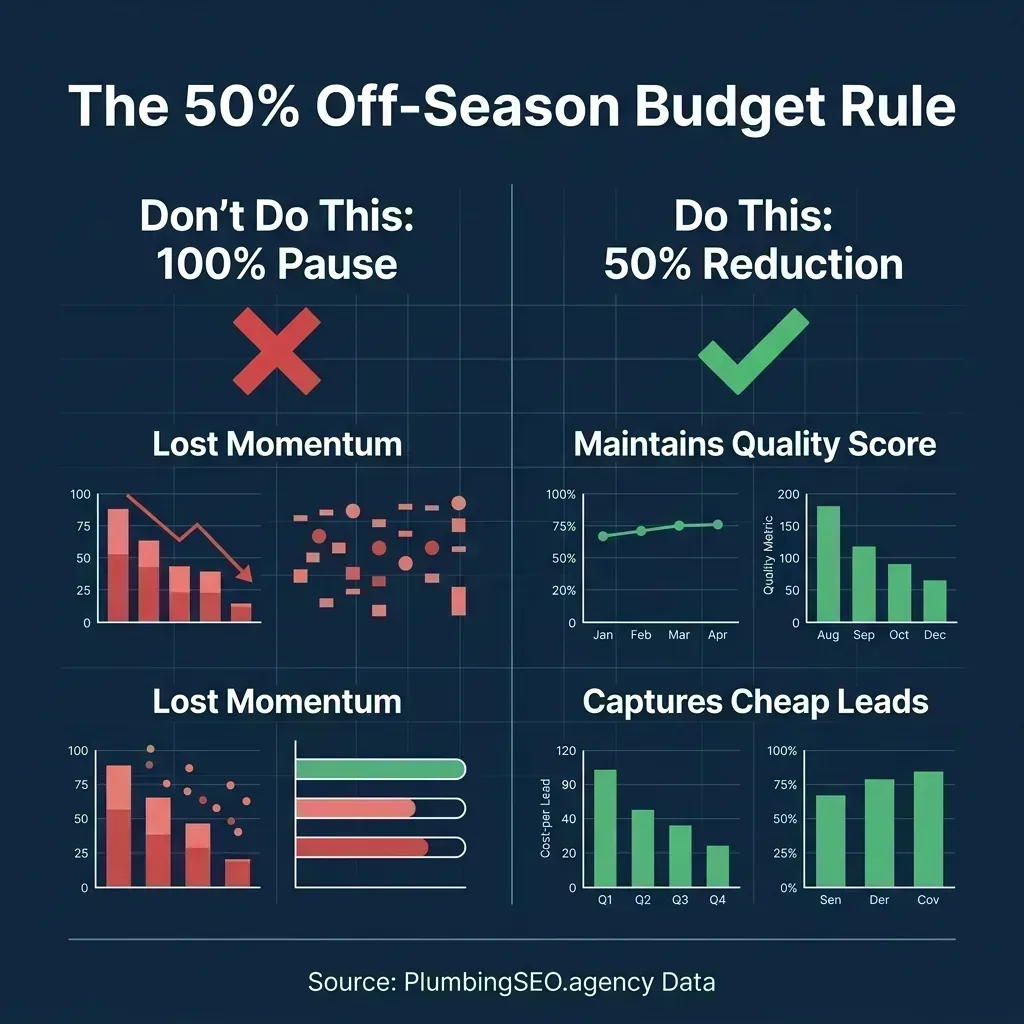
- Don't pause ads in the slow season: Cutting your budget by 50% instead of 100% captures cheaper leads and maintains momentum for peak season.
- Speed to lead is revenue: 78% of customers go with the first company that responds. During peak season, speed beats outspend every time.
The Cost of Being Late to the Season
Every year, thousands of plumbing and HVAC contractors wait for the first real freeze or the first heatwave to turn their marketing budgets back on. And every year, they pay a massive premium for it.
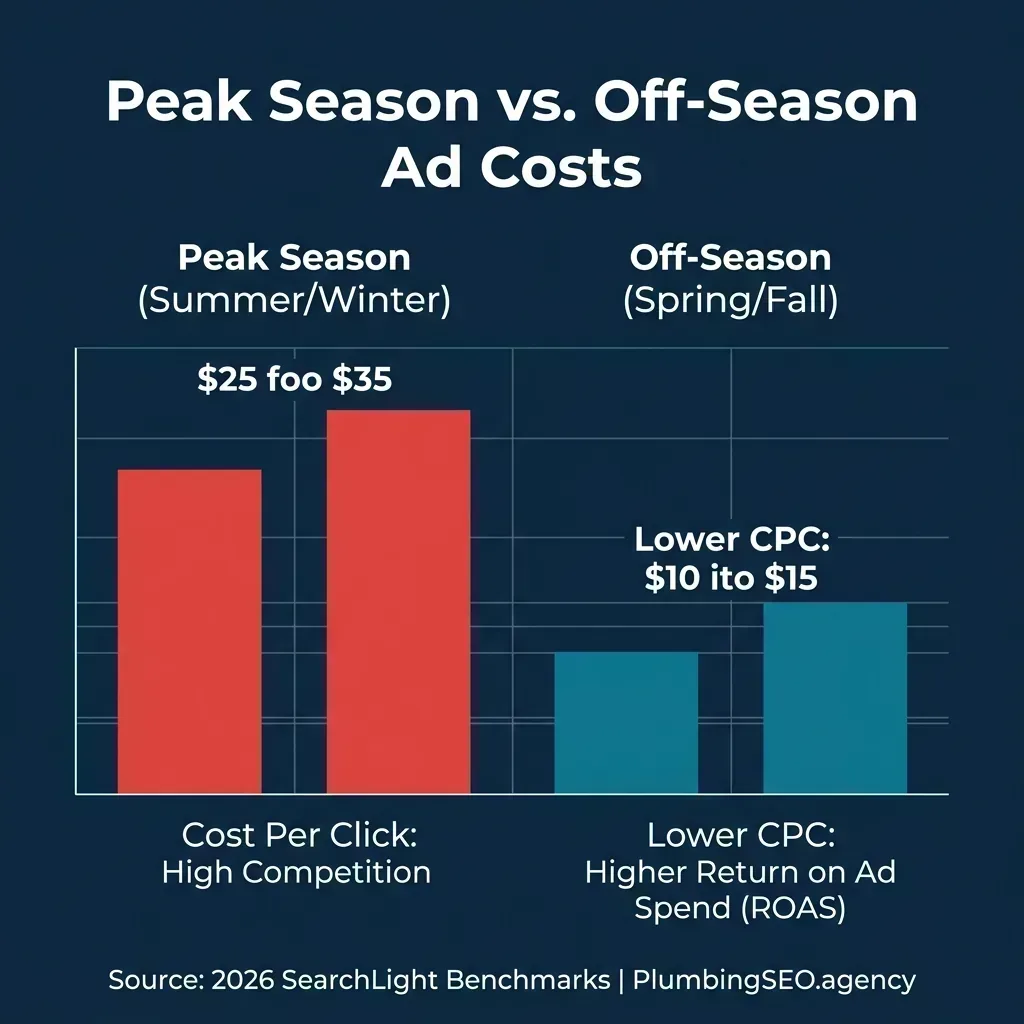
Recent data tracking millions in home service ad spend shows that Cost Per Lead (CPL) rose by over 10% in the last year alone. In major metro areas during peak demand, emergency repair keywords can exceed $30 per click. If you launch your seasonal campaigns the week temperatures spike, you are bidding against competitors who have had three weeks of momentum, better Quality Scores, and lower costs per click.
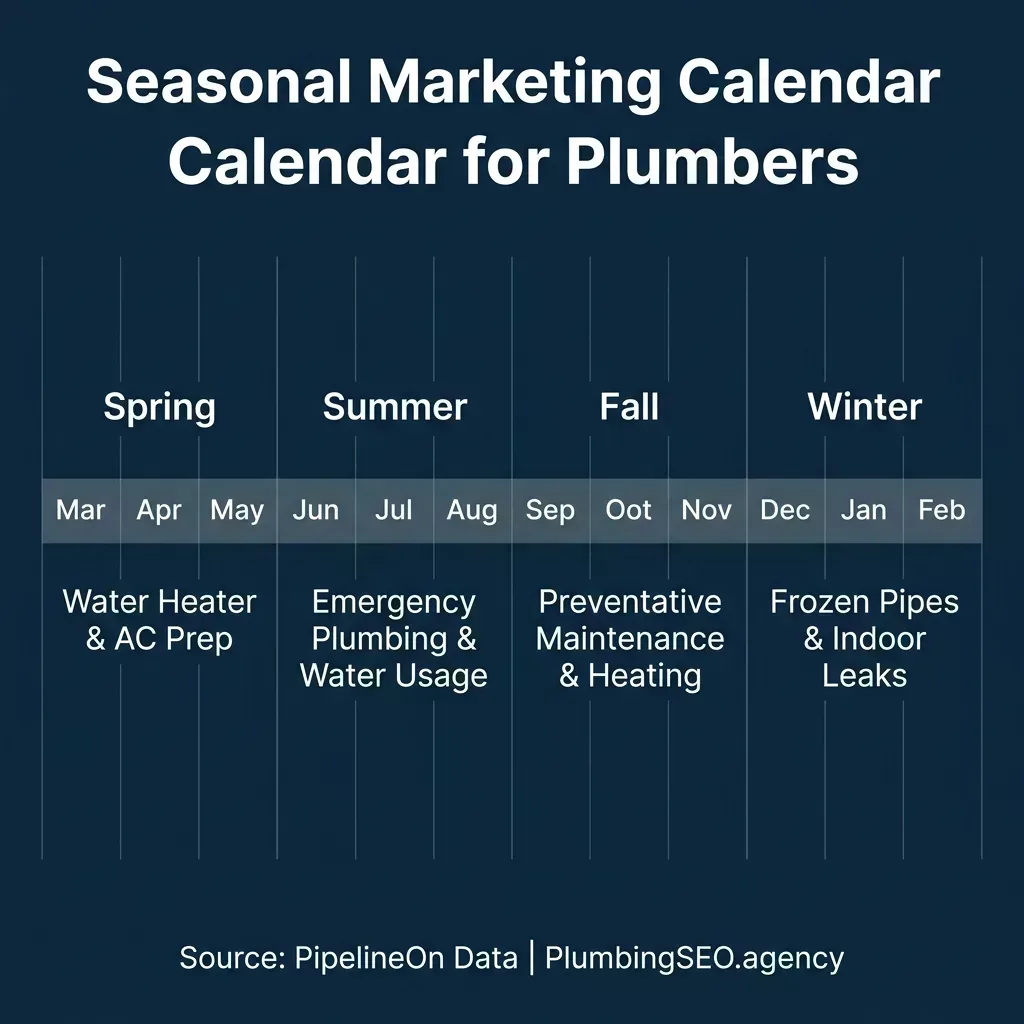
The solution is simple: launch your seasonal campaigns 30 to 45 days before your peak season starts. AC ads should be running by early March. Heating ads need to go live by September. This gives Google's algorithm time to learn your campaigns, stabilizes your Quality Score, and builds your remarketing audiences.
For context on what to prioritize when building this seasonal foundation, understanding the difference between SEO and PPC for home services will help you decide how to split your budget.
The Slow Season Strategy: Never Go Dark
One of the most common mistakes we see when doing a website audit is a complete halt in marketing during the "shoulder months" (typically early spring and early fall). Plumbers pause their ads entirely because the phone isn't ringing as much.
"The contractors who kill their budget in November or February lose ground they spend three months buying back. Competition drops in the off-season. CPCs fall."
When you pause your campaigns entirely, you lose your Google Ads momentum. When you restart them in peak season, you start from scratch. Furthermore, the homeowners who are searching for a furnace tune-up or a bathroom remodel quote in January are not just browsing—they are buying. And because your competitors have paused their ads, Cost Per Click (CPC) drops significantly.
We saw a great example of this on a small business subreddit: An HVAC contractor built out an educational "preventative maintenance" program specifically to keep his crew booked through mild winters. Routine checkups kept the business running, and those same customers sent him referrals when summer demand exploded. He didn't stop his marketing; he shifted the message.
The 50% Off-Season Budget Rule
If you don't pause your ads, how much should you spend? The general rule for plumbing marketing during the slow season is a 50% budget reduction.
If you were spending $4,000 a month in July, drop it to $2,000 in October. This keeps your lead volume trickling in, maintains your Google Ads account history, and captures the highly motivated buyers who aren't window shopping.
The margin on home services averages 33%, which means every dollar of waste in your ad account cuts directly into a thin margin. Using UTM parameters to track where your leads come from is the minimum standard for any contractor spending more than $500 a month on ads. You should know if that $2,000 off-season spend is actually booking jobs, not just getting clicks.
Speed to Lead: The Ultimate Peak Season Multiplier
You can have the best seasonal campaign in your market and still lose jobs to a competitor with worse ads and better reviews. More importantly, you will lose jobs to whoever answers the phone faster.
According to BrightLocal data, 78% of customers go with the first company that responds to them. Responding within 60 seconds increases conversions by a staggering 391%. Waiting just five minutes cuts your odds of qualifying that lead by 80%.
During peak season (summer heatwaves or winter deep freezes), urgency drives faster decisions. Homeowners aren't going to leave a voicemail and wait three hours for a callback when their basement is flooding or their AC is dead in 100-degree heat. If your CSRs (Customer Service Representatives) are not trained to answer and book fast during peak season, your marketing budget is essentially funding your competitor's growth.
Year-Round Tactics to Supplement Seasonal Dips
What if your market doesn't have extreme seasons? Or what if you want to smooth out the revenue curve so you aren't so dependent on August heatwaves?
One of the strongest year-round tactics is to focus on new homeowners. According to industry data, new homeowners buy services year-round regardless of weather because they are still figuring out what they have and need to fix deferred maintenance. Direct mail, targeted Facebook ads, or leaving welcome packages in target neighborhoods can keep the phones ringing in October.
Another massive needle-mover is offering financing. Per ServiceTitan's 2025 Consumer Trends report, contractors who offer financing close 12% more jobs and see 13% higher average ticket sizes. A whopping 41% of consumers are actively looking for financing options when they search for services. If you are quoting an $8,000 water heater and repipe job in the slow season without a financing option, the homeowner isn't saying no to the job—they are saying no to the lump sum.
Frequently Asked Questions
When should contractors start running seasonal marketing campaigns?
Launch paid campaigns 30 to 45 days before your peak season begins. For AC season, that means ads running by early March. For heating, start by September. Starting early gives Google's algorithm time to optimize and keeps your CPCs lower than competitors who jump in late.
Should I keep running ads during my slow season?
Yes, but scale back. Reducing your budget by 50% keeps your campaigns active and your Google Ads Quality Score intact while CPCs are lower and competition thins out. Contractors who go entirely dark in the off-season often spend heavily to rebuild momentum come spring.
Does offering financing really help close more plumbing jobs?
Yes. Contractors who offer financing close 12% more jobs and see a 13% higher average ticket size. Over 40% of homeowners look for payment plans on jobs over $2,000, making it a critical tool for closing deals during slower months.
Stop Guessing With Your Marketing Budget
Find out exactly why your phone isn't ringing in the slow season. We'll audit your website and Google Business Profile for free.
Get Your Free SEO Audit