
- Do not wait until the phone is quiet to publish. Build each month around the plumbing problem homeowners are about to notice.
- Use one seasonal theme across a blog post, Google Business Profile update, review request, email reminder, and social proof post.
- Link every useful seasonal article back to your core plumbing SEO page so the content supports calls, not just pageviews.
If you run a plumbing company, the calendar already runs part of your business. Cold snaps bring frozen pipe calls. Holidays bring kitchen drain trouble. Spring rain brings sump pump worries. Summer brings hose bibs, outdoor water use, vacations, and the kind of small leak that waits until nobody is home.
The mistake is publishing after the calls start. By then, the homeowner has already searched, clicked somebody else, or asked a neighbor who they use. A good plumbing content calendar gets your answer online before the problem hits the kitchen floor.
This guide gives you a month-by-month plan for what to publish, what channel to use, and how to connect each seasonal topic back to booked jobs. If you want the broader search system behind this, pair the calendar with a plumber-focused plumbing SEO plan that connects service pages, Google Business Profile, reviews, and internal links.
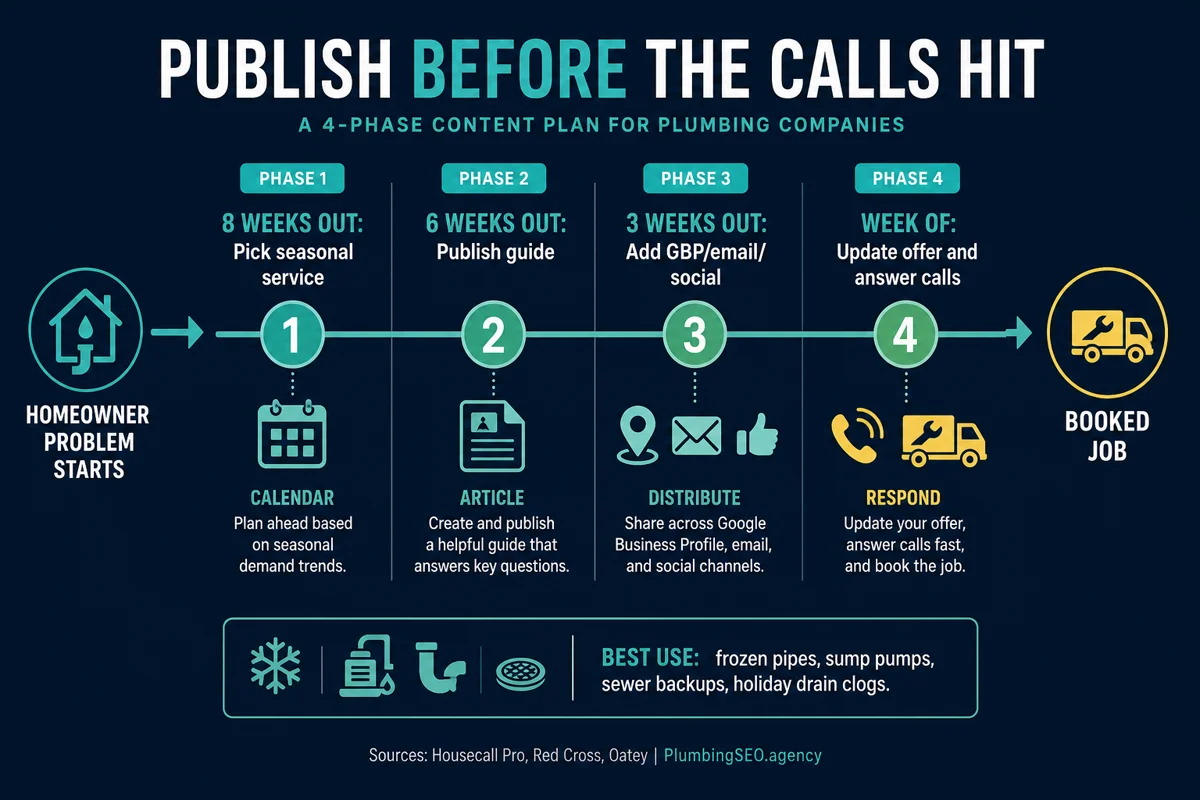
Publish the helpful guide six to eight weeks before the seasonal problem. Then reuse the same topic for Google Business Profile, email, review prompts, and short social posts as the season gets closer.
How a plumbing content calendar should actually work
A calendar is not just a list of blog ideas. It is a dispatch board for your marketing. Every topic should answer one of three questions:
- What is the homeowner about to worry about? Frozen pipes, sewer smells, sump pumps, water heaters, outdoor faucets, or holiday drain clogs.
- What job do you want more of? Emergency calls, inspections, replacements, maintenance visits, or service area jobs.
- What proof makes the customer trust you? Photos, reviews, before-and-after work, simple checklists, and clear next steps.
Housecall Pro recommends charting marketing work on a dedicated calendar so a company can see when it is doing too little, overspending, or forgetting channels like newsletters, blog articles, local events, and social posts. That advice matters because plumbing owners do not need more random marketing. They need a rhythm they can keep while the trucks are moving.
The month-by-month plumbing content calendar
Use this as the working calendar. Adjust the exact timing for your climate and service mix. A plumber in Texas will not talk about the same winter risks as a plumber in Minnesota, and a drain-heavy shop will plan differently than a water-heater-heavy shop. Same idea, different truck.
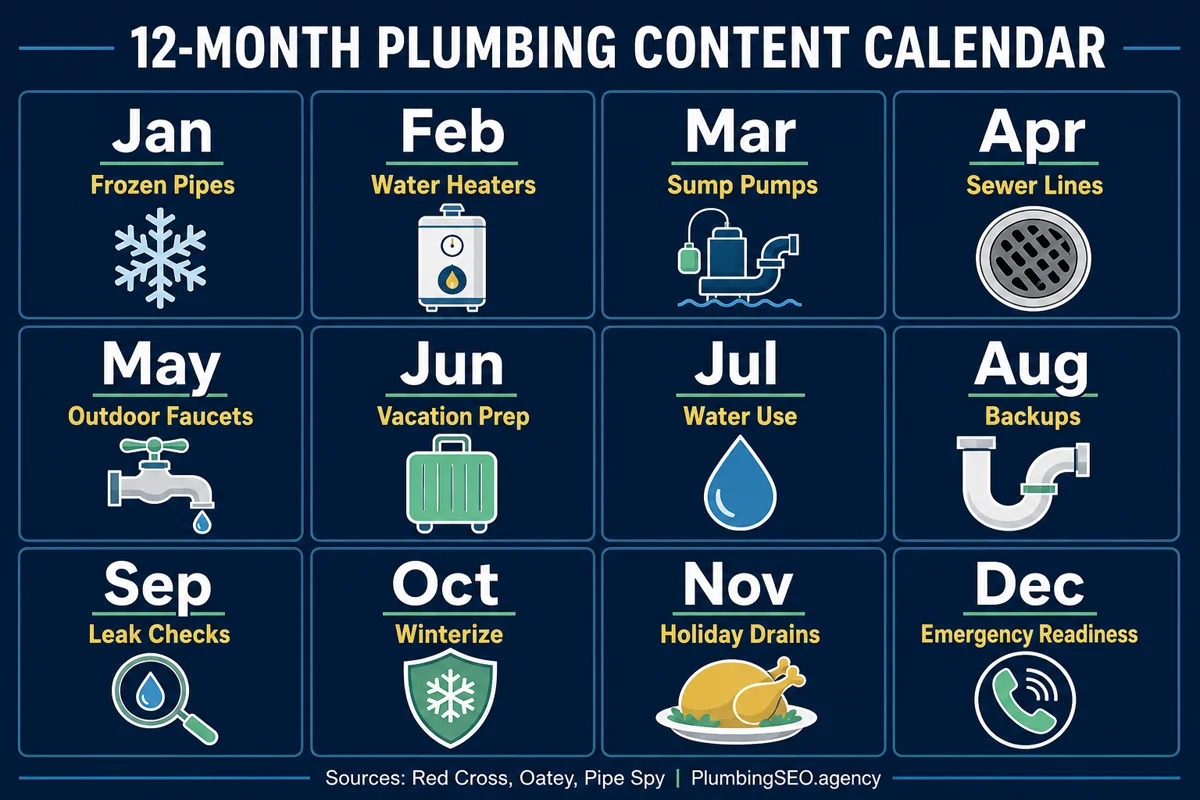
| Month | Primary topic | Best content angle | Call-to-action |
|---|---|---|---|
| January | Frozen pipes | What to do if water slows to a trickle and when to call a licensed plumber. | Emergency pipe help |
| February | Water heaters | Repair vs replacement, strange noises, rusty water, and no-hot-water checks. | Water heater inspection |
| March | Sump pumps | Test the pump before spring rain and explain backup pump options. | Sump pump test |
| April | Sewer lines | Slow drains, yard smells, gurgling toilets, and when camera inspection makes sense. | Sewer camera inspection |
| May | Outdoor faucets | Hose bib leaks, sprinkler startup, and outdoor water line checks. | Outdoor leak repair |
| June | Vacation prep | Shutoff valve checks, leak sensors, water heater vacation settings, and peace of mind. | Pre-trip plumbing check |
| July | Water use | Running toilets, high water bills, outdoor watering, and hidden leaks. | Leak detection |
| August | Backups | Late-summer drain backups, root intrusion, and what not to pour down the line. | Drain cleaning |
| September | Leak checks | Get small leaks handled before colder weather and holiday traffic. | Whole-home plumbing check |
| October | Winterizing | Outdoor faucets, exposed pipes, crawl spaces, and shutoff reminders. | Winterization visit |
| November | Holiday drains | Kitchen grease, garbage disposals, guest bathrooms, and day-after emergency prep. | Drain tune-up |
| December | Emergency readiness | Main shutoff location, emergency numbers, cold-weather prep, and same-day service. | Save our emergency number |
January and February: cold-weather answers before panic searches
Cold weather content needs to be simple. Nobody with a frozen pipe wants a lecture. They want to know what to check, what not to do, and who to call before damage spreads.
The American Red Cross explains that water expands as it freezes, putting pressure on metal and plastic pipes. Oatey also notes that winter brings problems like frozen pipes and clogged indoor drains, with holiday cooking adding strain to kitchen lines. That gives you two practical content lanes for the first part of the year:
- Emergency answer content: What to do when pipes freeze, when to shut off water, and when to call a pro.
- Prevention content: How to insulate exposed lines, protect crawl spaces, and avoid grease-heavy drain clogs.
For February, shift into water heaters. Cold weather makes no-hot-water calls feel urgent. Publish a repair-versus-replacement guide, a noisy-water-heater checklist, and a quick Google Business Profile post that says what information the customer should have ready before calling.
March through May: rain, drains, sewers, and outdoor water
Spring content should help a homeowner prevent the mess they can almost see coming. Sump pumps, sewer lines, slow drains, outdoor faucets, and sprinkler startup all fit here.
Use March for sump pump testing. Do not just write a generic checklist. Show what happens when the pump fails, where the backup plan comes in, and why a small test now beats a wet basement later. In April, move into sewer and drain content. In May, talk about hose bibs, outdoor faucets, irrigation tie-ins, and leaks that start outside but show up on the water bill.
Good spring topic
"How to test your sump pump before spring rain"
Specific problem, clear timing, easy CTA.
Weak spring topic
"Why plumbing maintenance is important"
Too broad. It does not match the call the owner wants.
June through August: vacations, water waste, and backup prevention
Summer is where a lot of plumbing content gets lazy. Do not just post a beach graphic and say, "Happy summer." Tie the season to real work: vacation shutoff checks, running toilets, high water bills, outdoor fixtures, sewer smells, and drain backups.
Pipe Spy reports that its plumbing call volume can rise in summer between May and September, along with higher volume from September through December in its California market. Your market may look different, but the planning lesson is the same. Watch your own call logs and publish ahead of the months when certain jobs always seem to come back.
A strong July article might be about high water bills and hidden leaks. An August article might explain why the same drain keeps backing up. Pair those with short proof posts, such as a before-and-after photo of a cleanout, a review from a leak detection job, or a simple reminder about what not to flush. If photos matter to your local visibility, connect this work with your Google Business Profile photo strategy.
September through December: winter prep and holiday drain demand
Fall is where the calendar earns its keep. September gives you time to talk about leak checks and whole-home plumbing inspections before the schedule tightens. October is for winterizing. November is holiday drain prep. December is emergency readiness.
Do not wait until the week of Thanksgiving to publish a holiday drain post. Oatey notes that winter cooking can put more fat, oil, and grease into kitchen drains, where it can solidify and contribute to clogs. That is useful public education, but for a plumbing owner it is also a service opportunity. Publish the guide early, then reuse it as a short email, a review request prompt, and a Google Business Profile post.
Pipe Spy also mentions Black Friday, sometimes called Brown Friday, as a day when plumbers can receive up to 50 percent more calls than an average Friday. That does not mean every shop sees the same number. It does mean holiday-drain content deserves a slot before the holiday, not after the phones light up.
Turn one seasonal topic into five pieces of content
A plumbing owner does not have time to create five separate ideas every week. So do not. Pick one seasonal service and break it into five pieces.
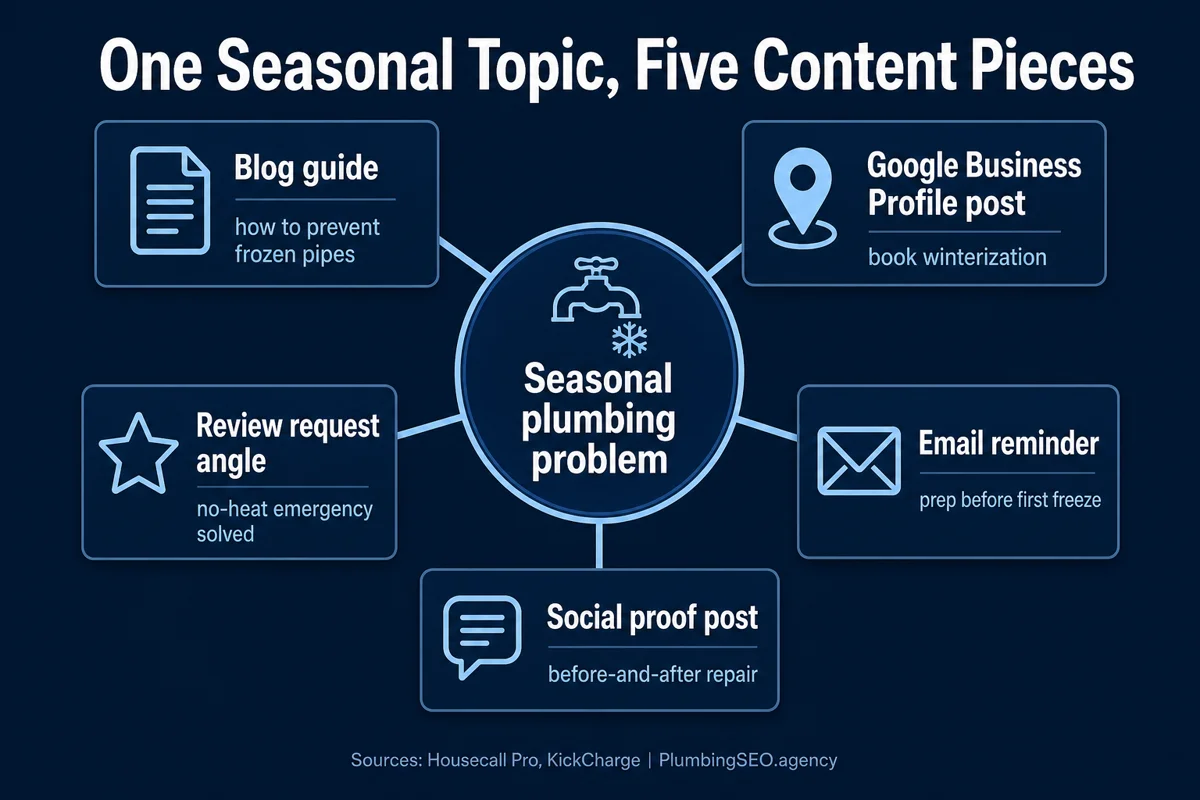
Blog guide
Publish the complete answer. Example: "How to prevent frozen pipes before the first hard freeze."
Google Business Profile post
Turn the guide into a short local update with one clear booking action.
Review request angle
After a related job, ask the customer to mention the problem you solved, not just "great service."
Email reminder
Send the simple checklist to past customers before the season hits.
Social proof post
Share a before-and-after photo, tech tip, or anonymized service story from the field.
KickCharge makes a useful point about scheduling posts in advance: when you stop inventing social posts in the moment, you can spend more time responding to comments, reviews, and questions. For plumbers, that matters because the content calendar should reduce stress, not create another thing nobody wants to touch after a full day of calls.
What to publish on each channel
The blog is the long answer. Google Business Profile is the local nudge. Email is the reminder to people who already know you. Social is proof that your crew does the work. Reviews are trust in the customer’s words.
| Channel | Best seasonal use | Example |
|---|---|---|
| Blog | Detailed answer that can rank and earn internal links. | "Sump pump test checklist before spring rain" |
| Google Business Profile | Short, timely update for local searchers. | "Book your sump pump test before the next storm." |
| Reminder for past customers before a seasonal risk. | "Leaving town? Check these shutoff valves first." | |
| Reviews | Proof language that matches future searches. | "They fixed our no-hot-water issue the same day." |
| Social | Photos, quick tips, and trust-building field updates. | "Here is what a backed-up cleanout looked like before we cleared it." |
If you already collect reviews but do not know how to turn them into better local trust, use seasonal jobs to guide the ask. A customer who calls for a winter pipe issue can mention fast emergency response. A customer who books drain cleaning before Thanksgiving can mention clean work and clear communication. That is more useful than another plain "five stars" line. For wording help, see these plumber review response templates.
Measure the calendar by calls, not just posts
A content calendar can look busy and still fail. The report may show posts published, impressions up, and social activity moving, but the phone tells the truth.
Track each seasonal topic with a simple scorecard:
- Did the page index?
- Did it earn impressions for the seasonal service or problem?
- Did it send internal link strength to the service page?
- Did Google Business Profile activity support the same service?
- Did calls or form fills mention the problem?
That is why each seasonal post should link naturally to the service page it supports. A winterizing article should support plumbing service work. A sump pump article should support the relevant service or service area page. A drain article should help the customer take the next step. If you are planning months ahead, use the same patience you need for SEO. Our guide on why plumbing SEO takes 90 days explains why early publishing gives Google and homeowners time to catch up.
A simple 90-day operating rhythm
Here is the rhythm I would use if I owned the shop and did not want marketing to run my life.
- Once per quarter: Pick the next three seasonal service themes from call history, weather, and margin.
- Six to eight weeks before each theme: Publish the main guide and add internal links from related pages.
- Three weeks before: Publish the Google Business Profile update, schedule one email, and prepare one review prompt.
- Week of demand: Refresh the post if needed, add a fresh photo, and make sure the CTA matches your actual availability.
- After the season: Review calls, rankings, and customer questions. Keep what worked. Cut what was noise.
That is enough structure to stay consistent without turning your plumbing company into a newsroom. Nobody needs that. You need useful answers online before the customer needs them, and a clear path from the answer to the call.
Plumbing content calendar FAQ
A plumbing content calendar is a planned schedule of blog posts, Google Business Profile updates, emails, review prompts, and social posts built around the services homeowners are likely to need each month.
Publish the main website guide six to eight weeks before the seasonal problem usually starts. Add shorter Google Business Profile, email, and social updates three to four weeks before demand peaks.
Winter topics should cover frozen pipes, no-hot-water calls, holiday drain clogs, shutoff valves, exposed pipe protection, and emergency readiness. Keep the advice practical and make the call path easy.
No. Big recurring services deserve blog posts. Smaller reminders may only need a Google Business Profile update, short email, or social proof post. Match the content depth to the value of the job and the search demand.
Seasonal content helps plumbing SEO by answering timely homeowner searches, supporting service pages with internal links, creating fresh local updates, and giving customers a reason to call before the problem gets worse.
Pick one seasonal service theme per month. Turn it into one useful blog post, one Google Business Profile update, one email reminder, one review prompt, and one social proof post. That is enough for many small shops to stay consistent.
Want the calendar tied to real plumbing SEO?
We can find the seasonal content gaps, connect them to service pages, and build a publishing plan that supports calls instead of random posts.
Run My Free SEO Leak Check