
- Local SEO for plumbers is not just a website job. It is your Google Business Profile, reviews, service pages, citations, and call tracking working together.
- Start with trust basics first: correct business info, real categories, accurate service areas, and clear service pages for the jobs you actually want.
- Measure calls and booked jobs, not just rankings. A pretty report does not pay the crew if the phone stays quiet.
If you own a plumbing company, local SEO is the work that helps nearby customers find you when a pipe bursts, a water heater quits, or a drain backs up at the worst possible time. It is not magic. It is making sure Google, Maps, your website, and the rest of the internet all tell the same clean story about who you are, where you work, and why a homeowner should call you.
The generic answer is "optimize for local searches." That is true, but it is too thin for plumbing. A plumber does not need random traffic from three states away. You need calls from the right towns, for the right services, during the hours your crew can actually handle the job.
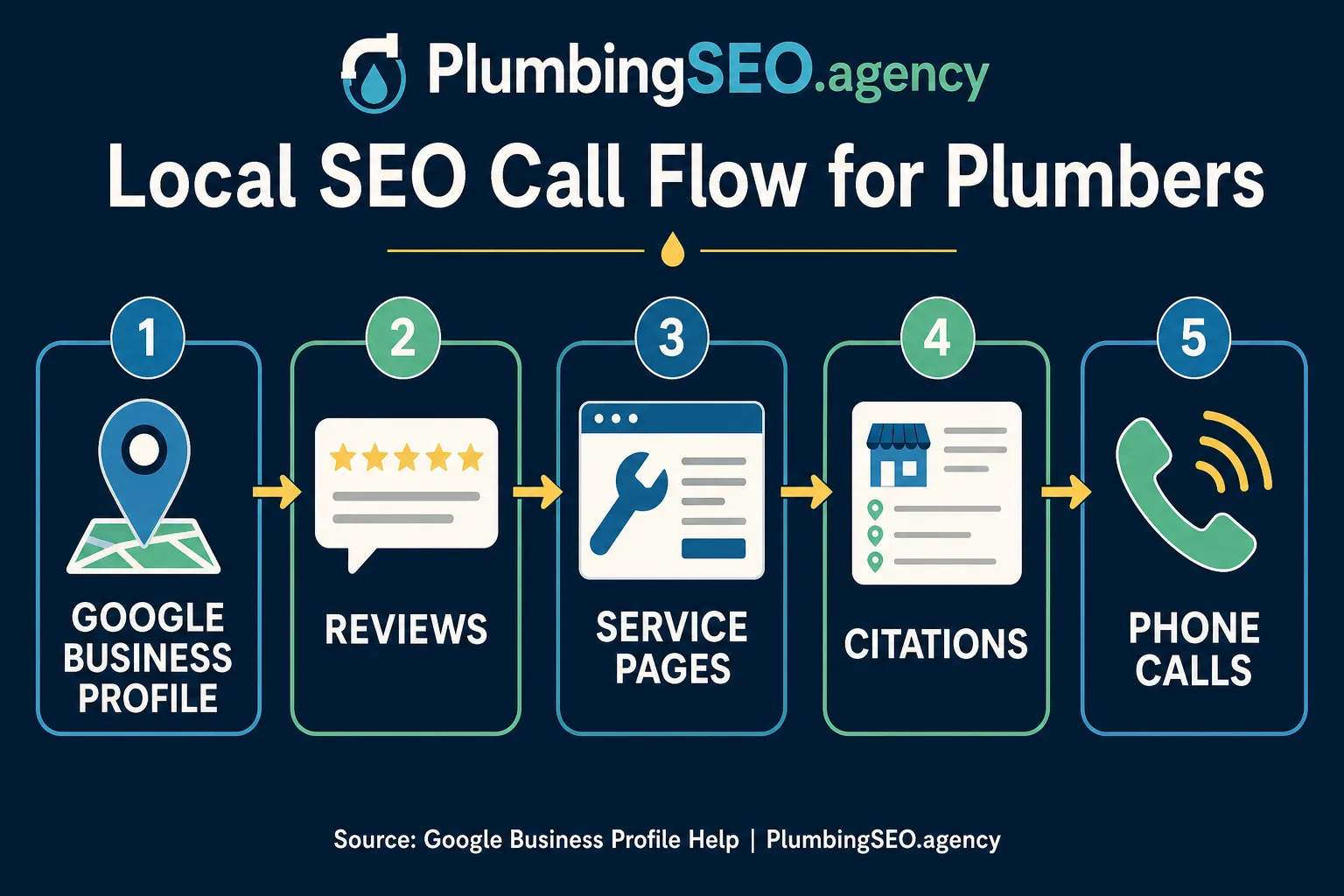
What local SEO means for a plumbing company
Local SEO is the cleanup, setup, and ongoing work that helps your company show up in location-based Google searches. For plumbers, the big places are Google Maps, the local pack, organic service pages, and sometimes AI answers that pull from trusted local sources.
Google says local visibility depends heavily on how accurately your business is represented and how your service area is set up. Its own Business Profile guidance says service-area businesses include plumbers, and that these businesses should use one profile for the area they serve. Google also says service areas should be specific, can include up to 20 areas, and generally should not stretch more than about two hours from the business base. Source: Google Business Profile Help on service areas.
Signals that create calls
- Google Business Profile category, hours, services, photos, and service area.
- Service pages that match real jobs: drain cleaning, water heater repair, sewer line repair, leak detection.
- Reviews that mention the service, town, speed, and trust.
- Consistent name, address, phone, and website across important listings.
Noise that looks busy
- Stuffing city names into your Google Business Profile name.
- Making thin pages for towns your trucks rarely serve.
- Chasing rankings without checking call quality or booked jobs.
- Buying cheap directory blasts before your core business info is clean.
What generic local SEO articles miss about plumbers
Most local SEO advice is written for restaurants, dentists, or retail shops. Plumbing is different. Customers are often stressed, mobile, and ready to call. They care about whether you handle their problem, whether you can reach their area, and whether other people trust you in a hurry.
That is why a plumbing local SEO plan has to connect search visibility to dispatch reality. If your service area is too wide, you may get calls that waste windshield time. If your reviews all say "great company" but never mention emergency work, water heaters, drains, or your key towns, Google and customers both get a weaker signal. If your website has one vague services page, Google has to guess what you actually fix.
Start with your Google Business Profile
Your Google Business Profile is usually the first thing a local customer sees. In my opinion, this is the first place most plumbers should look before touching blogs, backlinks, or fancy SEO tools. It is the online version of checking the shutoff valve before tearing open a wall.
Google's guidelines say businesses should represent themselves as they are known in the real world, use an accurate address or service area, choose the fewest categories needed to describe the business, and avoid creating duplicate profiles. The same guidelines warn against adding extra keywords, phone numbers, URLs, or unnecessary location terms to the business name. Source: Google's Business Profile guidelines.
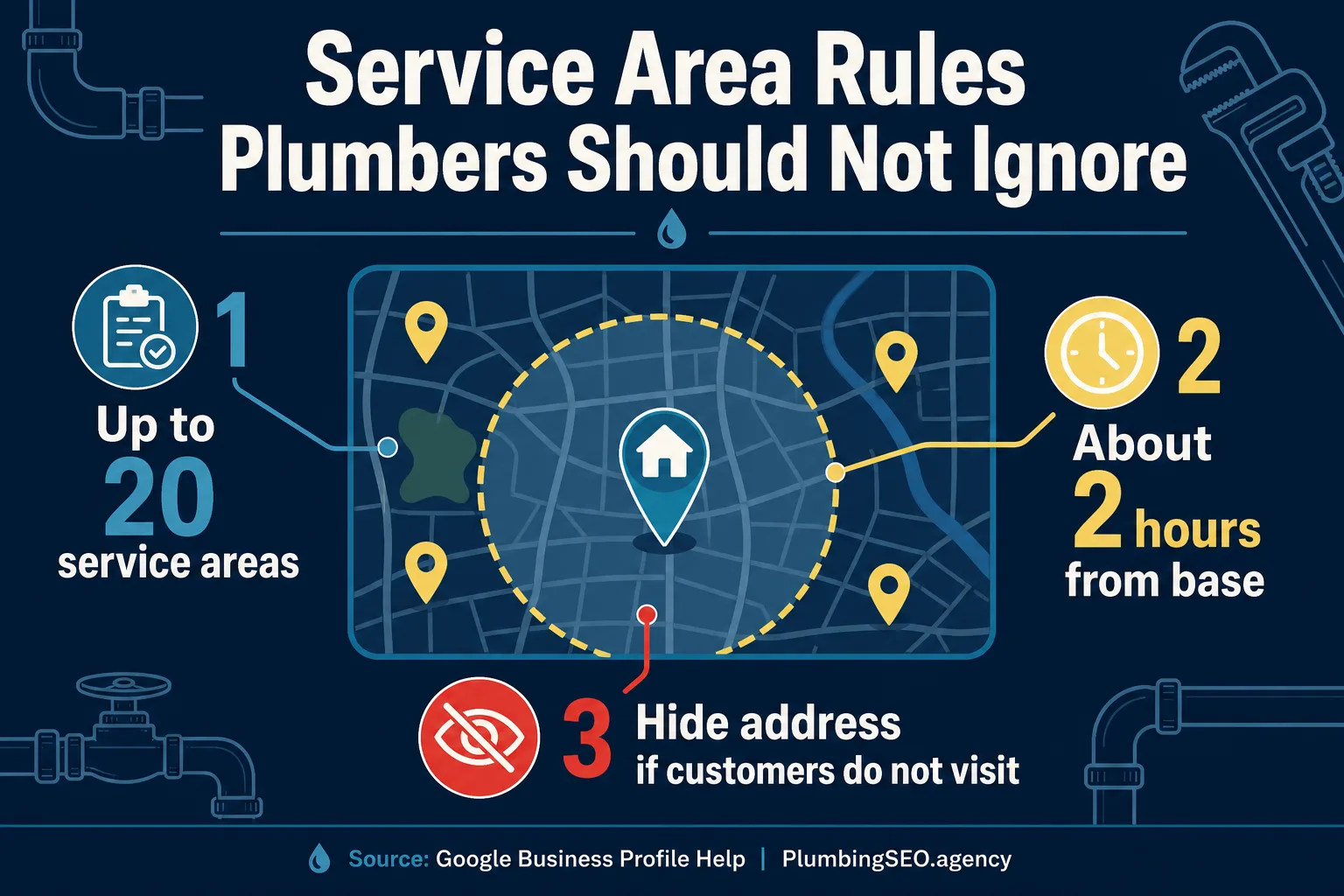
Google Business Profile checklist for plumbers
| Profile area | What to do | Why it matters for calls |
|---|---|---|
| Business name | Use the real-world name only. Do not add "emergency plumber near me" unless that is truly part of the business name. | Spammy names can create trust problems and profile risk. |
| Primary category | Use the closest core category, usually Plumber. Add only relevant extra categories. | Categories help Google match you to the right search intent. |
| Service area | List real cities, ZIP codes, or areas you serve. Keep the area practical for dispatch. | Bad service areas create wrong-area calls and weak location trust. |
| Hours and emergency work | Show honest hours. If you offer after-hours emergency calls, make that clear without overpromising. | Searchers often need help now, not next Tuesday. |
| Photos and services | Add real truck, team, job, and service photos. Fill out services with plain customer language. | Fresh, real proof helps customers feel safe calling you. |
Build service pages around jobs, not SEO jargon
A good plumbing website should make it easy for Google and a homeowner to answer three questions: what do you fix, where do you go, and how do I call you? This is where local SEO meets the actual job board.
Start with your money services. Emergency plumbing, drain cleaning, water heater repair, sewer line repair, leak detection, toilet repair, gas line work, repiping, and fixture installation are not all the same search. Give each important service its own useful page. If you need the full service-side framework, connect this article with our plumber SEO homepage and the deeper advanced local SEO guide for plumbers.
What each service page should cover
- The problem in the customer's words, not just the trade term.
- The towns or neighborhoods you actually serve for that job.
- Common signs, likely causes, and what the customer should do next.
- Trust proof: licensing, insurance, photos, warranties, reviews, or crew experience.
- A clear call button and form that work on mobile.
Do not create dozens of copy-paste city pages with the town name swapped out. That is like labeling every fitting in the truck "pipe thing." It may look organized for five minutes, then it causes problems.
Reviews and citations are trust signals, not chores
Reviews help customers decide if they can trust you in their home. Citations help Google confirm that your company is real and consistently represented. Neither one should be treated like a one-time setup task.
After a completed job, ask for a review while the customer is still relieved. Keep it simple. A text with the direct review link works better than a long email that reads like paperwork. Do not script fake reviews. Ask honestly, respond professionally, and make review requests part of the closeout process.
For citations, start with the listings that matter most: Google Business Profile, Bing Places, Apple Business Connect, Yelp, Angi, BBB where relevant, local chamber directories, supplier profiles, and any legitimate local sponsorship pages. Keep your name, address or service-area setup, phone, and website consistent.
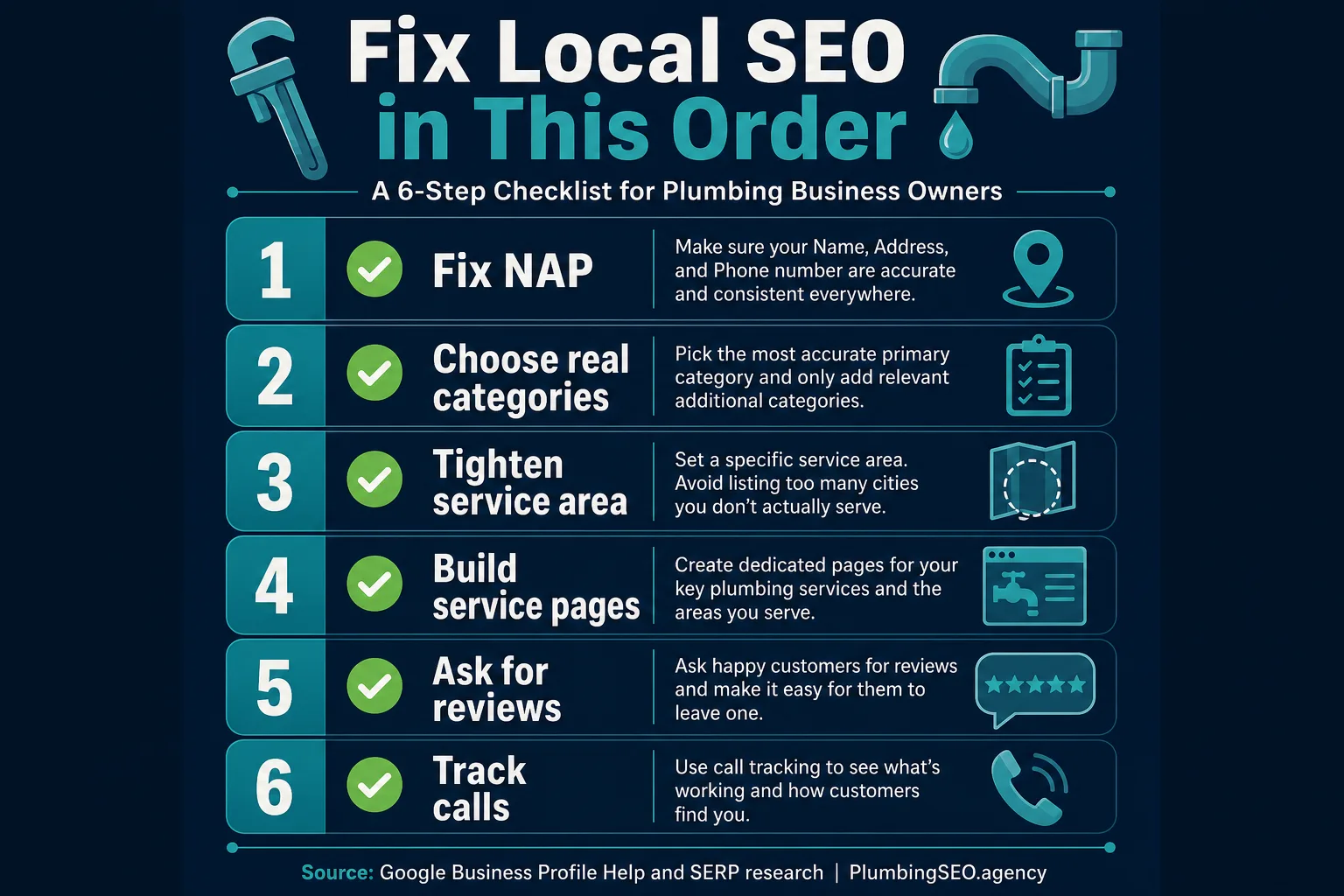
How to measure local SEO without fooling yourself
The report may look good, but the phone tells the truth. Track rankings, impressions, clicks, and website traffic, but do not stop there. A plumbing owner needs to know which calls came in, which ones turned into real booked jobs, and which service areas produced profitable work.
A practical monthly scorecard
| Metric | What it tells you | Owner question |
|---|---|---|
| Map pack visibility | Whether you are showing in the towns and services that matter. | Are we visible where the trucks can profitably go? |
| Google Business Profile calls | How often searchers call from Maps or the profile. | Are people choosing us from the local results? |
| Service page leads | Which jobs and cities produce form fills or calls. | Which pages are putting jobs on the board? |
| Booked-job source | Which marketing channel created actual revenue. | What should we keep, cut, or fix next? |
Common local SEO mistakes plumbers should avoid
- Using fake locations. A virtual office or mailbox can create Business Profile problems and bad customer trust.
- Stretching the service area too far. More towns do not help if your crew loses the day driving.
- Letting old phone numbers stay online. Citation clutter can leak calls before the customer ever reaches you.
- Building pages for search engines only. If a homeowner cannot tell what you do and how to call, the page failed.
- Stopping after setup. Local SEO needs steady reviews, profile updates, service page improvements, and tracking.
What to do in the next 30 days
If you want the practical path, do not try to fix everything at once. Work in this order:
- Audit your Google Business Profile name, category, hours, services, photos, and service area.
- Make one master NAP document with your correct business name, phone, website, and address or service-area rules.
- Fix the top listings that customers and Google are most likely to see.
- Choose three service pages that should produce calls and improve those pages first.
- Set up call and form tracking so you can judge booked jobs, not vanity numbers.
- Create a simple review request habit for every happy customer.
If that sounds like too much to handle while running dispatch, payroll, estimates, callbacks, and the occasional truck problem, that is normal. Local SEO is not hard because the words are fancy. It is hard because somebody has to keep checking every little leak. If you want help, contact PlumbingSEO.agency and we will help you figure out what should be fixed first.
Local SEO for Plumbers FAQ
Want to know where your plumbing calls are leaking?
We will review your Google Business Profile, service pages, reviews, and call path so you know what to fix first.
Ask for a Local SEO Review