
- The Dispatch Test: A real plumbing SEO expert asks about service areas, truck routes, job capacity, and high-margin calls before they build a keyword list.
- The Quick-Win Test: Expert support finds fixable leaks first: GBP categories, missing service proof, weak title tags, untracked calls, and pages that do not route buyers to the right offer.
- The Proof Test: Reports should connect rankings to phone calls, booked jobs, and page-level changes; not just impressions, screenshots, or generic traffic charts.
Quick Answer: What Makes Someone a Plumbing SEO Expert?
A plumbing SEO expert is not just a person who knows search engine optimization and happens to accept plumbing clients. The useful version understands how plumbing revenue is created: emergency calls, booked estimates, dispatch distance, technician capacity, average ticket size, repeat maintenance work, and the difference between a vanity ranking and a call that can actually be served today.
The best expert support starts by matching search demand to your real business model. A drain cleaning company that wants more same-day stoppage calls needs different pages, Google Business Profile signals, and call tracking than a remodel-focused plumber that wants repipes and water heater replacements. The keyword can look similar from the outside, but the money path is different.
That is why this page is not another agency-selection checklist. If you searched for a plumbing SEO expert, you are probably trying to figure out what kind of help is worth paying for, what should happen first, and how to avoid another generic marketing retainer. Use the tests below to judge whether the support you are considering can improve search visibility and protect your schedule at the same time.
The $3,500/Month Lesson
I recently spoke with an owner who was quoted $3,500 a month for "local SEO" with a vague 6 to 12 month timeline before they might see a single phone call. The shop had survived for years on referrals, but referral volume was flattening while nearby competitors were showing up first in Google Maps. The owner knew SEO mattered. They did not know what they were actually buying.
At that price, a plumber should not be buying mystery work. You should be buying a specific production line: technical cleanup, Google Business Profile repair, service page improvement, city or service-area prioritization, conversion fixes, tracking, and monthly decisions based on what actually moved. If the agency cannot explain those pieces in plain English, the retainer is probably paying for dashboard access and meetings.
A true plumbing SEO expert starts with your dispatch board. They ask which zip codes you want more calls from, which jobs are profitable enough to chase, whether you are overbooked on emergency work, whether financing matters for water heaters or sewer work, and how calls are answered after hours. They also check whether your plumbing SEO services foundation is strong enough to support new content before they recommend another batch of posts.
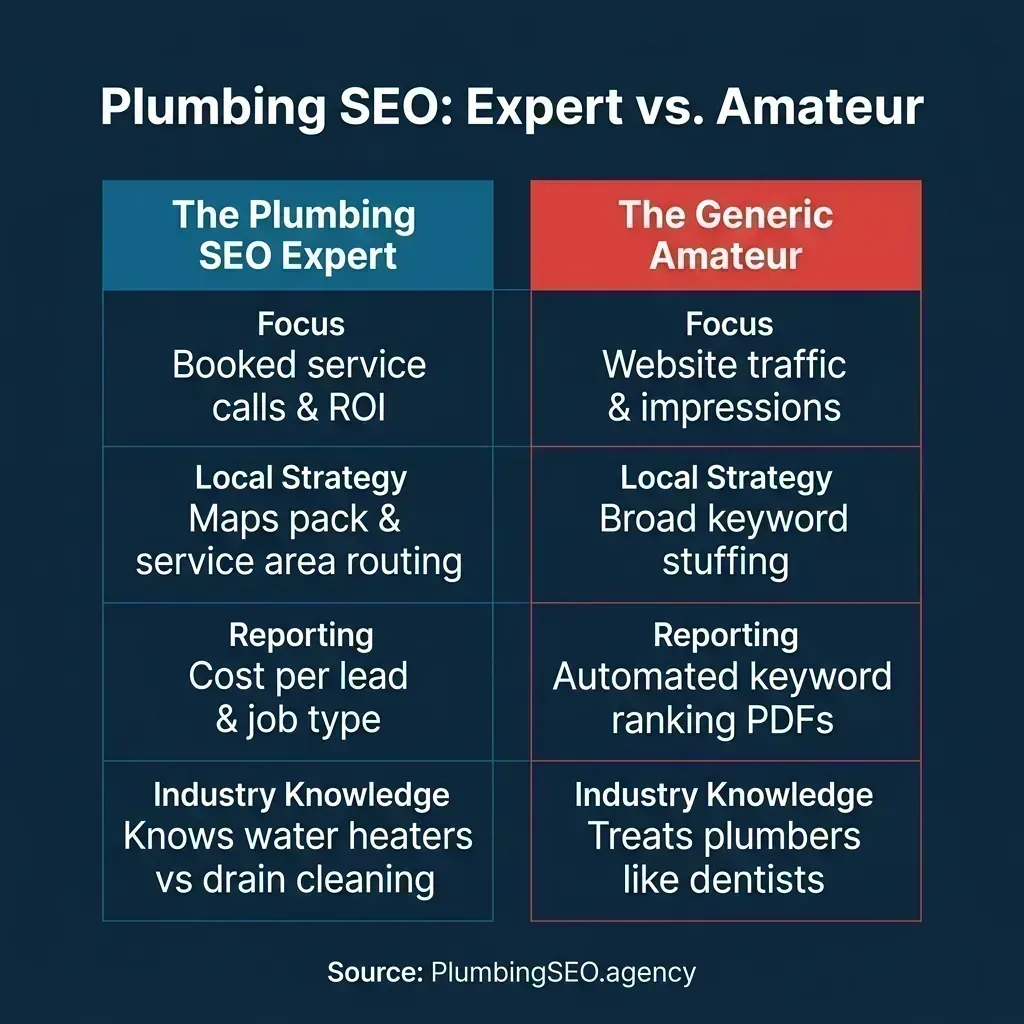
Expert support connects search work to service areas, dispatch reality, and booked jobs.
Start With Business Fit, Not a Keyword List
Keyword research is useful, but it is not the first question. The first question is: which calls should SEO create? A plumbing company that wants emergency drain work needs different landing pages, internal links, and GBP updates than a company trying to fill the calendar with tankless water heater installs. If the expert skips that conversation, they may rank you for work you do not want.
The business-fit pass should identify your best service categories, margin tiers, response areas, seasonality, and capacity limits. It should also expose bad-fit searches. Some keywords bring homeowners who want free troubleshooting advice. Others bring commercial accounts, insurance-related jobs, or same-day emergencies. A specialist knows how to separate helpful informational content from pages that should push directly toward a call or quote.
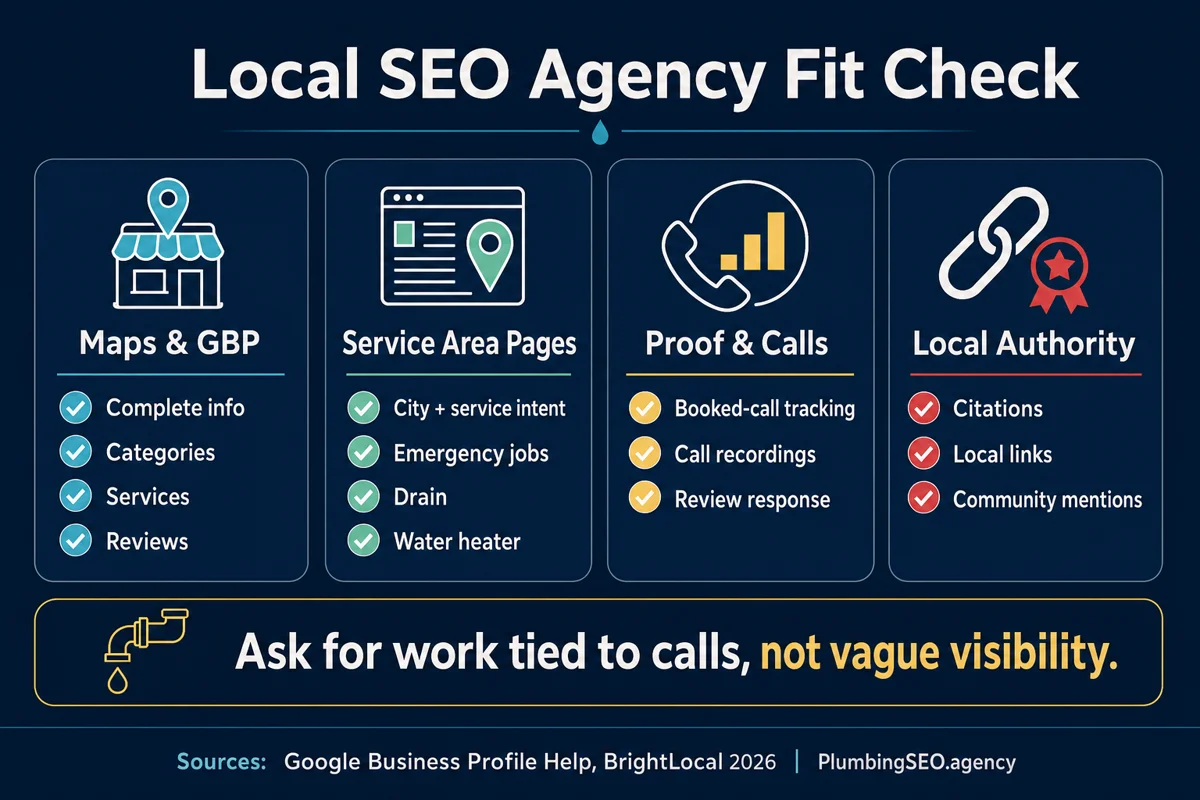
The right plan begins with the calls and territories your company can profitably serve.
For PlumbingSEO.agency, that means support content should route up to the homepage for broad plumbing SEO terms, to the core service page for buyers comparing SEO help, and to process pages when the reader needs to understand how the work is executed. That keeps this article from cannibalizing the main plumbing SEO agency hub while still answering the expert-intent query directly.
The SEO Skill Stack You Actually Need
A good portion of local SEO for plumbers is getting the foundations right and then building the exact trust signals Google and homeowners need to see. If an agency cannot clearly explain their approach to these layers, keep your wallet closed.
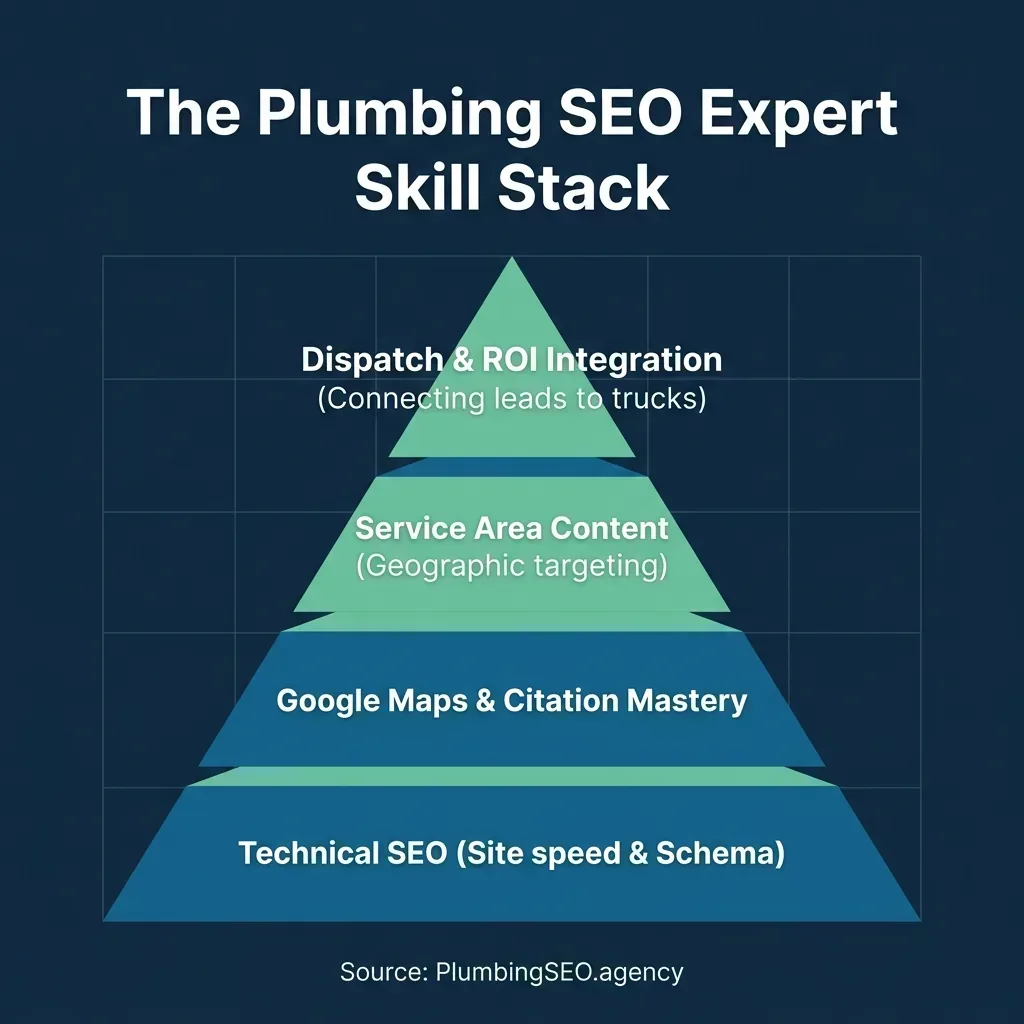
The practical skill stack behind profitable plumbing search visibility.
1. Technical SEO and crawl clarity
Your site needs clean titles, indexable pages, canonical tags, fast mobile performance, schema markup, and navigation Google can understand. This work is not glamorous, but it prevents wasted content. If Google cannot crawl the page or understand the service area, another 2,000 words will not fix the leak.
2. Google Business Profile and Maps work
For most plumbers, the map pack is where the calls begin. Expert support reviews categories, services, photos, review velocity, service areas, UTM tracking, and the connection between the GBP and website pages. A specialist also knows when not to over-edit a profile, because constant category and address changes can create risk.
3. Service and service-area architecture
Google ranks pages, not intentions. If you want to win drain cleaning in one town and water heater replacement in another, the site needs a clear structure. A plumbing SEO expert builds a map of priority services, support content, and internal links instead of publishing random posts that never help the money pages.
4. Conversion and call tracking
Rankings only matter if the page turns searchers into calls, forms, and booked work. Expert support checks whether the phone number is visible on mobile, whether CTAs match intent, whether forms are too long, and whether tracking can distinguish a qualified call from a wrong-number lead.
Google Business Profile Signals Separate Experts From Generalists
A generalist may say, "We optimize your Google profile." A plumbing specialist can explain exactly which GBP signals matter for a service-area business. They will review the primary category, secondary categories, services, booking or appointment links, photo cadence, review response patterns, and whether the landing page reinforces the same services and locations.
They also understand the handoff between Maps and the website. A homeowner may see your GBP, tap through to a water heater page, scan the proof, and call from a sticky button. If those steps do not agree with each other, trust breaks. The profile promises one thing, the page says another, and the call never happens.
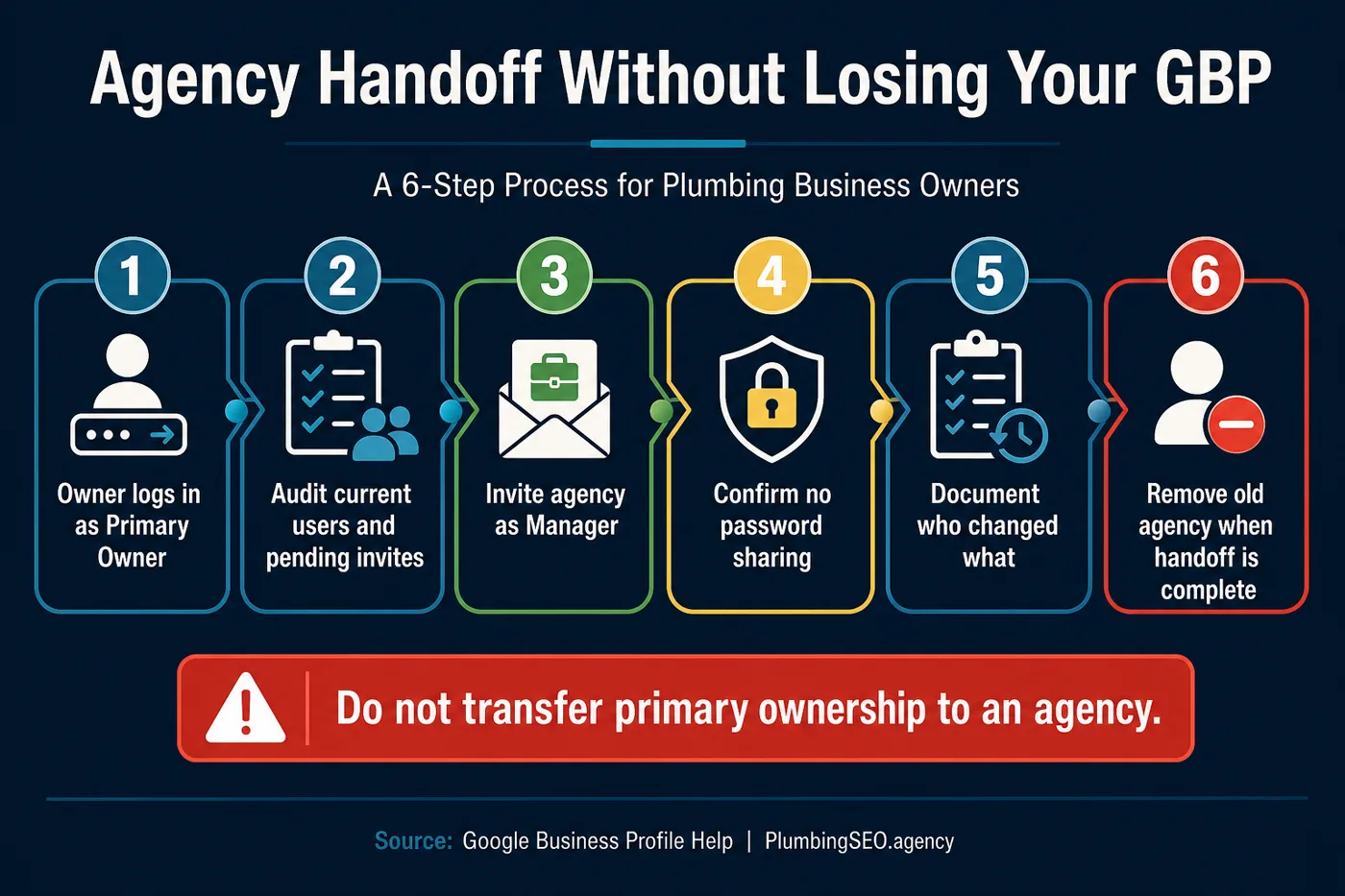
GBP work only pays off when the landing page and call path support the same job type.
That is why our Google Business Profile process connects profile updates to landing-page relevance, reviews, photos, and call tracking. The expert move is not to chase every possible Maps trick. It is to make the profile, page, and proof line up for the jobs you actually want.
E-E-A-T Proof Matters More Than More Generic Content
Plumbing is a trust business. Homeowners are inviting someone into their house during a leak, clog, sewer backup, or expensive replacement decision. Search engines also need proof that the business is real, local, and qualified. A plumbing SEO expert improves that proof instead of publishing filler articles that could belong to any contractor in any city.
Strong proof includes licensed team details where appropriate, service photos, before-and-after examples, clear areas served, real review language, job-type examples, financing information for high-ticket work, and pages that explain the process without sounding like a template. The goal is not to stuff the page with the phrase "plumbing SEO expert." The goal is to make the page feel specific enough that a plumber can tell the person behind it understands the industry.
For this support article, E-E-A-T means explaining how expert SEO support judges the business, not just the website. The reader should leave knowing what a serious consultant will ask, what evidence should appear in reports, and which internal pages explain the actual service line: the plumbing SEO process, the pricing model, and the free SEO audit path.
Measurement Should End at Calls, Booked Jobs, and Revenue
The fastest way to spot weak SEO support is to inspect the report. If the first page is impressions, clicks, and a green arrow, but nobody can say which calls came from which page, the business is still guessing. A plumbing SEO expert can still show rankings and traffic, but those metrics should lead to better business questions.
Which pages drove qualified calls? Which search terms are producing tire-kickers? Are calls being answered? Are emergency pages creating jobs outside your service area? Did the water heater page attract repair questions when you wanted replacement leads? Did a new internal link help the target page get crawled and discovered? These are the questions that turn SEO into a management system instead of a report subscription.
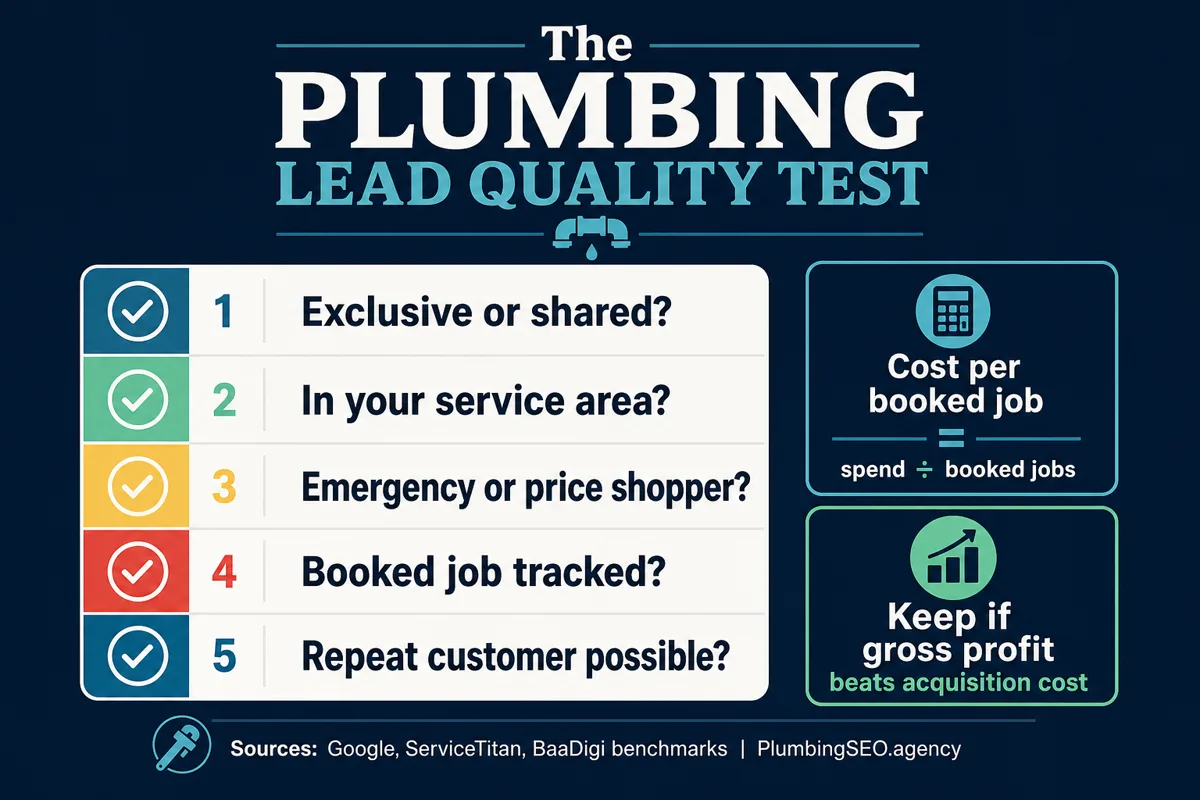
Expert reporting follows the trail from search visibility to qualified calls and booked work.
That does not mean every call becomes perfect overnight. It means the work has a feedback loop. If the wrong calls come in, adjust the page. If a ranking improves but conversions lag, fix the CTA or offer. If an internal link lifts discovery for a support page, route that authority toward a money page. A specialist keeps tightening the loop.
Red Flags of a Generic SEO Agency
When you are looking for expert support, it is often easier to spot the wrong fit first. The plumbing industry is filled with marketing agencies that promise the moon but deliver generic PDFs, thin location pages, and meetings where nobody can explain what changed.
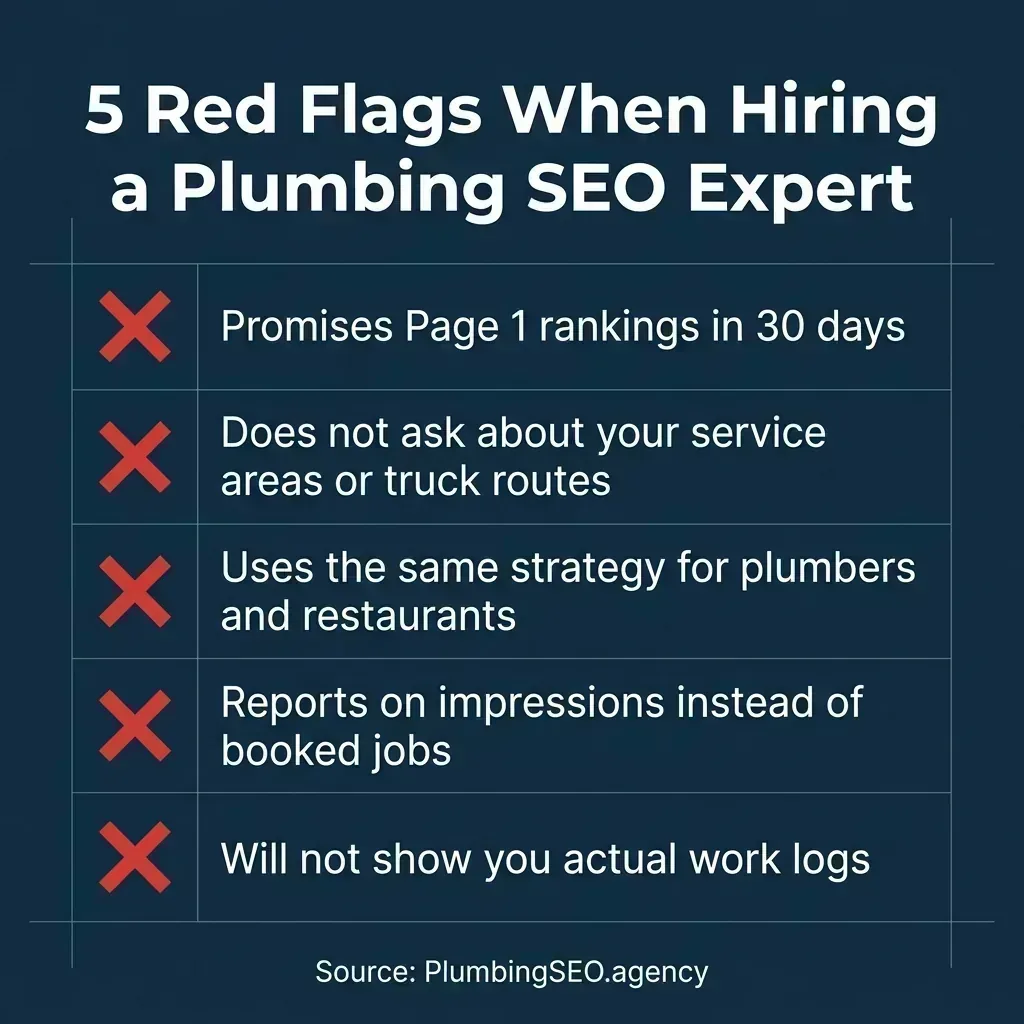
Warning signs that the retainer is not tied to plumbing-specific outcomes.
Run if an agency guarantees first-page rankings in 30 days, owns your website or tracking data, refuses to show work logs, sells backlinks without context, or talks only about traffic. Be cautious if they recommend dozens of new city pages before fixing the existing service pages. Be even more cautious if every example they show is from a dentist, lawyer, or ecommerce site and they cannot explain how a plumbing service-area business differs.
The most expensive red flag is misalignment. An agency may technically increase traffic while attracting low-value searches, DIY readers, or homeowners outside your service area. A plumbing SEO expert filters for business value before celebrating a ranking win.
A 30-Day Quick-Win Plan an Expert Would Look For
The task that prompted this refresh came from an emerging quick-win query: "plumbing seo expert." That kind of signal is small, but useful. It tells us Google is already testing the page for expert-intent searches. The right response is not a new duplicate page. The right response is to improve the existing page in place so it answers the query more completely and routes the reader toward the right next step.
In the first 30 days, a specialist would usually look for fixes like these: rewrite the title and H1 so the query is clear, update the meta description for better click intent, add sections that answer qualification questions, strengthen internal links to the homepage and service pages, expand FAQ coverage, check schema freshness, verify image alt text, and make sure the CTA matches the reader's stage of awareness.
For a plumber's own site, the equivalent quick wins might be missing service modifiers in title tags, weak GBP service descriptions, no dedicated page for a profitable job type, untracked calls, thin proof on city pages, or internal links that never point to the priority service page. None of these require guessing. They require a careful audit and a willingness to fix what already exists before creating more pages.
How to Choose the Right Level of Support
Some plumbing companies need full-service SEO. Others need a focused audit, a technical cleanup, or a content plan the in-house team can execute. A good expert will not force every company into the same retainer. They will diagnose whether the biggest leak is visibility, trust, conversion, tracking, or follow-up.
If you are comparing options, ask for a page-level plan. Which existing pages should be refreshed? Which internal links should change? Which GBP items are risky versus safe? Which service categories deserve new content? Which metrics will define success after 30, 60, and 90 days? The answers should be specific to your market and your revenue goals.
If you want a low-pressure starting point, run the free plumbing SEO audit. If you are comparing budgets, read the plumbing SEO pricing guide. If you are deciding whether to hire outside help or keep SEO internal, the agency vs. in-house guide for plumbers explains the tradeoffs. This article's job is to help you judge expertise before you commit.
Frequently Asked Questions
What does a plumbing SEO expert actually do?
A plumbing SEO expert improves how a plumbing company appears in Google Search and Google Maps, then connects that visibility to qualified calls. The work usually includes technical SEO, Google Business Profile optimization, service page improvements, local content, internal links, conversion fixes, and call tracking.
What should a plumbing SEO expert cost?
Pricing depends on market size, competition, and production volume, but many serious plumbing SEO retainers fall between $1,500 and $3,500 per month. Lower pricing may be fine for an audit or a limited cleanup, but ongoing SEO should include visible work, reporting, and page-level decisions tied to call quality.
How long does plumbing SEO take to work?
Some technical, title tag, GBP, and conversion fixes can show early movement in 30 to 90 days. Competitive market dominance usually takes 6 to 12 months because Google needs repeated evidence: stronger pages, better proof, better reviews, and consistent local relevance.
Do I need a plumbing-specific SEO expert?
You do not always need a plumbing-only provider, but you do need someone who understands service-area businesses, emergency intent, dispatch limits, Google Maps, review signals, and high-margin job categories. A generalist can work if they can prove they understand those plumbing-specific constraints.
What questions should I ask before hiring SEO help?
Ask which service pages they would improve first, how they will handle Google Business Profile work, how calls will be tracked, what proof they need from your team, which keywords are not worth chasing, and what success should look like after 30, 60, and 90 days.
How do I know if my current SEO provider is too generic?
Warning signs include reports that only show traffic, no discussion of service areas or booked calls, generic blog topics, no GBP detail, no work log, no page-level recommendations, and no plan for routing authority to high-value services.
Can I do plumbing SEO myself?
Yes, many basics can be handled in-house: keep your Google Business Profile complete, collect and answer reviews, add real job photos, make sure your main services have clear pages, and keep your phone number easy to tap on mobile. Expert help becomes more valuable when competition, technical issues, tracking, or content scale get harder.
What is the first quick win a plumbing SEO expert should check?
The first quick win is usually a page relevance check: make sure the page Google is already testing has a clear title, H1, meta description, CTA, internal links, schema, and proof for the query. Improving an existing page is often safer and faster than creating a new URL that competes with it.
Ready to work with a real plumbing SEO expert?
Stop paying for generic marketing that doesn't get your phone ringing. As a focused plumbing SEO agency, we will audit your site and show you exactly where you're losing calls to the competition.
Get Your Free SEO Audit